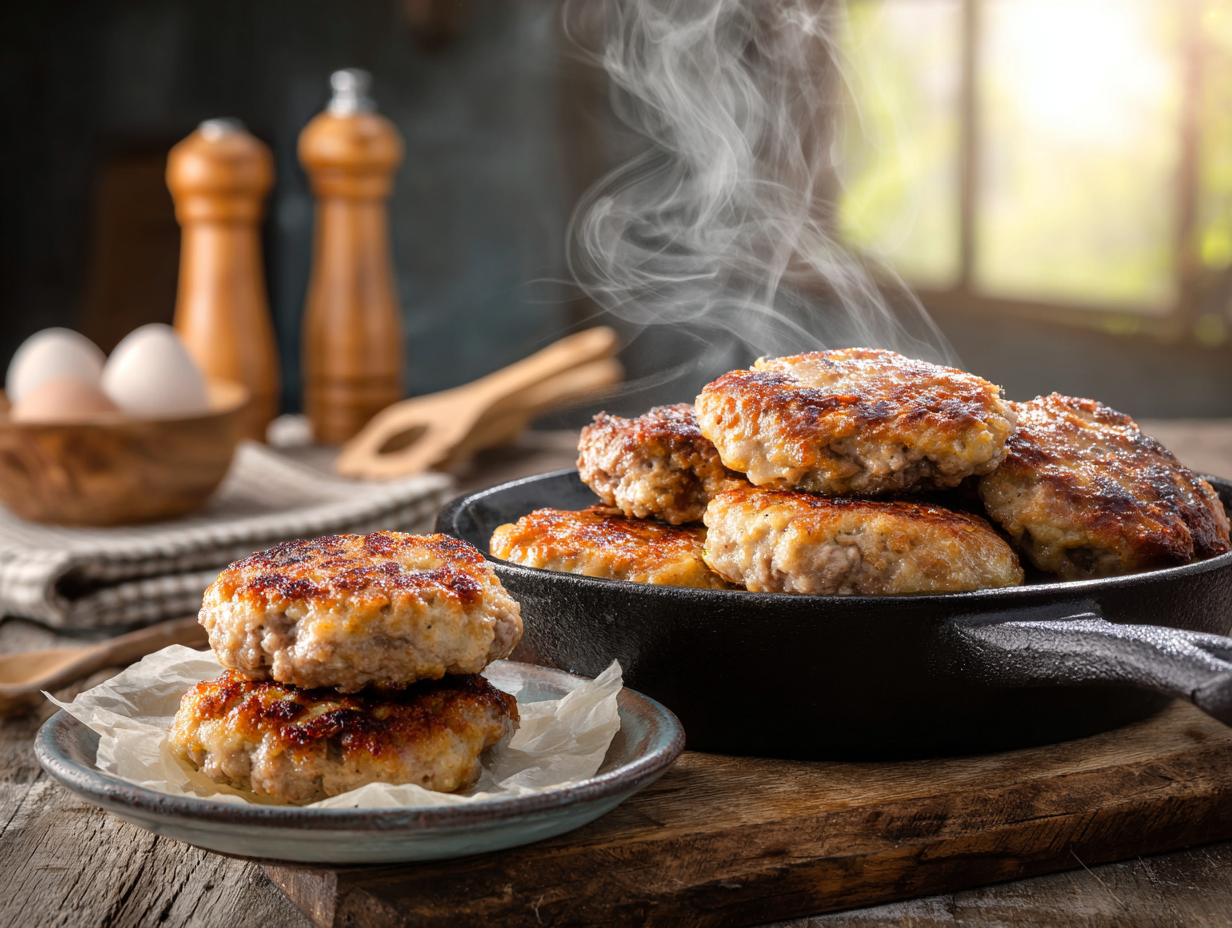
This is a straightforward ground pork breakfast sausage seasoned with sage, thyme, black pepper, and optional maple syrup — no casings, no special equipment. The honest reason to make it yourself is ingredient control: you know exactly what’s in it, and it’s genuinely cheaper than buying pre-seasoned patties, especially if you cook in bulk.
Why this recipe works
Two things matter here. First, the fat content in ground pork does the heavy lifting — it keeps the patties juicy and carries the seasoning evenly through the meat, so don’t swap in extra-lean pork thinking it’s a healthier move; you’ll get dry, crumbly patties instead. Second, mixing the spices into the raw meat and letting it rest before cooking (even 15 minutes) gives the salt time to draw moisture slightly inward and lets the sage and thyme bloom into the fat rather than sitting on the surface. That short rest is the difference between sausage that tastes seasoned all the way through and sausage that tastes like plain pork with herbs on top.
Make-ahead notes
Shaped raw patties keep in the fridge for up to 2 days, stacked between squares of parchment paper in a sealed container. For longer storage, freeze them on a parchment-lined tray until solid — about 2 hours — then transfer to a zip-lock bag; they’ll hold well for up to 3 months. Cook from frozen in a covered skillet over medium-low heat, adding roughly 4–5 extra minutes to the cook time and confirming an internal temperature of 160°F (71°C) before serving. Cooked patties reheat well too: 60–90 seconds in a microwave covered with a damp paper towel, or a quick 2-minute flip in a dry skillet keeps them from drying out. A batch of a dozen patties takes about 20 minutes of hands-on work and covers breakfasts for the whole week.
Mistakes to avoid
- Overworking the meat: Mix just until the spices are evenly distributed. Squeezing and kneading the pork past that point tightens the proteins and makes the patties dense and tough — treat it more like folding than mixing.
- Skipping the thermometer: Ground pork must reach 160°F (71°C) at the center. Color alone isn’t reliable — a patty can look fully browned outside while still underdone in the middle, especially if it’s thick.
- Making the patties too thick for weekday reheating: Patties thicker than ¾ inch take longer to reheat evenly and tend to dry out on the outside before the center warms through. Keep them around ½ inch for the best results when cooking from frozen or reheating later — save the thicker ones for when you’re cooking fresh to order.
- Using wet hands to shape patties: Unlike burgers, wetting your hands here can dilute the seasoning on the surface and cause sticking to parchment. Lightly oiled hands work better and give you a cleaner release.
- Crowding the skillet: Too many patties at once drops the pan temperature and the sausage steams instead of sears. Cook in batches with a little space between each patty — a proper sear also tells you when it’s time to flip without tearing.
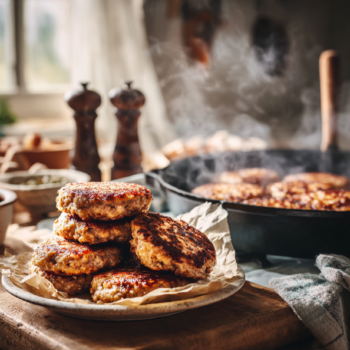
Easy Gluten-Free Breakfast Sausage Recipe

Ingredients
 2 pounds ground pork (minced pork)
 2 teaspoons sage
 2 teaspoons salt
 1 teaspoon ground black pepper
 ¼ teaspoon thyme
 ¼ teaspoon marjoram
 ¼ teaspoon cayenne pepper
Instructions
- Place ground pork in a large bowl.
- In a small bowl, combine the spices, salt, and sucanat. If using, mix until combined.
- Pour spice mixture over ground pork and mix in a kneading motion until the spices are thoroughly incorporated. This may take a couple of minutes.
- Once the spices and meat are combined, you have sausage. You can make sausage balls, patties or chubs. I chose to roll the meat into a log and wrap it in plastic wrap. I placed the sausage in the freezer for 45 minutes (for easy slicing), then took it back out and cut it into one-ounce patties. I flash froze the patties on a cookie sheet and then packaged them up into family-sized portions.
- Fry the patties up until golden brown on each side.
Nutrition
FAQ
Can I use ground turkey instead of ground pork?
Yes, but the texture and flavor will be noticeably leaner and drier. Ground turkey needs to reach 165°F (74°C) internally, and because it has less fat, adding a tablespoon of olive oil or a small amount of finely grated cold butter to the mix helps prevent the patties from drying out.
How do I know the sausage is cooked through without cutting every patty?
Use an instant-read thermometer inserted into the side of the patty to the center — you’re looking for 160°F (71°C) for pork. This takes about 3 seconds and removes all guesswork, especially useful when cooking a large batch where patty thickness may vary slightly.
Can I mix the seasoned meat the night before and shape it in the morning?
Yes, and it actually improves the flavor. Cover the seasoned ground pork tightly and refrigerate overnight; the spices have more time to work into the fat. Shape and cook straight from the fridge the next morning.
What’s the best way to freeze a large batch without the patties sticking together?
Freeze them individually on a parchment-lined baking sheet first until firm, then stack them with parchment squares between each patty in a freezer bag. Skipping the initial individual freeze almost always results in a solid frozen block that’s impossible to separate without thawing the whole batch.
Can I crumble and brown this sausage instead of making patties?
Absolutely — crumbled sausage is actually faster to cook and easier to portion for meal prep. Break the raw meat into a hot skillet and cook over medium heat, stirring occasionally, until no pink remains and the internal temperature reaches 160°F (71°C). Crumbled cooked sausage stores and reheats even more efficiently than patties.
Try these next
- Sweet Savory Scotch Eggs
- Swedish Dill Pork Sausage
- Cumberland Sausage Mince Pie
- Spiced Pork Mince Flatbreads