When it comes to Thai cuisine, few dishes have captured hearts around the world quite like Pad Thai. It’s the gateway dish for many people discovering Thai food for the first time—a beautifully balanced stir-fry of rice noodles, protein, egg, aromatics, and that irresistible sauce that hits sweet, salty, sour, and spicy all at once. For me, Chicken Pad Thai isn’t just a meal. It’s the dish that made me fall in love with Thai cooking in the first place.
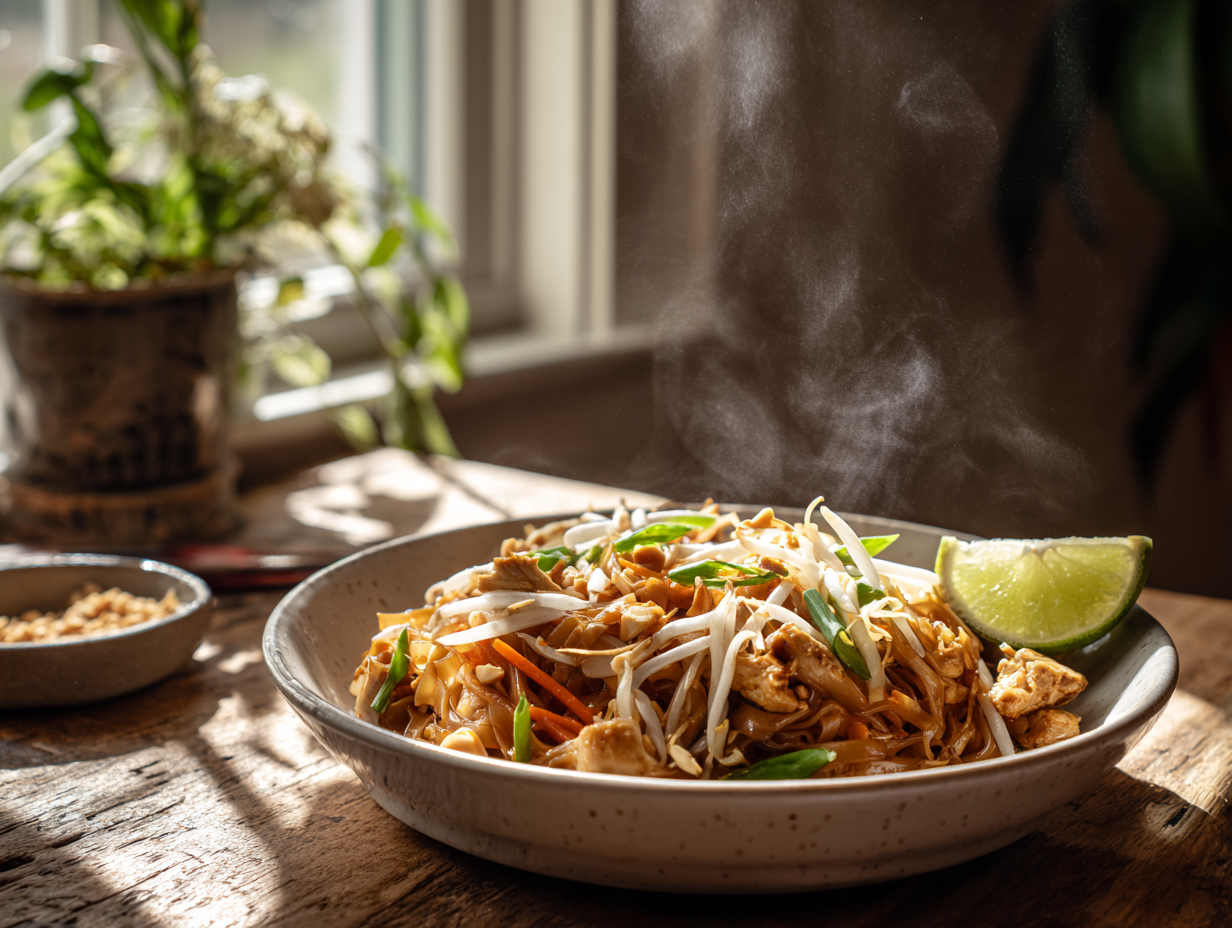
My obsession started the way it does for many people: sitting in a small Thai restaurant, completely mesmerized by the aromas drifting from the kitchen. The smell of garlic sizzling in oil, the faint sweetness of tamarind, the punch of fish sauce—it all builds anticipation before the plate even hits the table. And when it finally does arrive, tangled noodles glistening with sauce, tender chicken pieces nestled throughout, crushed peanuts sprinkled over the top, lime wedges on the side—it feels like comfort and excitement all at once.
Over time, I realized something important: not all Pad Thai is created equal.
I’ve had incredible versions that were perfectly balanced—savory and bright with just enough heat to make your lips tingle. And I’ve had disappointing ones that were overly sweet, heavy, or bland, missing that signature tangy depth. Some were drowning in sauce. Others were dry and sticky. A few times, I walked away thinking, “I could do better than that.”
That’s when I started teaching myself how to make Chicken Pad Thai at home.
Now, I want to say this clearly: I deeply respect authentic Thai cuisine. I’ve been lucky enough to travel to Thailand, where Pad Thai is often cooked fresh on bustling street corners in blazing hot woks. Watching a street vendor prepare Pad Thai is like witnessing choreography. Quick movements, precise timing, ingredients added in a flash. The heat is intense, the pace is fast, and the flavors are bold yet balanced.
Authentic Pad Thai leans heavily on tamarind for its signature tanginess. The sweetness is present but restrained. The saltiness comes from fish sauce, and the heat from Thai chilies. It’s not meant to be a sugary noodle bomb—it’s a harmony of contrasts.
When I set out to create my own Chicken Pad Thai recipe, I wasn’t trying to replicate a specific street cart in Bangkok. I was trying to capture the spirit of Pad Thai while working with what I could easily find at my local grocery store. That meant adapting slightly—but never sacrificing balance.
That’s where this 30-minute easy Chicken Pad Thai recipe was born.
One of the reasons I love this dish so much—especially for home cooks—is that it feels impressive but is surprisingly practical. Once your ingredients are prepped, you’re only minutes away from a complete meal. It’s a one-pan wonder with layers of flavor that taste like they took far longer to develop.
Chicken is my protein of choice here. While traditional Pad Thai often includes shrimp or a mix of shrimp and tofu, chicken brings heartiness and broad appeal. It’s tender, satisfying, and absorbs the sauce beautifully. Thinly sliced chicken cooks quickly and stays juicy when tossed at high heat, making it perfect for a fast stir-fry.
Of course, the noodles are the star. Properly soaked rice noodles have that signature chew—soft but not mushy, with just enough structure to stand up to the sauce. Getting the texture right is one of the most important parts of making great Pad Thai at home. Overcook them and they become sticky and clumpy. Undercook them and they stay tough. There’s a sweet spot, and once you hit it, you’ll never forget it.
Then comes the sauce—the soul of the dish.
Pad Thai sauce is where the magic happens. Traditionally, tamarind paste provides a deep, fruity tang. Fish sauce adds salt and umami. Palm sugar contributes caramel-like sweetness. Chili gives heat. When combined, these ingredients create that iconic flavor that makes Pad Thai so addictive.
In my home-kitchen version, I focus on achieving that same balance with accessible ingredients. I adjust the sweetness carefully (because too sweet is a dealbreaker for me). I make sure there’s enough acidity to wake up your taste buds. And I always leave room for customizing the heat level—because not everyone wants to sweat through dinner.
Another key element is texture. Pad Thai isn’t just about flavor—it’s about contrast. The softness of the noodles meets the crunch of fresh bean sprouts. Crushed peanuts add nutty richness and a satisfying bite. Fresh green onions brighten every forkful. A squeeze of lime at the very end lifts the entire dish.
And yes—it can absolutely be gluten-free.
That’s another reason I adore making Pad Thai at home. By choosing gluten-free rice noodles and ensuring your sauces (especially fish sauce or soy alternatives) are gluten-free, you can easily make this dish friendly for those avoiding gluten. It’s naturally adaptable without sacrificing authenticity or flavor.
What I’ve also learned over the years is that great Pad Thai is about confidence and speed. Once everything is prepped—sauce mixed, chicken sliced, noodles ready—cooking happens fast. You need to trust the heat of the pan and move decisively. Stir-frying is not a slow process. It’s energetic. It’s interactive. It’s part of the fun.
When I say this is a “white girl style” version, I say it with a smile and honesty. It’s respectful of tradition but tailored to my kitchen, my preferences, and my audience. It may not be identical to what you’d find from a Bangkok street vendor—but it delivers those bold, balanced flavors with ingredients most home cooks can find and use confidently.
The beauty of learning to make Chicken Pad Thai at home is empowerment. You’re no longer at the mercy of a restaurant that might make it too sweet or skimp on the spice. You control the sauce. You control the protein. You control the heat. Want extra chili? Go for it. More lime? Squeeze away. Skip the tofu? That’s your call.
Cooking is deeply personal. And this dish reflects years of tasting, tweaking, and refining until it became something I crave and feel proud to serve.
Every time I make this 30-minute Chicken Pad Thai, it takes me back—to that first restaurant experience, to the street vendors in Thailand, to the trial-and-error evenings in my own kitchen. It’s comforting yet vibrant. Familiar yet exciting. Simple but layered.
If you’ve ever been disappointed by takeout Pad Thai, I hope this recipe—and the story behind it—encourages you to try making it yourself. Because once you find that perfect balance of sweet, sour, salty, and spicy in your own pan, there’s no going back.
Pad Thai isn’t just a dish. It’s an experience. And this version brings that experience home.
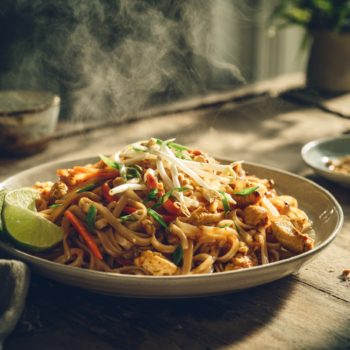
30-Minute Easy Chicken Pad Thai Recipe

Ingredients
TO MAKE THE SAUCE:
 2 tablespoons brown sugar
 2 tablespoons lime juice - (about one whole fresh lime)
- 3 tablespoons tamarind sauce - (wheat-free soy)
 2 tablespoons sweet chili sauce (sweet chilli sauce in British English)
 ⅛ teaspoon sriracha sauce - (you can add more later for more heat, if you like)
TO MAKE THE PAD THAI:
 2 pieces chicken breast - ground
 1 large egg - free-range
 8 ounces vermicelli rice noodles - (half of a store-bought pack)
 ½ cup bean sprouts
 ½ cup carrots - shredded
 2 cloves garlic - minced
 ¼ cup cilantro (coriander) - finely chopped
 ¼ cup peanuts - chopped
 2 tablespoons olive oil
- 1 medium lime - wedges
Instructions
TO MAKE THE SAUCE:
- Combine all the sauce ingredients. Stir well and set aside.
TO MAKE THE PAD THAI:
- In your saucepan (or wok if you want to be authentic, put one tablespoon of olive oil in and heat, then stir in your egg and scramble. Once your egg is scrambled, remove from the pan and save for later. Then, add another tablespoon of oil and fry your chicken with the minced garlic, salt and pepper. The chicken will cook fairly quickly.
- In a separate large sauce pot, bring 3 cups of water to a boil. Once boiling add your Pad Thai noodles. Since I have seen varying instructions on the rice noodle packages, I suggest you follow their instructions. I typically just boil my noodles until they’re tender, but other recipes suggest steeping the noodles. It really doesn’t matter as long as they’re not chewy.
- Back to the pan with the chicken- add your egg back, then add your fully cooked noodles and add your sauce slowly. You don’t want your noodles to be too wet or too dry, so slowly add the sauce so you can gauge how much you really need. I personally would rather my noodles be too wet, because if they’re dry they get really gummy. Then once your sauce is incorporated, add your bean sprouts and carrots.
- Fully incorporate all ingredients and then serve. I like to add some more fresh bean sprouts, cilantro and peanuts to my Pad Thai. I also serve it with a lime in case the spices are too hot. You can serve with chopsticks, but Thai people eat with forks and spoons like us!