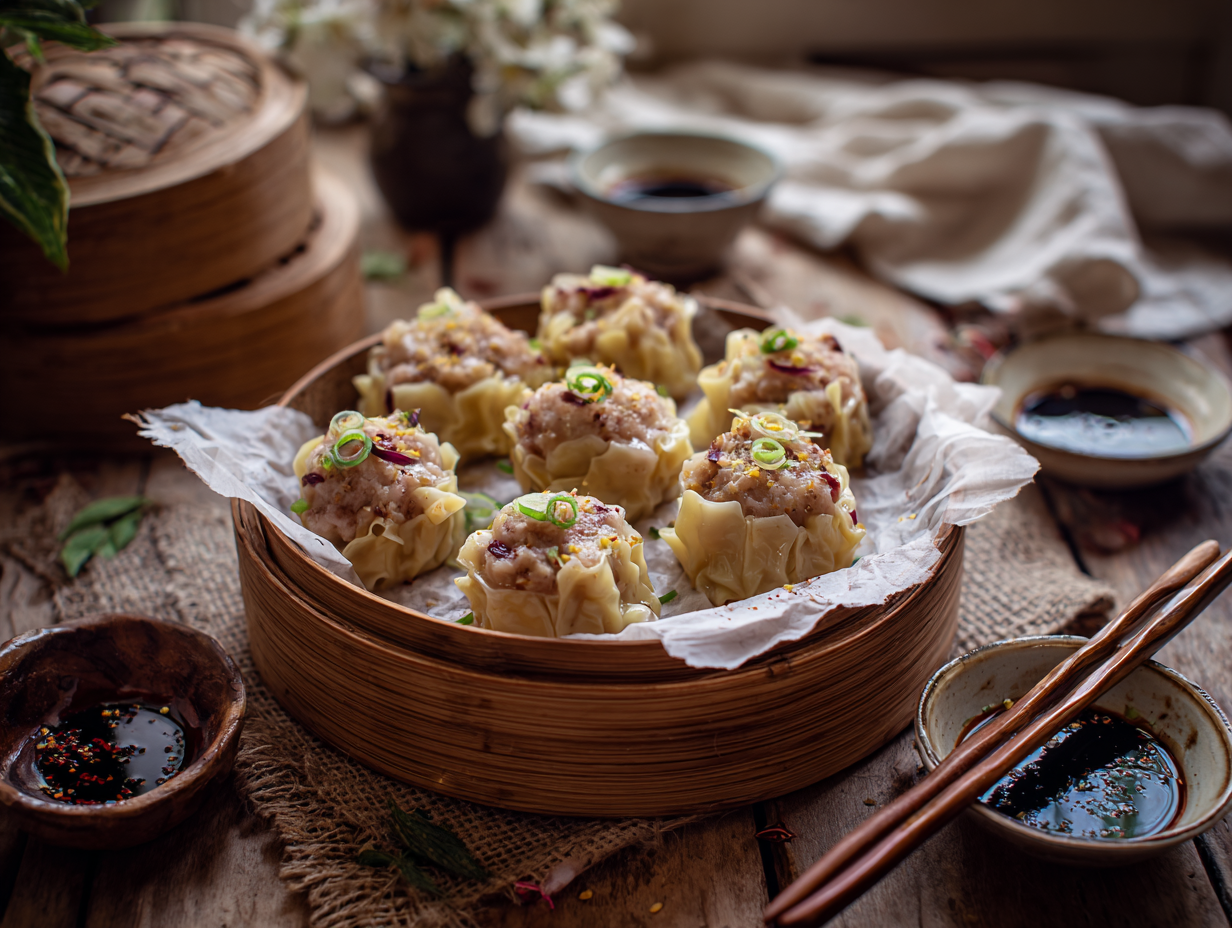
Pork siomai are open-topped steamed dumplings filled with ground pork, shrimp, and water chestnuts — a Filipino-Chinese staple that works equally well as a weeknight dinner or a weekend batch-cook project. The filling comes together fast, the wrapping is forgiving, and a single batch makes enough to feed a full table with leftovers to spare.
The technique that matters
Two things determine whether your siomai turns out juicy or dry. First, mix the filling until it becomes slightly sticky — this means the proteins have bound together, which keeps the dumpling cohesive and moist during steaming rather than crumbling apart. Under-mixing is the most common home-cook mistake. Second, keep your steam consistent: once the water is boiling and the lid is on, don’t lift it repeatedly. Every time you check, you drop the temperature and add condensation that drips onto the wrappers and makes them gummy. Set a timer and leave it alone. The water chestnuts handle the rest — they hold moisture inside the filling so the pork stays tender even if your steamer runs a little hot.
Troubleshooting
- Wrappers tearing during shaping: The wrapper is too dry. Keep unused wrappers covered with a damp paper towel while you work. If they’ve already dried out, lightly brush the edges with water before folding.
- Filling slides out of the wrapper: You’ve overfilled. A heaping teaspoon is the practical limit for standard wonton wrappers. More filling than that and the wrapper can’t grip it.
- Dumplings sticking to the steamer: Line each tier with perforated parchment or lightly oiled cabbage leaves before placing the siomai. Bare metal or bamboo will grab the wrapper every time.
- Filling tastes flat after steaming: Season the raw mixture and then fry a small spoonful in a pan before you wrap anything. Steaming mutes salt and aromatics slightly, so you may need to adjust before committing to the whole batch.
- Dumplings are dense and rubbery: The filling was overworked after the cornstarch went in. Add the cornstarch last and mix just until combined — overworking it tightens the texture noticeably.
Substitutions that actually work
- Water chestnuts: Fresh are best, but canned work fine — just drain and pat them dry thoroughly or the filling turns wet. In a pinch, finely diced jicama gives a similar crunch and neutral sweetness.
- Shrimp: If you’re skipping shrimp due to allergies or availability, add an extra 50g of ground pork and a small splash of fish sauce to recover some of the umami depth.
- Wonton wrappers: Round gyoza wrappers are a direct swap and actually easier to shape for beginners. Square wonton wrappers work too — just trim the corners if you want a tidier look. Skip the garnish of fish roe or peas on top; not worth the extra dish.
- Sesame oil: Don’t substitute with regular vegetable oil — the flavor is structural here, not decorative. A small amount goes a long way, so the bottle lasts.
Keeping and reheating
Cooked siomai keep in an airtight container in the fridge for up to 3 days. To reheat, steam them again for 4–5 minutes until heated through — ground pork must reach 160°F (71°C) internally, so use a thermometer if you’re unsure. Microwaving works in a pinch: place them on a damp paper towel, cover loosely, and heat in 30-second bursts. For longer storage, freeze uncooked siomai on a parchment-lined tray until solid, then transfer to a freezer bag; they keep well for up to 2 months. Cook straight from frozen — just add 3–4 extra minutes to the steaming time and verify the internal temperature before serving.
Juicy Pork Siomai with Water Chestnuts

Ingredients
 1 pound ground pork
 ½ cup shrimp - chopped
- ¼ cup water chestnuts - chopped
 ¼ cup carrots - chopped
 ¼ cup green onions - chopped
 2 cloves garlic - minced
 1 medium egg
 1 tablespoon soy sauce
 1 tablespoon oyster sauce
 1 teaspoon sesame oil
 ½ teaspoon ground black pepper
- 24 small siomai wrappers
Instructions
- In a mixing bowl, combine the ground pork, chopped shrimps, water chestnuts, carrots, green onions, minced garlic, egg, soy sauce, oyster sauce, sesame oil, and black pepper. Mix well.
- Place about 1 tablespoon of the pork mixture in the center of a siomai wrapper.
- Gather the edges of the wrapper around the filling and pleat the edges, exposing the top of the filling.
- Repeat the process until all of the pork mixtures are used up.
- Place the siomai on a steamer basket lined with parchment paper.
- Steam the siomai for 15 to 20 minutes or until cooked through.
- Serve hot with soy sauce, calamansi, and chili oil for dipping.
Nutrition
FAQ
Can I make the filling ahead of time?
Yes — the filling can be mixed and refrigerated up to 24 hours before wrapping. Keeping it cold actually makes it easier to handle and helps the flavors develop, so making it the night before is a practical move when you’re feeding a crowd.
How many siomai does one batch make, and is it enough for a family meal?
A standard batch yields roughly 30–35 pieces, which comfortably feeds 4–5 people when served with rice. If you’re feeding hungry teenagers or want leftovers, double the filling — the wrapping takes more time but the steaming time stays the same.
Do I need a bamboo steamer, or will a regular pot with a rack work?
Any steamer setup works — a metal steamer insert, a heatproof plate on a rack inside a covered wok, or a dedicated electric steamer all produce good results. The one practical difference is that bamboo absorbs some condensation, so metal lids may drip slightly onto the dumplings; tilt the lid just a crack or wrap it in a clean kitchen towel to catch the drips.
More mince recipes to try
- Crispy Pork Dumpling Delight
- Authentic Szechuan Dan Dan
- Japanese Pork Lettuce Cups
- Savory Pork Noodle Stir-Fry