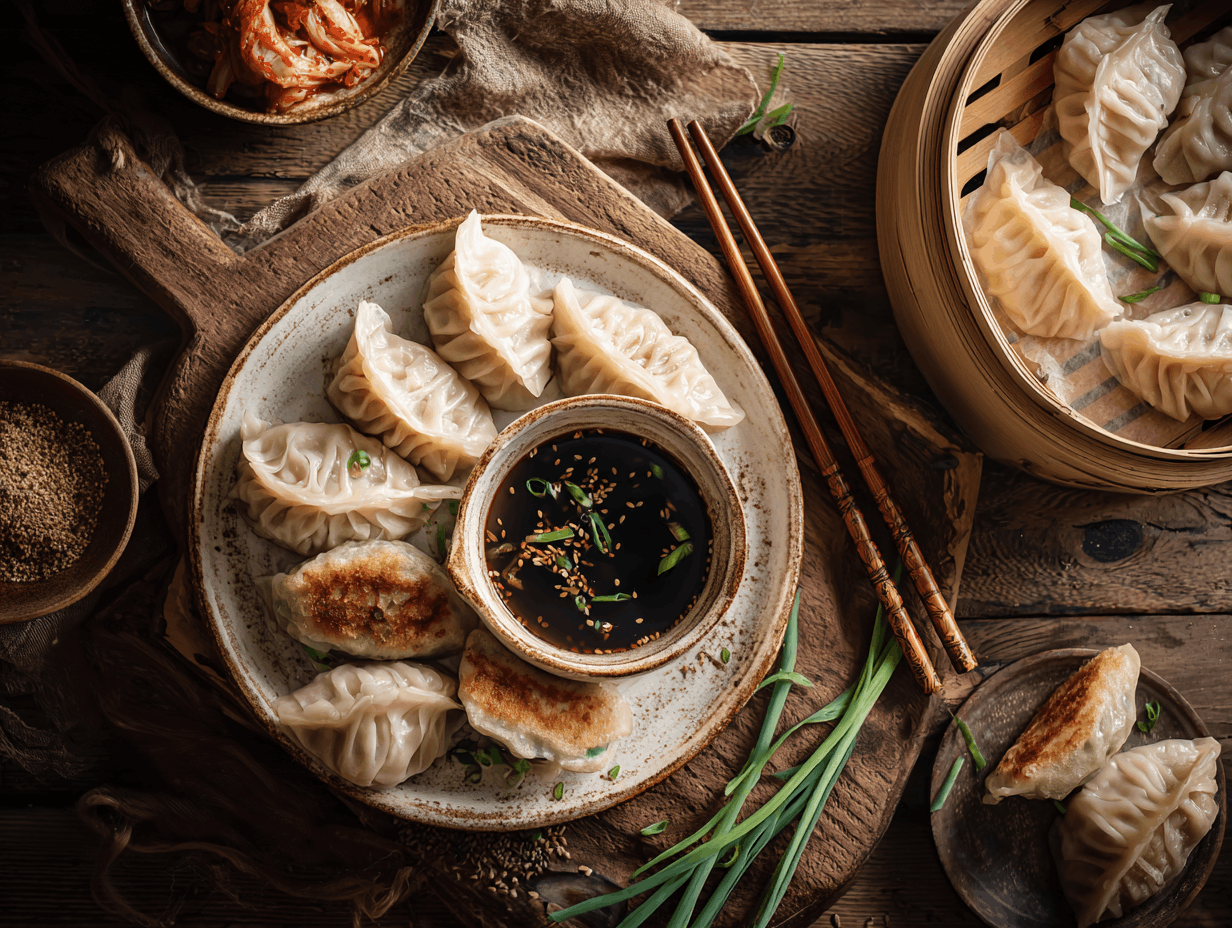
Mandu are Korean dumplings filled with ground pork or beef, tofu, napa cabbage, and garlic chives, then steamed, boiled, or pan-fried depending on what you want for dinner. The filling comes together in one bowl, and a single batch gives you enough to cook some now and freeze the rest. That alone is reason enough to make them.
What makes this version work
Two things actually matter here. First, squeezing the moisture out of the napa cabbage and tofu before mixing the filling — if you skip this, the wrappers get soggy and tear during cooking. Press the cabbage in a clean kitchen towel and crumble the tofu onto paper towels; give both a firm squeeze. Second, keep the filling cold when you’re wrapping. A warm filling is slippery and harder to seal, and it softens the wrapper edges so they won’t stick properly. Mix everything, then refrigerate the filling for 20 minutes before you start folding. Both steps cost almost no extra effort and make a real difference in the finished texture.
Common problems and fixes
- Dumplings burst open while cooking: The seal failed, usually because the wrapper edge had filling or grease on it. Wipe the edge clean with a fingertip before pressing, and make sure you’re pressing firmly all the way to the corners.
- Pan-fried mandu stick to the pan and tear: The oil wasn’t hot enough before you added them. Heat the oil until it shimmers, then add the dumplings. Don’t move them for the first 2 minutes — let the crust form.
- Filling is dense and rubbery after cooking: The ground meat was overworked or packed too tightly. Mix just until combined and spoon the filling loosely into the wrapper rather than pressing it in.
- Wrappers turn gummy and thick when boiled: The water wasn’t at a full rolling boil when the dumplings went in. A weak simmer causes the wrappers to absorb water instead of cooking quickly through it.
- Filling tastes flat: Tofu dilutes seasoning. Taste the raw filling before wrapping — it should taste slightly saltier than you’d expect, because cooking mellows it. Add a small splash more soy sauce or a pinch of salt if needed.
Make-ahead notes
Assembled, uncooked mandu freeze well for up to 2 months — arrange them in a single layer on a lined baking sheet, freeze until solid (about 1 hour), then transfer to a zip-lock bag. Cook straight from frozen; add 2–3 extra minutes to whatever method you’re using. If you’d rather refrigerate them, keep uncooked mandu on a lightly floured plate covered with plastic wrap and cook within 24 hours, otherwise the wrappers start to absorb moisture from the filling and get sticky. Skip the garnish — not worth the extra dish. Cooked leftovers reheat best in a dry non-stick pan over medium heat for 3–4 minutes rather than the microwave, which makes the wrappers rubbery.
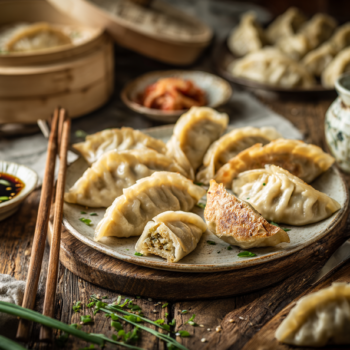
Easy Mandu (Korean Dumplings)

Ingredients
- 1 package dumpling wrappers
 1 pound ground pork (minced pork) - or beef
 1 cup cabbage - chopped
 1 cup green onions (scallions or green shallots) - chopped
 1 cup red onion - chopped
 1 cup chives - (garlic) chopped
 2 tablespoons soy sauce
 1 tablespoon sesame oil
 1 tablespoon vegetable oil
 1 teaspoon salt
 ½ teaspoon ground black pepper
 1 medium egg
Instructions
- In a large bowl, combine the ground meat, chopped cabbage, scallions, onion, garlic chives, soy sauce, sesame oil, vegetable oil, salt, black pepper, and egg. Mix well until everything is evenly distributed.
- Take a dumpling wrapper and place a small spoonful of filling in the center. Dampen the edges of the mandu wrapper using water, and then proceed to fold it in half, pressing the edges together to seal the dumpling. Repeat with the remaining wrappers and filling.
- To cook the dumplings, bring a large pot of water to a boil. Add the mandu and boil for 6-8 minutes, or until they float to the top and the filling is cooked through.
- Serve the mandu with your favorite dipping sauce, such as soy sauce, vinegar, or chili sauce. Enjoy!
Nutrition
FAQ
Can I use store-bought dumpling wrappers instead of making my own?
Yes, and for most home cooks it’s the right call. Look for round gyoza wrappers or round dumpling wrappers in the refrigerated section of an Asian grocery — they’re thinner and more pliable than the square wonton wrappers, which are a different product and don’t seal as cleanly for this style.
What internal temperature should the filling reach, and how do I check it?
Ground pork and ground beef both need to hit 160°F (71°C) at the center of the dumpling. The easiest way to check is to sacrifice one dumpling from the batch and probe the middle with an instant-read thermometer — if it reads 160°F, the rest cooked the same way are done.
Can I make the filling with ground chicken or turkey instead?
You can, but ground poultry must reach 165°F (74°C) internally — never serve it pink or undercooked. Chicken and turkey are also leaner than pork, so the filling can turn dry; adding a teaspoon of neutral oil to the mix before wrapping helps.
Why do my frozen mandu fall apart when I cook them from frozen?
They likely weren’t frozen solid before being bagged, so they stuck together and tore when separated. Always freeze in a single layer first until each dumpling is firm, then bag them. When cooking from frozen, lower the heat slightly and give them more time rather than cranking the temperature to rush it.
Try these next
- Crispy Pork Dumpling Delight
- Spiced Lamb Pumpkin Dumplings
- Authentic Szechuan Dan Dan
- Japanese Pork Lettuce Cups