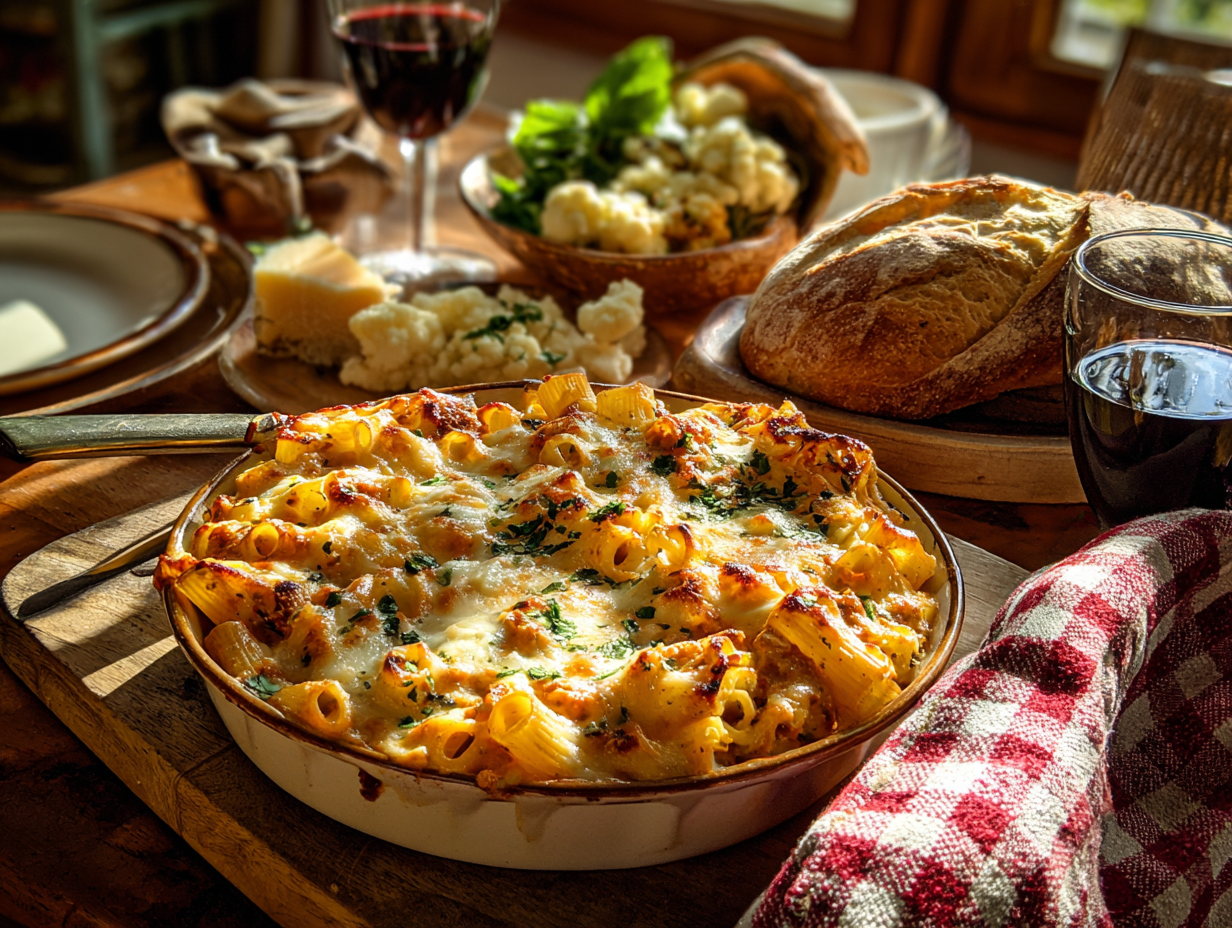
Aromatic Baked Rigatoni is a ground turkey pasta bake built around a red-wine tomato cream sauce, cauliflower, and a double layer of mozzarella and Parmesan. It comes together in one casserole dish and feeds a crowd without much hands-on time — which makes it one of the more practical things you can cook on a Sunday.
The technique that matters
The two things that actually determine whether this bake succeeds are browning the ground turkey properly and pulling the rigatoni early. Ground turkey releases a lot of moisture. If you crowd the pan or rush it, the meat steams instead of browns, and the finished sauce tastes flat. Cook the turkey in a wide skillet over medium-high heat, leave it alone for a minute or two before breaking it up, and get some real color on it before you add the onion and garlic. The second point: cook the rigatoni two minutes short of the package time. It finishes cooking in the oven inside the sauce. If it goes in fully cooked, it turns soft by the time the cheese is golden. Al dente going in means the right texture coming out.
What can go wrong
- Watery bake: Cauliflower holds water. If you add it raw and straight from washing, it steams in the oven and thins the sauce. Pat it completely dry before it goes in, or give it five minutes in a dry skillet first.
- Turkey not reaching safe temperature: Ground poultry must hit 165°F (74°C) internally. If the bake looks done on top but the center is still cool, cover with foil and return it to the oven in five-minute increments. Check with an instant-read thermometer in the middle of the dish, not the edge.
- Cheese topping burning before the center is hot: This happens when the dish goes into the oven cold from the fridge. Let it sit at room temperature for 20 minutes first, or tent with foil for the first half of baking and remove it for the last 10 minutes to brown the cheese.
- Sauce too thick after baking: The rigatoni absorbs liquid as it bakes. If the sauce looks tight before it goes in the oven, add a splash of pasta cooking water — about a quarter cup — to the assembled dish. Skip the garnish of extra fresh basil on the hot bake; it wilts immediately and is not worth the extra prep.
- Uneven layers: If the rigatoni sits in a thick clump, some pieces bake dry while others stay soft. Toss the pasta and sauce together thoroughly before transferring to the baking dish, then press it into an even layer.
Keeping and reheating
Covered tightly, leftover baked rigatoni keeps in the fridge for up to four days. Individual portions reheat well in the microwave in two-minute bursts with a tablespoon of water added to prevent drying. For larger portions, cover the dish with foil and reheat in a 350°F (175°C) oven for about 20 minutes until the center reaches 165°F (74°C) throughout. The bake also freezes well: portion it into airtight containers once fully cooled and freeze for up to three months. Thaw overnight in the fridge before reheating — going straight from frozen to oven works but takes significantly longer and risks drying out the edges before the center is hot.
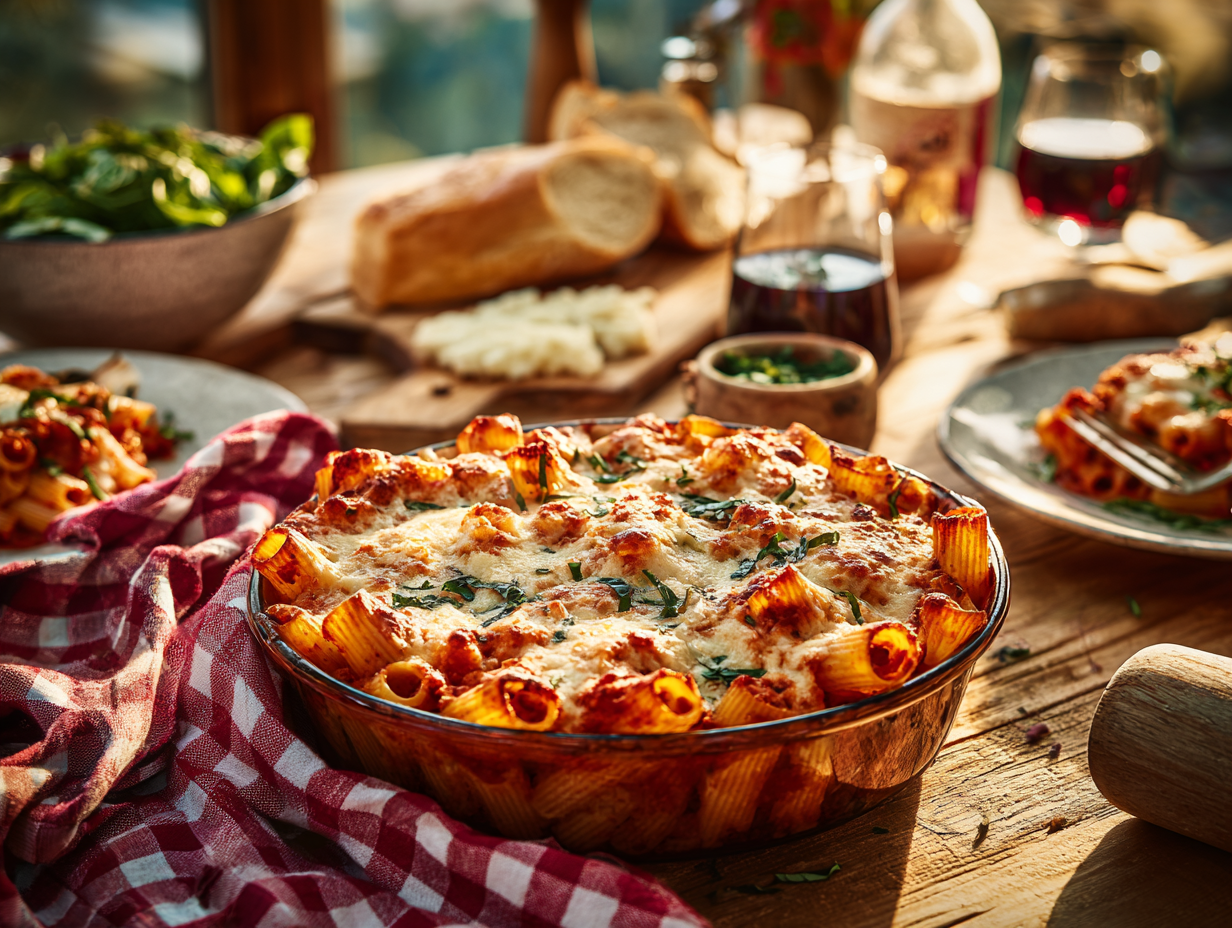
Aromatic Baked Rigatoni Recipe

Ingredients
- 1 pound rigatoni
 ½ pound ground turkey (minced turkey)
 ¼ cup basil - well-chopped
 1 cup cheddar cheese - grated
 2 cloves garlic - minced
 ¼ cup red wine
 1 cup mozzarella cheese - grated
 ½ cup Parmesan cheese - grated
 ¼ teaspoon ground black pepper
 ½ pound cauliflower
 5 medium tomatoes - ripe and chopped
 1 quart Marinara sauce (tomatoes, garlic, herbs, and onions - pasta sauce in southern hemisphere for Italian seafood dish)
 ¼ cup cooking cream
 2 tablespoons olive oil
 1 small red onion
 ½ teaspoon salt
Instructions
- Preheat oven to 375 degrees Fahrenheit. Prepare a large pot with enough water, oil, salt and boil. Grease a 9×15 pan with butter. Set aside.
- In a skillet, heat olive oil over medium heat. Add the onion and turkey; cook it until it turns brown. Then add the garlic and cook for about 2 minutes or so. Drain the excess fat, add the red wine into the pan, and let it boil until the boil becomes lesser. Add the marinara sauce, then simmer. Reduce heat to low and add the cream and basil. Heat the sauce, season with pepper and salt, then taste. Remove it from the heat.
- If you see that your water is already boiling, cook the rigatoni for about 10 minutes until al dente. Next, use a slotted spoon to drain the pasta, leave the water in the pot and transfer the pasta to a large bowl. Put the water back to a boil, then add the cauliflower. Cook it until tender for about a minute or so. After that, drain it add to the pasta.
- Add the tomatoes, tomato sauce, and mozzarella cheese to rigatoni pasta and cauliflower. Mix it well before transferring the mixture to a buttered dish. Lastly, top the pasta with parmesan cheese.
- Bake the rigatoni for about 30 minutes until the cheese is melted. Let the pasta cool for 10 minutes before serving.
Nutrition
Frequently asked questions
Can I assemble this the night before and bake it the next day?
Yes, and it actually works well this way. Assemble the dish completely, cover it tightly, and refrigerate overnight. Take it out 20 minutes before baking so it is not ice-cold going into the oven, which helps it heat evenly and prevents the cheese from over-browning before the center is done.
Can I substitute ground beef or pork for the ground turkey?
Ground beef or pork both work here. Keep in mind that beef and pork need to reach 160°F (71°C) internally, and both are fattier than turkey, so drain excess fat from the pan after browning before you add the onion and garlic — otherwise the sauce can turn greasy.
How do I know when the bake is actually done?
The cheese should be golden and bubbling at the edges, but the real check is temperature: the center of the dish should read 165°F (74°C) on an instant-read thermometer since this contains ground poultry. If the top is browning too fast, cover loosely with foil and continue baking until the temperature is reached.
What to cook next
- Creamy Beef Spinach Pasta
- Beef Ricotta Lasagna Rolls
- Ultimate Cheesy Beef Bake
- Hearty Beef Cauliflower Bake