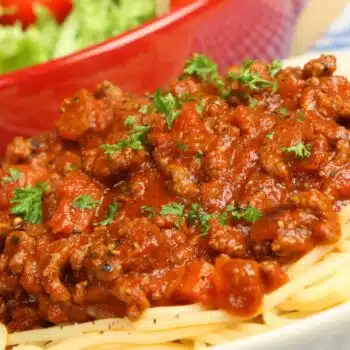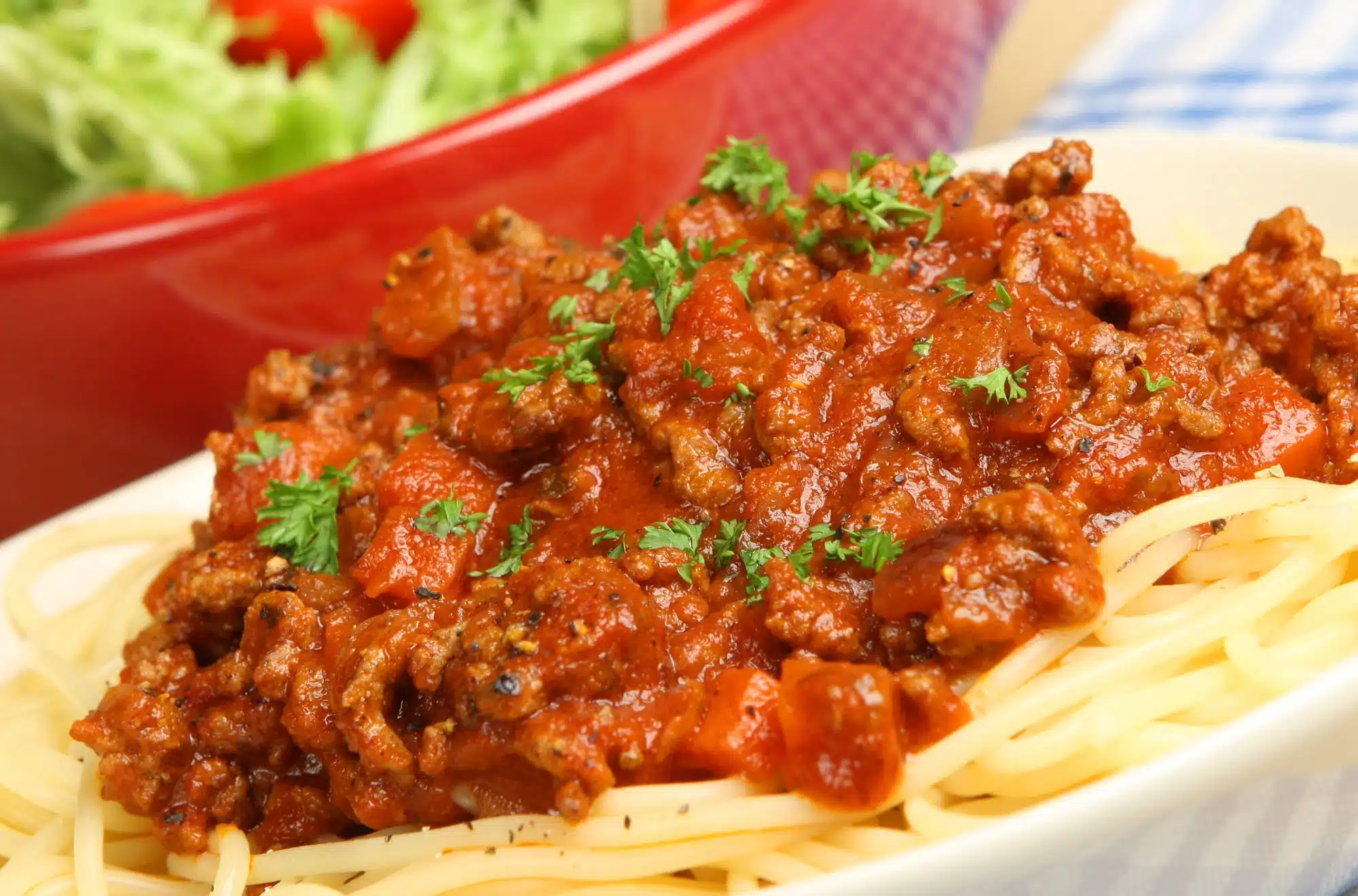
This is a ground beef pasta sauce built on jarred tomato base, stretched with onion, carrot, zucchini, garlic, and fresh basil, then finished with Parmesan. It comes together in one pan alongside a pot of spaghetti, and it makes enough to feed a crowd or stock the fridge for several days. That second point is the real reason to make it.
Substitutions that actually work
- Ground beef: Ground turkey works well — cook it to 165°F (74°C) and expect a slightly leaner, milder sauce. Ground pork adds richness if you have it.
- Zucchini: Yellow squash or finely diced mushrooms behave the same way — they cook down and disappear into the sauce.
- Carrot: Parsnip works as a direct swap. Both add background sweetness without announcing themselves.
- Jarred sauce: A 28 oz can of crushed tomatoes plus a teaspoon of sugar gets you to the same place. Simmer five minutes longer to thicken.
- Fresh basil: Stir in a teaspoon of dried basil with the garlic instead — skip the fresh garnish on top, it’s not worth the extra dish.
- Spaghetti: Any long or medium pasta holds this sauce. Penne and rigatoni actually trap more sauce per bite.
The technique that matters
Brown the ground beef properly before anything else goes in the pan. That means a hot pan, meat spread in a single layer, and no stirring for the first two minutes. You want actual browning on the bottom — not grey steaming meat. That crust is where the flavor is. Once the beef hits 160°F (71°C) throughout, drain the excess fat before adding the vegetables. Skipping the drain leaves the sauce greasy and makes it harder for the vegetables to soften evenly. Everything after that — sautéing the aromatics, adding the sauce, simmering — is straightforward.
Troubleshooting
- Sauce is watery after simmering: Zucchini releases moisture as it cooks. If the sauce looks thin at the end, remove the lid and simmer uncovered for five more minutes, stirring occasionally.
- Sauce tastes flat or acidic: A pinch of sugar (half a teaspoon) balances tomato acidity. Add it after the jarred sauce goes in, taste, and adjust before serving.
- Vegetables are still crunchy: Carrot takes longer than zucchini or onion. Dice it smaller than the other vegetables — around a quarter inch — so everything finishes at the same time.
- Pasta clumps while the sauce finishes: Toss drained spaghetti with a small splash of olive oil immediately after draining. It holds for ten minutes without sticking.
- Parmesan clumps instead of melting: Pre-shredded bagged cheese contains anti-caking starch. Grate a block fresh and add it off direct heat, stirring as you go.
Keeping and reheating
The sauce keeps in an airtight container in the fridge for up to four days and freezes well for up to three months — freeze it without the pasta for best results. Store cooked spaghetti separately; it keeps for three days and reheats faster than the sauce. To reheat the sauce, warm it in a saucepan over medium-low heat with a splash of water to loosen it, stirring until it reaches a full simmer. Microwave reheating works fine for single portions — cover loosely and stir halfway through. Leftover sauce also works spooned over baked potatoes or used as a base for stuffed peppers later in the week.

The Best Spaghetti And Meat Sauce
Ingredients
½ cup white onion - chopped
½ cup carrots - diced
½ cup zucchini - diced
3 cloves garlic - crushed
1 tablespoon vegetable oil
1 pound ground turkey (minced turkey)
1 jar Neapolitan Sauce or Pasta sauce Southern Hemisphere (Tomato Sauce in North America) - (16 ounces)
1 teaspoon hot sauce
1 teaspoon Worcestershire sauce
½ teaspoon salt
½ teaspoon Italian seasoning
¼ teaspoon ground black pepper
1 pinch sugar - optional- 1 pound spaghetti noodles - dried (try whole wheat)
2 tablespoons basil - fresh chopped
3 tablespoons Parmesan cheese - grated
Instructions
- Cook spaghetti noodles according to the directions on the box.
- Heat a skillet or frying pan over medium-high heat. When hot, add in the cooking oil, onions, carrots, and zucchini saute for 2 minutes.
- Next, add in the ground meat and garlic and cook until the meat is no longer pink; drain (if you are using lean meat, skip the draining step).
- Add the spaghetti sauce, hot sauce, Worcestershire sauce, salt, Italian seasoning, and pepper. Bring to a slight boil, then reduce heat; cover and simmer for 10 minutes or until heated through. Taste. If the sauce is bitter, add a pinch of sugar. Serve the meat sauce over spaghetti, and top with basil and Parmesan cheese.
Nutrition
FAQ
Can I make the sauce ahead and refrigerate it overnight?
Yes — the sauce actually tastes better the next day. The flavors from the garlic, basil, and vegetables have time to meld overnight in the fridge. Reheat it gently on the stovetop and cook fresh pasta when you’re ready to serve.
Can I double the recipe for meal prep?
Doubling works without any changes to technique. Use a large, wide pan so the beef still browns rather than steams — crowding is the only thing that causes problems at double volume.
What’s the best way to freeze this sauce?
Let the sauce cool completely, then portion it into freezer bags or containers in meal-sized amounts. Lay bags flat to freeze — they stack efficiently and thaw faster than a solid block.
How do I know the ground beef is fully cooked?
Ground beef is safe at an internal temperature of 160°F (71°C). If you don’t have a thermometer, look for no remaining pink and juices that run clear — but a thermometer is the reliable check.
Can I use this sauce for something other than spaghetti?
It works directly as a lasagna filling, a topping for baked potatoes, or a stuffing for bell peppers. The vegetable content means it’s already thick enough for all three without modification.
Do I need to peel the zucchini before adding it?
No — leave the skin on. It softens completely during simmering and adds a small amount of color to the sauce. Peeling just creates extra prep with no practical benefit.
Try these next
- Creamy Beef Spinach Pasta
- Beef Ricotta Lasagna Rolls
- Spicy Beef Stuffed Peppers
- Spicy Calabrian Lamb Ragù