The Story Behind Indulgent Beef Bolognese
Few dishes capture the essence of Italian comfort cooking quite like Beef Bolognese. Rich, aromatic, and deeply satisfying, it’s the kind of meal that brings people to the table and keeps them there—lingering over second helpings and good conversation. While many think of Bolognese simply as “meat sauce,” its roots and character run far deeper than that humble description suggests.
Bolognese, or Ragù alla Bolognese, originates from Bologna, a historic city in northern Italy’s Emilia-Romagna region. This region is often regarded as the culinary heart of Italy. It’s the birthplace of Parmigiano Reggiano, traditional balsamic vinegar, mortadella, and some of the finest fresh pastas in the world. In Bologna, food is not merely sustenance—it is heritage, craft, and pride passed down through generations.
Traditionally, ragù alla Bolognese is a slow-simmered meat sauce made with a combination of beef (and sometimes pork), soffritto (a finely chopped mixture of onion, carrot, and celery), tomato, wine, and often a touch of milk or cream. It is gently cooked for hours to achieve its signature depth of flavor and velvety texture. Unlike tomato-heavy sauces found in southern Italy, authentic Bolognese is more meat-forward, with tomato playing a supporting role rather than dominating the dish.
The version shared in this recipe is inspired by those classic roots but tailored for modern home cooks who crave bold flavor without spending an entire afternoon at the stove. Designed to come together in just 30 minutes, this Indulgent Beef Bolognese delivers richness and balance while fitting seamlessly into busy schedules.
The Foundation: Soffritto
Every great Bolognese begins with soffritto—the aromatic backbone of the sauce. Onion, carrot, and celery are sautéed slowly in olive oil to release their natural sweetness and form a fragrant base. This trio is foundational in Italian cookery, building layers of flavor from the very first step.
Garlic and rosemary join the mix in this recipe, adding warmth and herbal complexity. Rosemary, in particular, pairs beautifully with beef, intensifying its savory notes without overpowering the dish. Taking a few extra moments to properly sauté these aromatics creates depth that carries through the entire sauce.
The Star Ingredient: Ground Beef
Ground beef is the heart of this Bolognese. When browned properly, it develops a savory crust through caramelization, unlocking robust umami flavors. For the most indulgent result, a moderately fatty ground beef works best, as the rendered fat enriches the sauce and enhances the mouthfeel.
If you prefer a lighter approach, lean beef or even ground turkey can be used while still maintaining the spirit of the dish. However, there’s something undeniably luxurious about the richness that traditional beef brings to the table.
The meat is complemented by tomato paste rather than large quantities of crushed tomatoes. Tomato paste offers concentration and depth, intensifying the overall flavor without turning the sauce overly acidic or watery. This approach keeps the texture thick and clingy—exactly what you want when pairing with wide ribbons of pasta.
The Perfect Pasta: Pappardelle
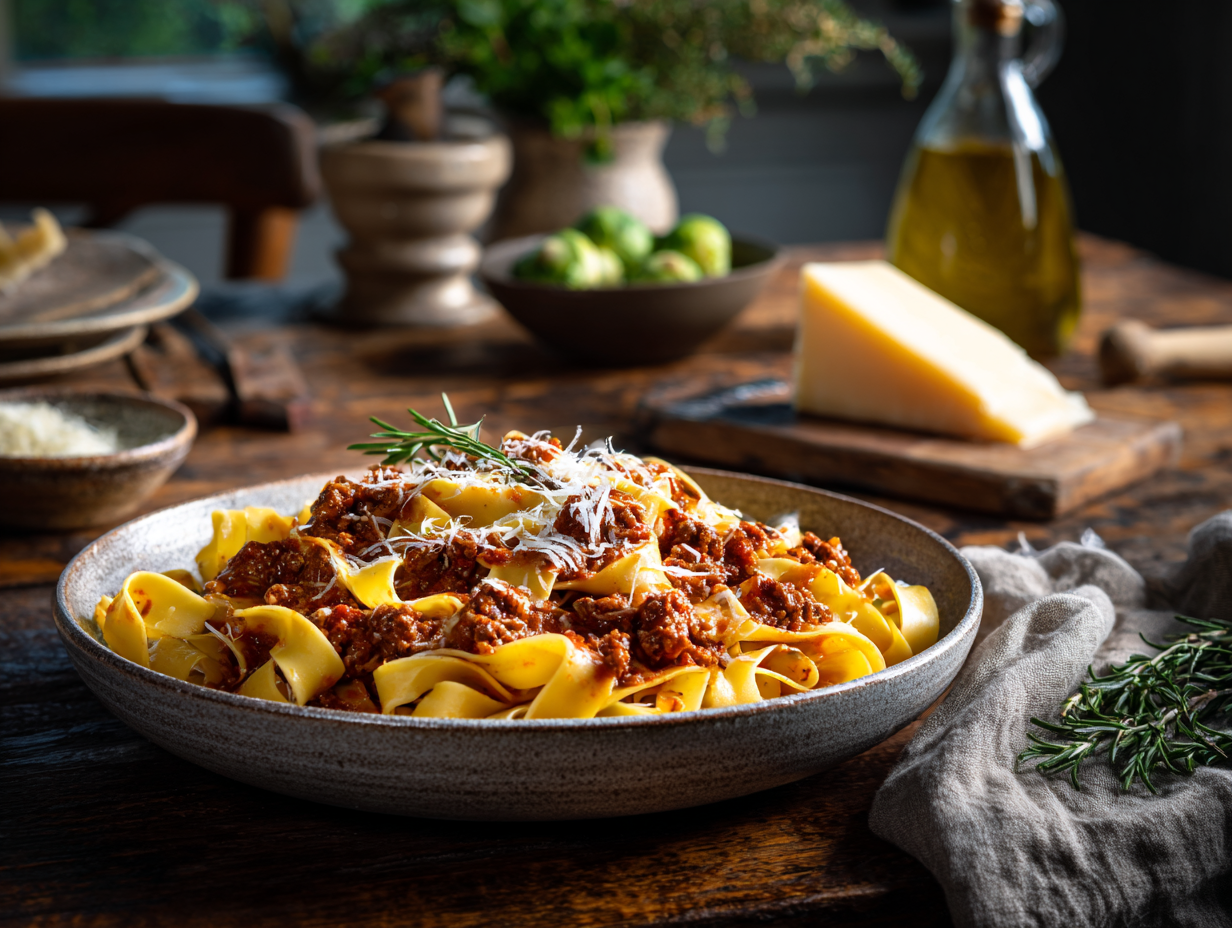
In Bologna, ragù is traditionally served with tagliatelle, a long, flat ribbon pasta. For this recipe, fresh pappardelle is used—a slightly wider, equally elegant pasta that holds up beautifully against a hearty meat sauce.
The width of pappardelle is not just aesthetic; it’s functional. Its broad surface area allows the sauce to cling to each strand, ensuring every bite carries a perfect balance of pasta and ragù. This is not a sauce meant for thin spaghetti. Bolognese deserves a pasta substantial enough to stand up to its richness.
Cooking the pasta to al dente is crucial. That slight firmness provides textural contrast and prevents the dish from feeling heavy. Reserving a splash of pasta water and stirring it into the sauce before serving is a simple but transformative step. The starch in the water helps emulsify the fat and liquid, creating a silky coating that ties everything together.
A Touch of Green: Brussels Sprouts
This recipe introduces brussels sprouts, adding a subtle bitterness and freshness that balance the richness of the beef. Thinly sliced or finely chopped, they blend into the pasta seamlessly while contributing both flavor and nutrition.
Brussels sprouts also reflect a modern sensibility—adding more vegetables to classic comfort foods for a well-rounded meal. Their slightly nutty taste complements the savory sauce without distracting from its core flavors.
The Finishing Touch: Parmesan
No Bolognese would be complete without a generous shower of freshly grated Parmesan cheese. Parmigiano Reggiano, with its salty, nutty sharpness, enhances the sauce’s depth and provides a finishing layer of umami.
In Italy, cheese is used thoughtfully—not to overwhelm, but to elevate. A light sprinkle is often all that’s needed to round out the dish and add just the right amount of richness.
Comfort Food with Cultural Roots
What makes Beef Bolognese so universally loved is its ability to feel both rustic and refined. It’s equally at home in a cozy family kitchen as it is on a candlelit dinner table. It bridges everyday comfort and special-occasion indulgence.
Though our version is streamlined for convenience, it still respects the soul of the original dish: layering aromatics, building flavor patiently, and pairing the sauce with an appropriate pasta. Cooking Bolognese is an act of care—it invites you to slow down, even if only for half an hour, and engage with the ingredients.
In many households, Bolognese is a recipe handed down, tweaked, and personalized over time. Some add a splash of red wine for depth, others stir in milk for tenderness, and many guard their variations with affectionate secrecy. It’s a dish that evolves yet remains timeless.
Versatility and Adaptation
One of the strengths of Beef Bolognese is its adaptability. Leftovers can be spooned over creamy polenta, layered into lasagna, folded into baked pasta dishes, or even served atop roasted vegetables. It freezes beautifully, making it ideal for meal prep or make-ahead dinners.
For those seeking a healthier spin, incorporating additional vegetables such as spinach, zucchini, or mushrooms enhances both nutrition and texture. Lean proteins can be substituted without sacrificing flavor, especially when the soffritto and herbs are properly developed.
A Dish That Brings People Together
Ultimately, Indulgent Beef Bolognese is more than a quick meal—it’s a celebration of tradition adapted for modern life. It captures the comforting aromas of an Italian kitchen while respecting the time constraints many of us face today.
When the onions soften in olive oil and the rosemary releases its perfume, when the beef sizzles and the tomato paste deepens to a rich brick-red hue, something magical happens. The kitchen fills with warmth. Anticipation builds. And before long, bowls of wide pappardelle ribbons coated in hearty ragù are set before eager diners.
Food like this doesn’t just nourish the body—it creates memories. It invites connection. It reminds us why certain recipes endure through generations.
Whether you’re cooking for a quiet evening at home or sharing a meal with guests, this Beef Bolognese offers the perfect balance of indulgence, authenticity, and ease. It honors its Italian heritage while fitting beautifully into contemporary kitchens—proof that great cooking is always about combining tradition with thoughtful simplicity.
Indulgent Beef Bolognese

Ingredients
 ½ pound ground beef (minced beef)
- ½ pound pappardelle pasta - fresh
- ⅜ pound brussels sprouts
 2 cloves garlic
 1 medium carrot
 1 stalk celery
 1 medium yellow onion
 1 bunch rosemary
 3 tablespoons tomato paste
 ⅓ cup Parmesan cheese - grated
Instructions
- Chop onion, celery, carrots, and rosemary. Mince garlic.
- Put olive oil, salt, and pepper to your liking and start sautéing the onions, carrots, celery, rosemary, and garlic.
- As the rosemary begins to release its aroma and enhance the flavors, you’ll feel like a chef! Use a great non-stick pan and wooden spoon to add the meat and tomato paste. You’ll have time to season it more without burning your food. Keep it on medium heat while simmering.
- This is also a good time to start boiling water for the pasta and heavily salt it. Normally, you would add olive oil, but since the recipe does not call for it and you’ve never worked with fresh pasta, you skip it to avoid changing the texture.
- Add the meat and tomato paste to the sautéed vegetables.
- Before cooking the pasta, separate it and add it to the boiling water. Cook it for 3-4 minutes, then strain it over a measuring cup, saving 1 ½ cups of pasta water. Be careful, as it gets very hot. Place the strained pasta on top of the meat in the saucepan, followed by the pasta water and the outer leaves of the Brussels sprouts. Add more salt and pepper to taste as the Brussels sprouts soften before adding the pre-grated Parmesan cheese.
- Place the cooked pasta on top of the meat.
- Add the Parmesan cheese and shake it in.