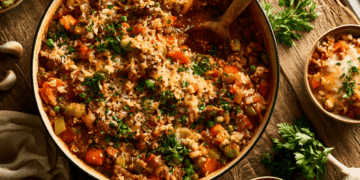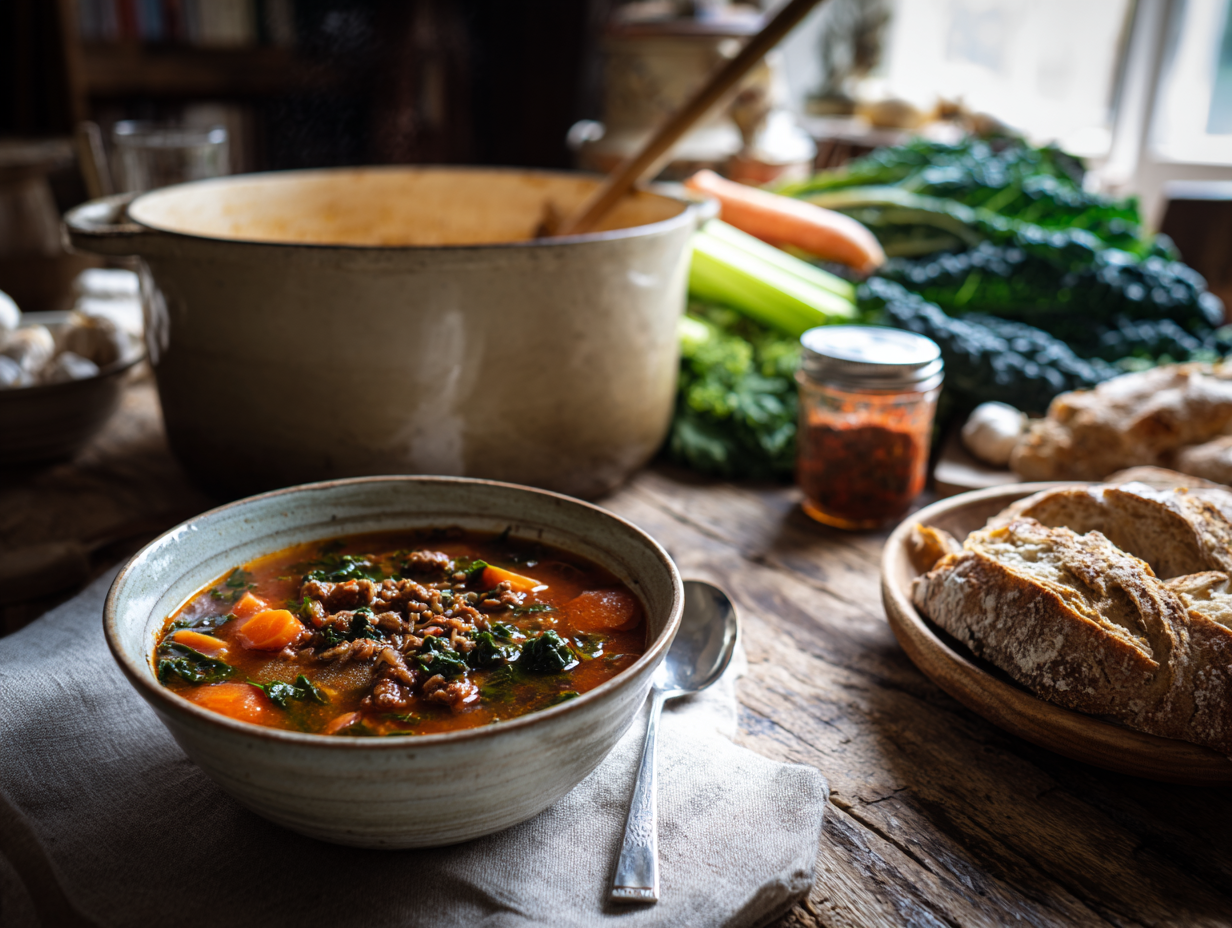
This is a ground beef and kale soup built on a base of onion, garlic, celery, carrot, tomato paste, smoked paprika, and beef broth. It comes together in one pot and is genuinely filling without needing bread or a side. The main reason to make it on a weeknight is that the active work is under 15 minutes — the pot does the rest.
What makes this version work
Two steps carry most of the flavor here. First, the tomato paste gets a minute or two in the hot pan before any liquid goes in — it darkens slightly and loses its raw, sharp edge, which makes the broth taste like it simmered longer than it did. Second, the kale goes in late. Add it too early and it turns army-green and soft; added in the last 5–8 minutes, it stays a deeper green and holds a little texture, which keeps the soup from feeling like mush by the time it hits the table.
Substitutions that actually work
- Kale: Cavolo nero (Tuscan kale) works well and softens a touch faster. Spinach works in a pinch but wilts to almost nothing — double the amount if you use it.
- Smoked paprika: Regular sweet paprika plus a small pinch of cumin gets you close enough. Chipotle powder works too but adds heat.
- Beef broth: Chicken broth is a fine substitute — the soup will be slightly lighter in color and flavor but still good. Skip the bouillon cubes; they make it taste salty rather than savory.
- Ground beef fat percentage: 80/20 gives the best flavor. If you use 90/10 or leaner, add a teaspoon of olive oil when browning or the meat can turn grainy.
Keeping and reheating
Stored in a sealed container, this soup keeps in the fridge for up to 4 days. The flavor genuinely improves on day two once the broth absorbs the paprika and beef drippings more fully. For freezing, portion it into individual containers and freeze for up to 3 months — leave a little headspace since the broth expands. Reheat on the stovetop over medium-low, stirring occasionally, until it reaches a steady simmer throughout; the internal temperature of the meat pieces should hit 165°F (74°C) when reheating from frozen. The microwave works for fridge leftovers — cover loosely and stir halfway through.
What can go wrong
- Greasy broth: If you don’t drain excess fat after browning the beef, the broth turns oily and heavy. Tilt the pan and spoon off the fat, or use a paper towel to blot — takes 30 seconds and makes a real difference.
- Watery, flat flavor: This usually means the tomato paste wasn’t cooked long enough, or the heat was too low when building the base. The paste should look a shade darker and smell slightly sweet before you add broth.
- Kale turns yellow and bitter: It’s been in the heat too long. Add it only in the final 5–8 minutes of simmering — skip the garnish of raw kale on top entirely, it’s not worth the extra prep.
- Beef clumps in large chunks: Ground beef needs to be broken up constantly during the first 2–3 minutes of browning. If you leave it, it fuses into chunks that don’t absorb the broth flavors evenly.
- Soup too thick after refrigerating: The starch from the vegetables thickens it overnight. Add a splash of broth or water when reheating and stir it in — it loosens back up quickly.
Hearty Beef Mince and Kale Soup

Equipment
Ingredients
 1 tablespoon olive oil - extra-virgin preferred
 1 pound ground beef - 85% lean for the best balance of flavor and richness
 1 medium yellow onion - finely chopped
 2 cloves garlic - minced
 2 cups carrots - peeled and sliced into 1/4-inch rounds
 1 cup celery - thinly sliced
 1 teaspoon dried thyme
 1 teaspoon smoked paprika - for a rich, deep flavor
 6 cups beef stock (beef broth or beef bouillon) - low sodium preferred
 2 tablespoons tomato paste - adds richness and depth
 4 cups kale - chopped, thick stems removed
 1 teaspoon salt - adjust to taste
 ½ teaspoon ground black pepper - freshly ground
Instructions
- Heat the olive oil in a large Dutch oven over medium heat (about 350°F / 175°C). Add the chopped onion and sauté for 3–4 minutes until translucent and fragrant.
- Add the minced garlic and cook for 30 seconds, just until aromatic but not browned.
- Stir in the ground beef. Break it up using your wooden spoon and brown evenly for about 6–7 minutes, until fully cooked and the edges have a golden sear.
- Add carrots and celery to the pot. Cook for about 5 minutes, stirring occasionally, until they begin to soften slightly.
- Mix in dried thyme and smoked paprika. Stir in tomato paste and allow it to cook for 1–2 minutes to caramelize slightly and enhance flavor.
- Pour in the beef broth. Bring to a gentle boil, then reduce heat to a simmer (about 300°F / 150°C). Simmer uncovered for 20 minutes or until the vegetables are tender and the soup has slightly thickened.
- Stir in the kale and continue to simmer for an additional 5–7 minutes, or until the kale is tender but still bright green.
- Season with salt and freshly ground black pepper. Taste and adjust seasoning if needed.
Notes
- For a spicier version, add a pinch of red pepper flakes during the sautéing process.
- You can substitute kale for Swiss chard or spinach for a milder flavor and softer texture.
- Use grass-fed beef for a more robust and cleaner flavor.
Nutrition
FAQ
Can I use frozen kale instead of fresh?
Yes, frozen kale works fine here. Add it straight from frozen in the last 5 minutes — it’s already blanched so it just needs to heat through, and it won’t need any trimming or chopping.
Do I have to brown the beef first, or can I just add it to the broth?
Browning is worth doing. It takes about 5 minutes and builds a layer of savory flavor in the pan that boiling the meat in broth won’t give you. Skipping it produces a paler, thinner-tasting soup.
How do I know the ground beef is fully cooked and safe to eat?
Ground beef needs to reach an internal temperature of 160°F (71°C). In a soup that’s been brought to a steady simmer, the beef will be safe — but if you’re unsure, a quick-read thermometer on a larger piece of meat in the pot confirms it.
Can I make this in a slow cooker?
You can, but brown the beef and cook the aromatics on the stovetop first — don’t skip that step and dump everything in raw. After that, transfer everything to the slow cooker and cook on low for 4–5 hours, adding the kale in the last 30 minutes.
What can I add to make it more filling without changing the flavor much?
Canned white beans (drained and rinsed) are the easiest addition — stir them in with the broth and they absorb the flavor without altering it. Diced potato also works; add it early enough to cook through, about 15 minutes before the soup is done.
Can I use a different ground meat instead of beef?
Ground turkey or chicken both work and make a lighter soup — just make sure the internal temperature reaches 165°F (74°C) since poultry requires a higher safe temperature than beef. Ground pork is another solid option and pairs well with the smoked paprika.
More mince recipes to try
- Hearty Beef Cauliflower Bake
- Creamy Beef Spinach Pasta
- Spicy Beef Stuffed Peppers
- Hearty Beef Mushroom Stroganoff