The Cultural and Culinary Story Behind West Indies Meat Patties
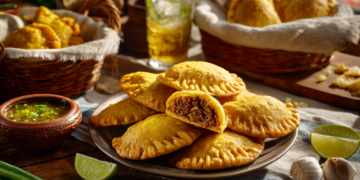
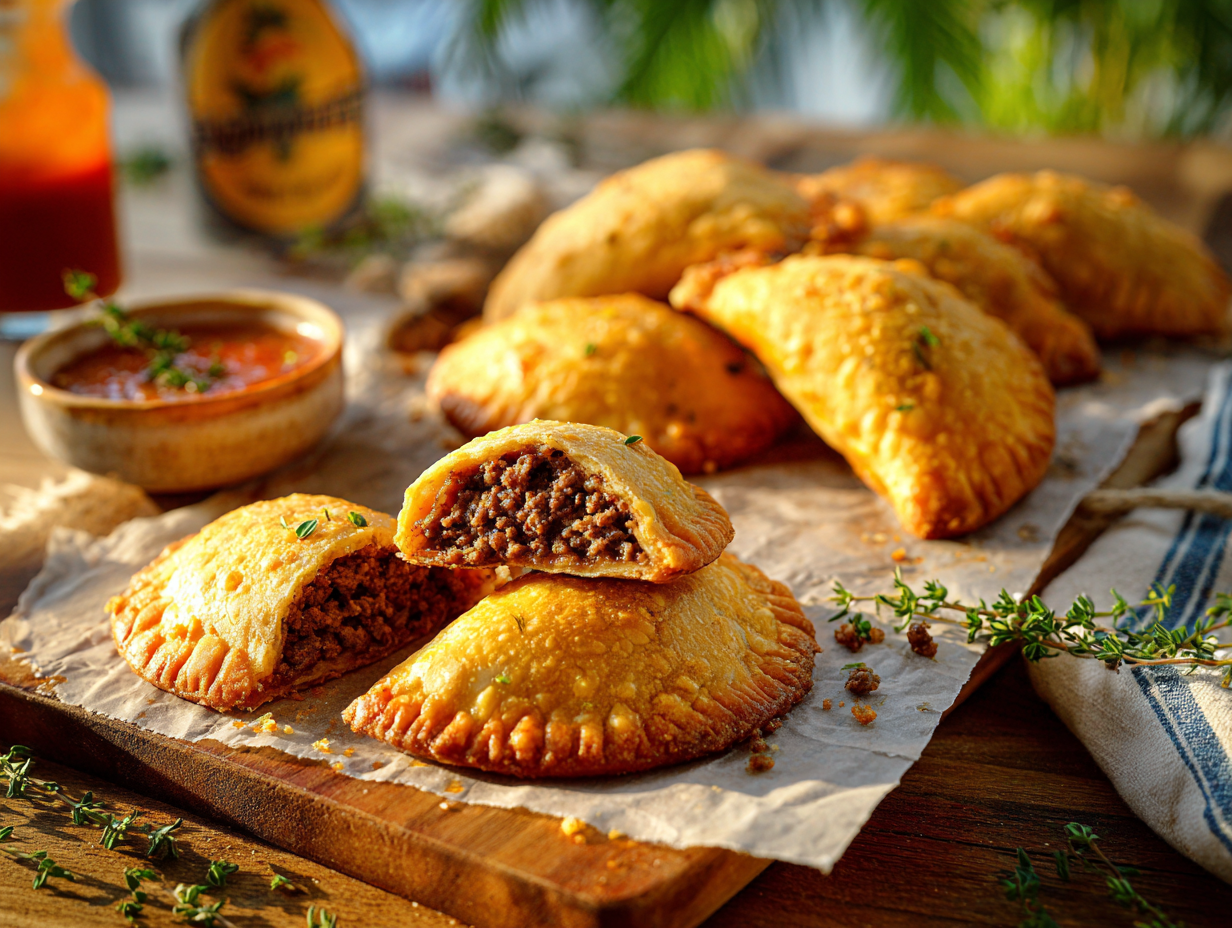
Few foods capture the vibrant spirit of the Caribbean quite like the humble yet irresistible West Indies Meat Patty. Golden, flaky, and filled with boldly seasoned meat, these hand-held delights are more than just a quick snack—they are a reflection of history, migration, resilience, and flavor layered into every bite. Having spent years cooking aboard yachts throughout the British and American West Indies, I came to appreciate that the true soul of island cuisine often lives in its street food. And nothing drew a crowd faster—or sold out sooner—than a tray of freshly fried meat patties.
The first time I tasted what I still consider the best West Indies Meat Patty was near the Ramada Yacht Haven Marina in St. Thomas. Tucked beside the marina was a modest food truck run by a local cook who had clearly mastered his craft. Each morning (except Sunday), he prepared dozens of patties by hand. By noon, a steady stream of dock workers, yacht crews, taxi drivers, and tourists would line up. By 1 p.m., the familiar “Sold Out” sign usually appeared. One bite was enough to understand why.
At its heart, the West Indies Meat Patty tells a story of culinary crossroads. The Caribbean has always been a meeting place of cultures—Indigenous Caribbean, African, European, and later Asian influences layered over centuries. The patty itself reflects this blending beautifully. Its structure resembles the British Cornish pasty, brought by colonial settlers. Its concept parallels Spanish empanadas, introduced during Spain’s early dominance in the region. Yet the filling—ah, that filling—is undeniably Caribbean.
In St. Thomas and throughout much of the English-speaking Caribbean, the filling often resembles picadillo. Ground beef is simmered with onions, garlic, and herbs, then enlivened with Scotch Bonnet chilies. These peppers are essential to the region’s flavor identity: fruity, floral, and fiercely hot when used boldly, yet capable of warmth and subtlety when handled with care. The heat is rarely one-dimensional. A proper West Indies Meat Patty achieves balance—spice that warms without overwhelming.
Another distinctive note is allspice, sometimes called pimento. Native to the Caribbean, this berry carries aromas reminiscent of clove, cinnamon, and nutmeg combined. Its inclusion is a quiet but defining accent. You may not immediately identify it, but if it’s missing, the patty feels incomplete. Together with thyme—another cornerstone herb of Caribbean cooking—the seasoning creates depth that lingers well beyond the last bite.
The crust is equally important. Traditional West Indies patties often feature a shortcrust dough enriched with fat for tenderness and sometimes tinted with turmeric for a warm golden hue. While many modern versions are baked, the patties I fell in love with were fried. Frying transforms the dough into something spectacular: blistered, crisp, and shatteringly flaky at the edges while remaining tender enough to yield without crumbling. That contrast—crisp perimeter giving way to savory, juicy filling—is what makes “one patty never enough.”
What fascinates me as a chef is how universal the concept is, yet how personal each rendition becomes. Travel from Jamaica to St. Thomas to Trinidad, and you’ll find variations in spice blends, heat levels, and even fillings. Some cooks add diced potatoes for texture. Others include raisins for sweetness. In certain islands, chicken or saltfish may replace beef. In more modern kitchens, you’ll even encounter curried goat or plant-based interpretations. The West Indies Meat Patty is not static; it adapts, reflecting local tastes and ingredient availability.
As a charter yacht cook, I often drew inspiration from the islands we sailed. Guests would return from shore excursions raving about local patties, and I’d find myself recreating them in the galley. Limited storage space and unpredictable provisioning forced creativity. Sometimes that meant making dough from scratch; other times, practicality ruled the day. Goya Discos—pre-made pastry rounds found in Latin markets—or even refrigerated pie crusts proved reliable alternatives when time was tight. A good cook knows when to embrace convenience without sacrificing flavor.
What matters most is the filling. Develop that properly, and you honor the spirit of the dish. The meat should be well-seasoned and moist but not wet. Excess liquid will cause the crust to split during frying or baking. The filling must cool before assembly—an old pastry rule that ensures clean sealing and prevents steam from sogging the dough. These small technical details separate a good patty from a great one.
Beyond technique, however, lies something less measurable: the experience of eating one. West Indies Meat Patties are social food. They’re eaten dockside, roadside, beachside. They’re tucked into lunchboxes, enjoyed between ferry rides, or passed around during Carnival festivities. You eat them with your hands, standing up, sometimes with a cold drink in the other hand and lively conversation all around. They are accessible—affordable yet deeply satisfying.
There’s also pride woven into every batch. For many island cooks, the recipe is inherited. Techniques are learned through watching, not measuring. A grandmother might insist on a specific pinch of this or dash of that, unable to quantify but instinctively correct. These patties are expressions of heritage as much as skill.
In today’s global food landscape, the West Indies Meat Patty has traveled far beyond Caribbean shores. You’ll find them in New York bodegas, Miami bakeries, Toronto cafés, and London markets—each location shaped by Caribbean diaspora communities who carried their food traditions with them. Yet tasting one on the islands, made by someone who grew up with the flavors, remains unmatched.
When I think back to those mornings near Yacht Haven Marina—the scent of frying pastry in the warm sea air, reggae drifting from a radio, boats rocking lightly in their slips—I’m reminded that food memories are tied to place. The best recipes capture not just ingredients but experiences.
So when you prepare these West Indies Meat Patties at home—whether using scratch-made crust, Goya Discos, or pie dough from the supermarket—you’re doing more than making a snack. You’re participating in a culinary tradition shaped by centuries of migration and adaptation. You’re bringing together British technique, Spanish influence, African resilience, and Caribbean spice in one golden, hand-held parcel.
Serve them hot. Eat them fresh. And if you find yourself reaching for a second before finishing the first, know that you’re experiencing them exactly as intended.
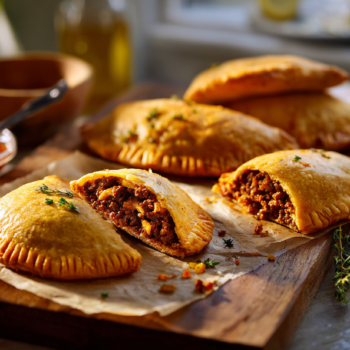
Irresistible West Indies Meat Patties

Ingredients
Ingredients for meat filling:
 2 tablespoons olive oil - or bacon drippings
 1 pound ground beef (minced beef) - lean
 1 medium onion - chopped fine
 2 cloves garlic - minced
 1 medium green pepper (green capsicum) - chopped fine
- 2-3 medium Scotch Bonnet chilies - or habanero chilies, seeded, veined, and chopped fine
 1 small can Neapolitan Sauce or Pasta sauce Southern Hemisphere (Tomato Sauce in North America) - or 2 large ripe tomatoes, skinned, seeded and diced
 1 teaspoon thyme - or 2 sprigs of fresh thyme
 ½ teaspoon ground allspice (also called pimento or Jamaican Pepper)
 1 teaspoon Sea salt
 ½ teaspoon ground black pepper - fresh
 ½ teaspoon cumin - optional
 ¼ cup cilantro (coriander) - fresh, chopped (optional)
 1 cup water
Ingredients for patty dough:
 3⅓ cup all purpose flour (plain flour Australia and UK)
 1 teaspoon salt
 1 teaspoon baking powder
- 1½ tablespoons shortening - chilled
 1 medium egg - well-beaten
- ¾ cup water - cold or ice water
 1 liter Vegetable oil - for frying
Instructions
Method to prepare filling:
- Heat oil in a large skillet over medium-high heat. Add beef and fry until crumbly and brown. Remove meat and keep warm.
- Saute onions, garlic, chilies, and bell peppers until translucent and just starting to brown.
- Add tomatoes, herbs, and spices. Stir to combine.
- Add back the cooked meat. Stir and add water. Bring to a boil.
- Lower heat to a simmer and cook until nearly all liquid evaporates. (You want this to be moist but not soupy.)
- Let cool until ready to assemble patties. It may be made a day in advance.
Method to prepare patty dough:
- Mix flour, salt, and baking powder in a large bowl.
- Cut shortening into the flour mixture using a pastry cutter.
- Whisk the egg and water together well.
- Add the liquid mixture to the flour and toss using a fork until the flour is moistened and can be formed into a ball. Do not over handle the dough.
- Divide the dough into 2 pieces, wrap it with plastic, and chill for 20 minutes.
- Sprinkle the countertop and rolling pin with flour. Roll out dough to 1/8 inch thickness and cut out 5-inch circles. A saucer works well for this.
Assembly:
- Place 2 tablespoons of filling on each pastry disc slightly off-center.
- Fold pastry in half over filling. Crimp the edges with a fork dipped in flour.
- At this point, you may freeze patties on a baking sheet and place them in a bag in the freezer for up to 3 months. To cook, thaw and bake or fry as directed here.
- If baking patties, preheat the oven to 400° F. and bake for 15-20 minutes.
- If frying, in a large skillet, pour 1-½ inches of oil and heat to 375° F. Slide 2 or 3 patties into the hot oil and cook until the first side is golden brown. Turn and cook until brown on the second side.
- Remove patties to paper towels or brown bags to drain. Serve hot.