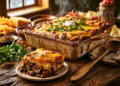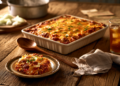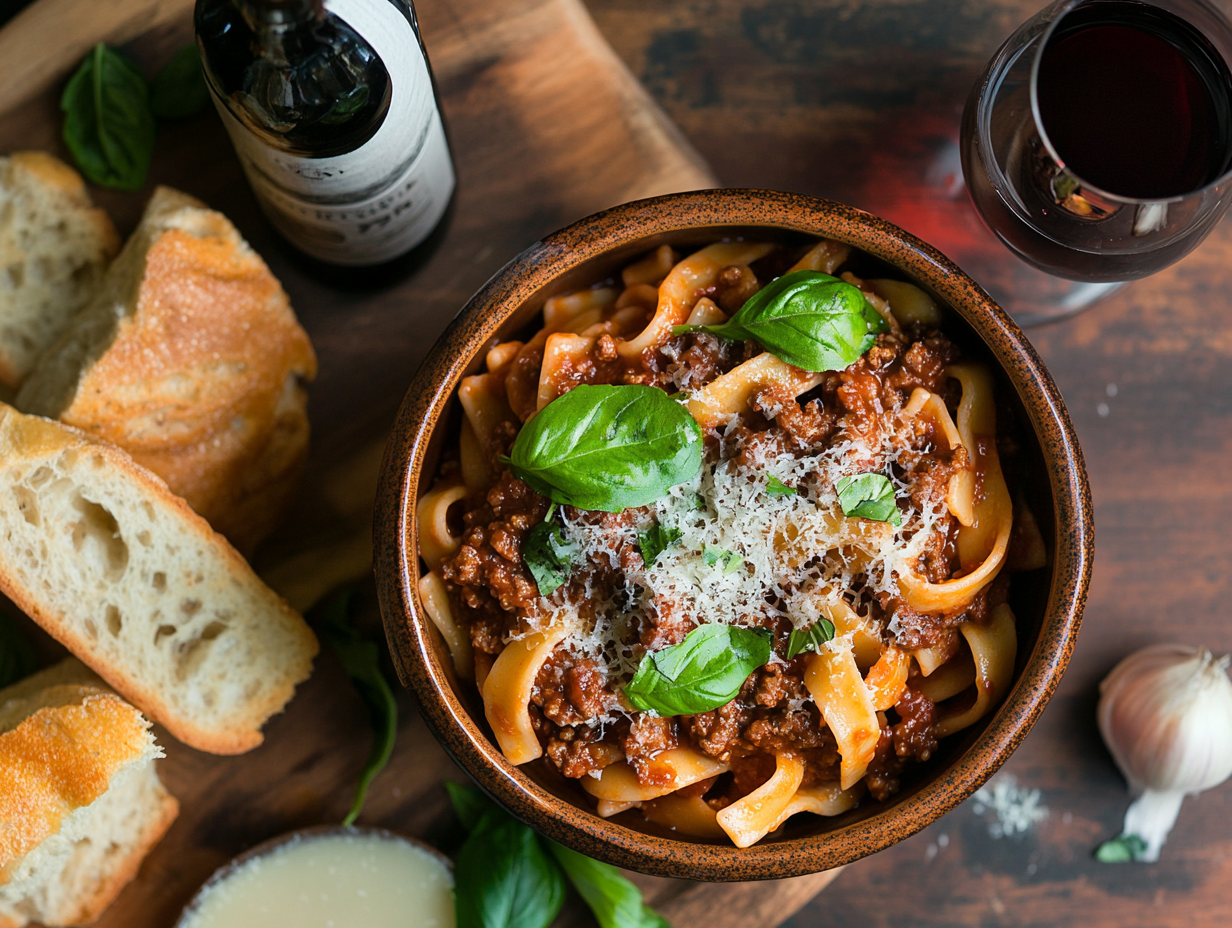
This is a ground beef pasta sauce built around a full cup of dry red wine and a short but deliberate simmer. It comes together in 35 minutes, feeds five people generously, and produces a sauce thick enough to cling to every piece of pasta. If you need a reliable weeknight dinner that doesn’t taste like one, this is it.
Shopping notes
- Passata vs. crushed tomatoes: The recipe calls for passata (smooth, seed-free tomato purée) or crushed tomatoes. Passata gives a silkier sauce; crushed tomatoes add a little more texture. Either works — just avoid diced tomatoes, which stay chunky and don’t break down in a 10-minute simmer.
- Ground beef fat ratio: The recipe specifies 90/10 (lean/fat). That ratio gives enough fat for flavor without leaving a greasy pool when you drain. Going leaner than 90/10 produces a drier, tougher sauce.
- Allspice: Sold as ground allspice, pimento, or Jamaican pepper depending on the store. Check the spice aisle under any of those names. You only need ⅛ teaspoon, so the smallest jar available is fine.
- Campanelle noodles: Not every store carries them. Rigatoni or penne rigate are the best substitutes — their ridges and hollow centers hold the sauce similarly. Avoid smooth pasta shapes here.
- Wine: Use a Merlot or any medium-bodied dry red you’d actually drink. Avoid “cooking wine” sold in bottles — it contains added salt and produces a flat, slightly metallic sauce.
Why this recipe works
Two steps do most of the work. First, draining the fat after browning the beef before adding wine keeps the sauce from turning greasy and lets the wine reduce directly into the meat rather than floating on top of rendered fat. Second, the spice load — oregano, basil, parsley, Italian seasoning, red pepper flakes, allspice, and nutmeg — goes in all at once with the tomatoes and simmers covered for 10 to 15 minutes. That covered simmer traps steam and keeps the liquid from evaporating too fast, which gives the dried herbs time to fully hydrate and bloom into the sauce rather than sitting on top of it as gritty flecks.
Troubleshooting
- Sauce is too thin after simmering: Remove the lid for the last 5 minutes and turn the heat up slightly to medium-high. The extra evaporation thickens it quickly. Stir frequently so the bottom doesn’t catch.
- Sauce tastes sharp or overly acidic: The wine hasn’t cooked down enough. Give it another 3 to 5 minutes uncovered before adding the tomatoes. A pinch of sugar stirred in at the end also cuts sharpness if you’re short on time.
- Meat is clumping in large chunks: Break it up continuously with a wooden spoon or spatula during the first 3 to 4 minutes of browning. Once it sets into large pieces it won’t break down further in the simmer.
- Pasta is absorbing all the sauce before serving: Don’t toss the pasta and sauce together in the pan — plate the noodles first and spoon the sauce over. If you’re feeding a crowd and need to combine them, keep a ladle of pasta cooking water to loosen the sauce back up.
- Sauce is salty enough but tastes flat: The allspice and nutmeg are easy to under-measure. Both are strong, so ⅛ teaspoon each is correct — but make sure those pinches actually made it in. A small squeeze of tomato paste stirred in at the end also sharpens the overall flavor without adding more salt.
Leftovers and meal prep
The sauce stores well in the fridge for up to 4 days in a sealed container — keep it separate from the cooked pasta if possible, since pasta left sitting in sauce turns soft and absorbs most of the liquid overnight. Reheat the sauce in a saucepan over medium-low with a splash of water to loosen it, then cook fresh or briefly boiled pasta to go with it. For longer storage, freeze the sauce in portion-sized containers for up to 3 months. Thaw overnight in the fridge and reheat gently on the stovetop. Skip freezing the pasta itself — it doesn’t hold up. If you’re cooking ahead for a family dinner, the sauce actually tastes better the next day once the spices have had more time to settle in.
Perfect Red Wine Pasta Bolognese

Ingredients
 1 tablespoon olive oil
 1 medium yellow onion - chopped
 5 cloves garlic - minced
 1 pound ground beef (minced beef) - 90% lean, 10% fat
 3 teaspoons salt - divided
 2 teaspoons ground black pepper - divided
- 1 cup dry red wine - preferably Merlot
 1 can passata or crushed tomatoes (tomato puree with seeds removed) - 28-ounce
 3 tablespoons tomato paste
- 1½ tablespoon oregano leaves
- 2 teaspoons basil leaves
- 1 teaspoon parsley flakes
 1 teaspoon Italian seasoning
 ⅛ teaspoon red pepper flakes
 ⅛ teaspoon ground allspice (also called pimento or Jamaican Pepper)
 ⅛ teaspoon ground nutmeg
- 1 pound Campanelle noodles - cooked according to package*
Optional: 3 ingredient garlic bread
 1 small pack Parmesan cheese - finely grated
 1 bunch basil - fresh, chopped
Instructions
- In a large saucepan, heat the olive oil.
- Add the onion and garlic and stir for about 5 minutes or until the onion becomes translucent.
- Add the ground beef and season with 1 teaspoon salt and 1 teaspoon pepper. Cook for about 8 minutes until the meat is cooked through. Remove the pan from the stove and drain out the fat from the meat.
- Return the pan to the stove and add the red wine. Let the wine cook with the meat for about 5 minutes over medium heat.
- Add the crushed tomatoes, tomato paste, oregano, basil, parsley, Italian seasoning, crushed red pepper, allspice, nutmeg, and the remaining 2 teaspoons salt and 1 teaspoon pepper.
- Cover and simmer for 10-15 minutes to let the flavors blend and to let the wine cook down.
- Serve over Campanelle noodles and top with parmesan cheese and fresh basil.
Notes
Nutrition
Frequently asked questions
Can I use a different type of ground meat instead of beef?
Yes — ground pork or a 50/50 beef-pork blend both work well and are common in traditional ragù. If you use ground pork, cook it to an internal temperature of 160°F (71°C) and drain the fat just as you would with beef; pork tends to render more fat, so draining is especially important here.
Do I have to use wine, or can I substitute something else?
You can substitute beef broth in the same quantity if you prefer to skip the alcohol. The sauce will be less complex and slightly thinner since broth doesn’t reduce the same way wine does, so simmer it uncovered for a few extra minutes to compensate.
How do I know when the ground beef is fully cooked?
Ground beef is safe to eat at 160°F (71°C) internal temperature — use an instant-read thermometer if you’re unsure. Visually, it should show no pink anywhere in the pan; the 8-minute cook time in the recipe is a reliable guide over medium heat, but pan size and heat level vary.
Can I double the recipe to feed a larger group?
Doubling works without any technique changes, but use your largest saucepan or a wide Dutch oven so the beef browns rather than steams. The simmer time stays the same — 10 to 15 minutes covered — though you may want an extra minute or two uncovered at the end if the sauce looks thin.
More mince recipes to try
- Beef Ricotta Lasagna Rolls
- Creamy Beef Spinach Pasta
- Spicy Calabrian Lamb Ragù
- Hearty Beef Mushroom Stroganoff