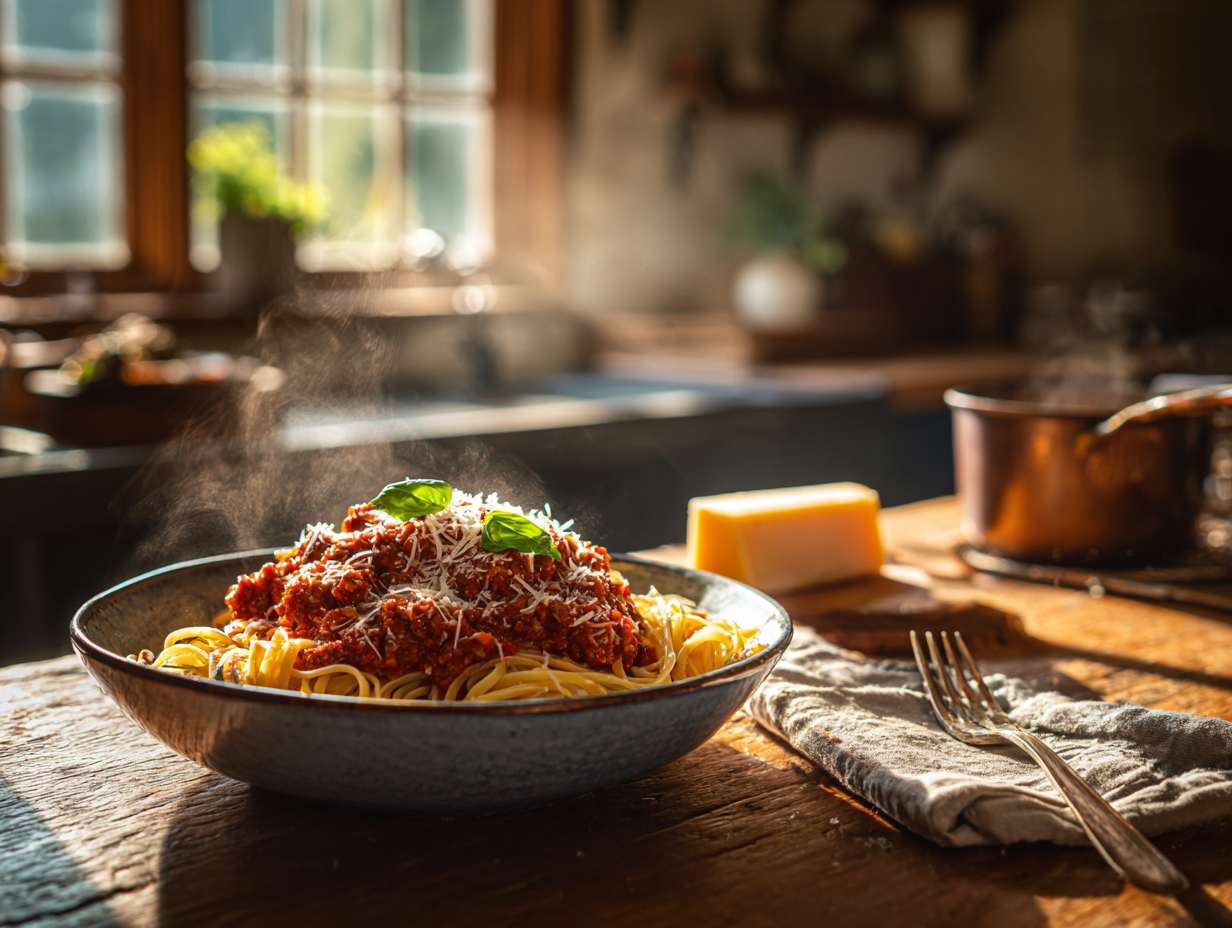
Bolognese is a slow-cooked ground meat ragù built on soffritto, wine, tomato, and a long simmer — this version uses ground chicken, which is leaner than beef but takes on the same deep, savory character when you give it enough time and heat. It takes a few hours, but most of that is hands-off. The payoff is a sauce that tastes better the next day and freezes well, so one batch does real work across the week.
Why this recipe works
Two things drive the flavor here. First, the soffritto — onion, carrot, and celery cooked down slowly in the same pot you’ll finish the sauce in — forms a sweet, savory base that no shortcut replaces. Chop everything finely so it melts into the sauce rather than leaving noticeable chunks. Second, the long, low simmer after the wine and tomato go in is what pulls everything together. Ground chicken is mild and lean, so it needs that extended cooking time to absorb the aromatics and develop any real depth. A hard boil will dry it out and tighten the texture; a gentle simmer — just an occasional bubble — keeps it tender and lets the sauce reduce gradually into something cohesive. Use a heavy-bottomed pot and you won’t need to babysit it.
Common problems and fixes
- Sauce tastes thin and watery after simmering: The lid was probably on too tight. Leave it slightly ajar so steam escapes and the sauce can reduce. If it’s already done and still thin, remove the lid completely and raise the heat briefly, stirring often, until it tightens up.
- Ground chicken clumping into large chunks: Break it up immediately when it hits the pan, before it starts to set. A wooden spoon or potato masher works well. Once it firms up, the clumps are hard to break without shredding the meat unevenly.
- Sauce tastes sharp or wine-forward: The wine didn’t cook off long enough. After adding wine, keep the heat at medium and stir until you can no longer smell raw alcohol — usually 3 to 5 minutes. Don’t rush this step.
- Soffritto browning too fast and catching on the bottom: The heat is too high or the pan is too thin. Drop to low, add a small splash of water, and scrape the bottom. The vegetables should soften and turn translucent, not brown.
- Sauce dries out near the end of the simmer: Add a ladleful of warm water or unsalted chicken stock, stir it in, and continue. This is normal with longer cook times — just adjust as needed rather than cutting the simmer short.
Ingredient notes
- Ground chicken: Use a blend that includes thigh meat if you can find it — pure breast mince is very lean and can turn grainy after a long simmer. If your store only carries breast, add a tablespoon of olive oil or a small knob of butter when you add the tomato to compensate.
- Milk: A splash of whole milk added toward the end of cooking rounds out acidity and adds a subtle richness. It’s a small addition but it matters — skip the garnish, not this.
- Canned tomatoes: Whole peeled tomatoes crushed by hand give you more control over texture than pre-crushed. Avoid tomatoes packed with basil, which can turn bitter in a long simmer.
- Wine: Dry white wine is the traditional choice with chicken Bolognese. A dry red works too and gives a slightly deeper color. Avoid anything labeled “cooking wine” — the salt content throws off the balance.
Keeping and reheating
Store cooled sauce in an airtight container in the fridge for up to 4 days. For freezing, portion it into zip-lock bags or containers — it keeps well for up to 3 months. Reheat on the stovetop over medium-low heat, adding a splash of water or stock to loosen it as needed; ground chicken can dry out quickly if you rush the reheat. Microwave reheating works for single portions — cover loosely, use medium power, and stir halfway through. Make sure reheated sauce reaches 165°F (74°C) throughout before serving, since this is a ground poultry dish.

Rich and Authentic Bolognese Sauce Recipe
Ingredients

 1 medium yellow onion - roughly chopped


 19 ounces passata or crushed tomatoes (tomato puree with seeds removed)


 2 leaves bay leaf (bay leaves)
 1 cup red wine


Instructions
- Rough chop the onion, celery, and carrot and place in a food processor with the roasted garlic and stock. Blend it until it's smooth (about 5 to 10 seconds). Set aside
- Heat a saucepan, and add the olive oil.
- Once the oil is good and hot, lay in the ground chicken and stir it until it browns up.
- Add the blended stock, dry spices and wine; then add the tomato crush and stir until thoroughly mixed.
- Let simmer, occasionally stirring, for 20 to 60 minutes, depending on how thick you like your sauce or how much time you have.
- Serve over your favourite pasta, and enjoy!
Nutrition
Common questions
Can I use ground beef instead of ground chicken?
Yes — ground beef works well here and is the more traditional choice. Use an 80/20 blend for enough fat to keep the sauce rich; leaner beef can produce a drier result after a long simmer. The cook time stays the same, but cook beef to an internal temperature of 160°F (71°C).
Do I really need to simmer it for hours, or can I shorten the time?
The long simmer is what makes it Bolognese rather than just meat sauce — 1.5 to 2 hours minimum is where the flavor comes together. You can eat it at 45 minutes and it will be fine, but the sauce will taste separate rather than integrated.
What pasta shape should I serve this with?
Wide, flat pasta like tagliatelle or pappardelle holds a meat ragù better than spaghetti — the sauce clings to the surface rather than sliding off. Rigatoni or penne also work well if that’s what you have on hand.
Can I make this in a slow cooker?
You can, but brown the meat and cook the soffritto on the stovetop first before transferring everything to the slow cooker — skipping that step produces a noticeably blander result. Cook on low for 6 to 8 hours or high for 3 to 4, and leave the lid slightly ajar for the last hour if your model allows it, to help the sauce reduce.
My sauce looks greasy on top — is that a problem?
A thin layer of fat on the surface is normal and not a problem — just stir it back in. If there’s a thick pool of grease, your chicken mince had a higher fat content than expected; skim the excess with a spoon before serving.
Can I make this ahead for a dinner party?
It’s actually better made a day ahead — the flavor deepens overnight in the fridge. Reheat it gently on the stovetop with a splash of water or stock, and bring it to 165°F (74°C) before serving since it contains ground poultry.
What to cook next
- Beef Ricotta Lasagna Rolls
- Creamy Beef Spinach Pasta
- Spicy Calabrian Lamb Ragù
- Hearty Beef Mushroom Stroganoff