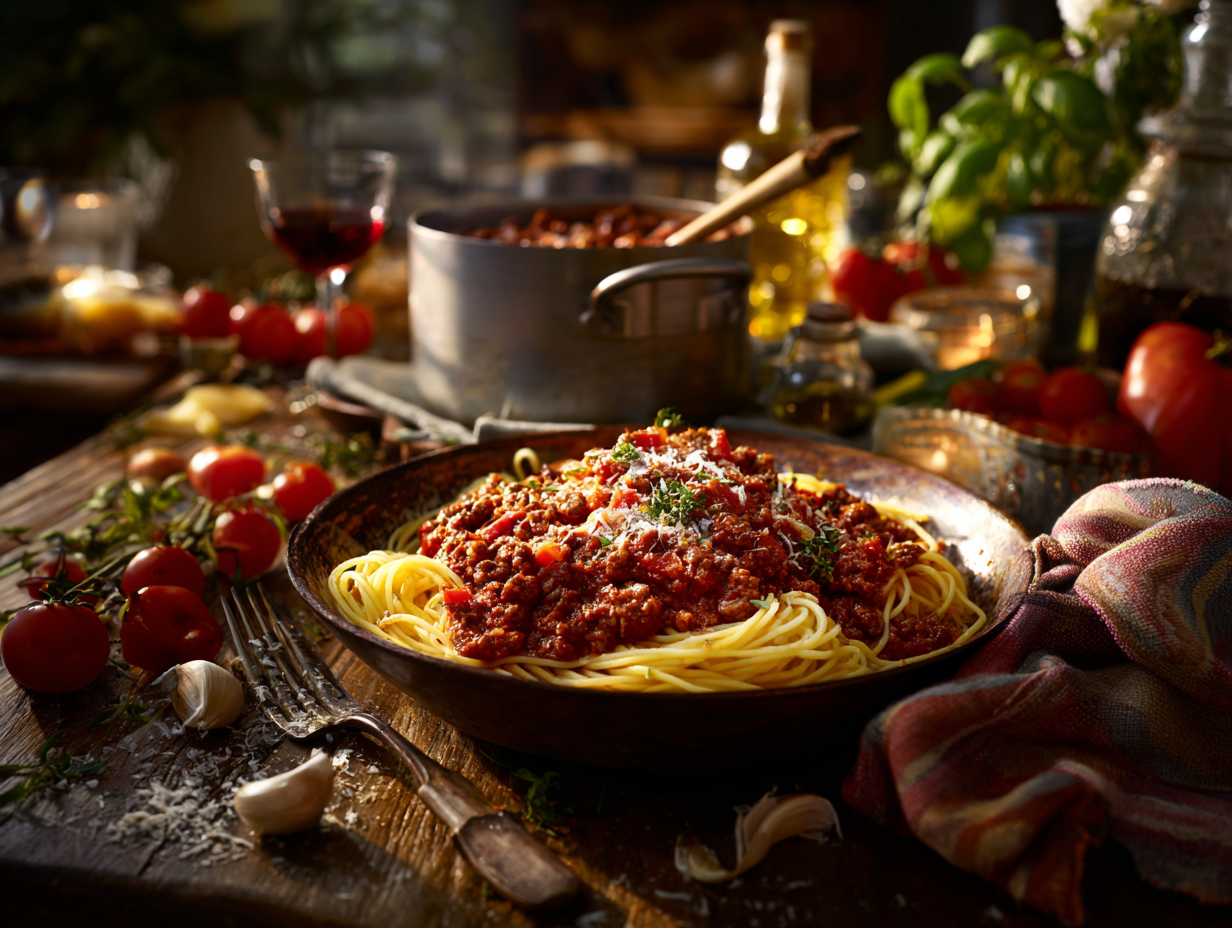
This is a ground beef pasta sauce built on a soffritto base — onion, carrot, and celery cooked down with browned beef, canned tomatoes, herbs, and a splash of wine. It comes together on a weeknight and gives you a genuinely filling meal with solid protein from the beef. Leftovers hold well, so one batch covers more than one dinner.
The technique that matters
Browning the ground beef properly is the one step that changes the sauce. If you crowd the pan or rush it, the meat steams and turns grey — you lose the caramelized crust that gives the sauce its depth. Work in batches if needed, and leave the beef alone for a minute or two before breaking it up. The second thing worth getting right is the soffritto: chop the onion, carrot, and celery small and give them enough time over medium heat to soften fully before the meat goes in. Undercooked soffritto stays sharp and gritty; properly cooked soffritto melts into the sauce and adds a quiet sweetness that balances the tomato’s acidity. Both steps take an extra five minutes and are worth every second.
Common problems and fixes
- Sauce tastes flat even after seasoning: The wine is doing less work than it should. Add it to the hot pan right after the meat is browned, before the tomatoes, and let it bubble hard for 60–90 seconds so the alcohol cooks off and the flavor concentrates. Adding it too late or skipping the reduction leaves a raw, sharp edge.
- Sauce is watery after simmering: The lid is trapping steam. Simmer uncovered — or with the lid cracked — so liquid can evaporate. If it’s still thin after 30 minutes, turn up the heat slightly and stir more often until it tightens.
- Beef is cooked through but the sauce still tastes meaty-raw: The beef fat hasn’t fully rendered into the sauce. Drain excess fat after browning if there’s a lot, but leave a tablespoon or so in the pan — it carries flavor. Then let the sauce simmer long enough for everything to meld, at least 20 minutes after the tomatoes go in.
- Pasta and sauce aren’t sticking together: The pasta went straight from the colander to the plate. Instead, reserve a cup of pasta cooking water before draining, then finish the pasta in the sauce pan for 60 seconds with a splash of that starchy water. It binds the sauce to the noodles.
- Sauce is too acidic: Canned tomatoes vary a lot. A pinch of sugar or a small knob of butter stirred in at the end will round it out without making it taste sweet — skip the garnish, not worth the extra dish.
Storage and reheating
Cool the sauce completely before storing — don’t leave it sitting out more than two hours. Refrigerated in a sealed container it keeps for four days; frozen it holds well for up to three months. Freeze in portion-sized containers so you can pull out exactly what you need. Reheat on the stovetop over medium-low with a splash of water or beef stock to loosen it, stirring until it reaches a full simmer throughout. If you’re reheating from frozen, thaw overnight in the fridge first rather than going straight from freezer to heat — it reheats more evenly and the texture holds better. The pasta itself doesn’t store as well as the sauce, so cook fresh noodles when you’re ready to eat.

Easy Spaghetti Bolognese (Meat Sauce)
Ingredients


Instructions
- Heat a large saucepan and add the ground beef. Brown the meat, then remove it from the pan. If meat is fairly fat, set it in a colander to drain off the excess fat.
- Add olive oil to the pan the beef was cooked in. Add the onions and cook for a few minutes. Do not brown the onions. Add the carrot, celery and garlic and cook for a few minutes more.
- Return the beef to the pan. Add the oregano, basil and wine. (You can use red or white wine or no wine if you prefer.)
- Heat the sauce through, then add the tomatoes, bay leaf and beef stock. Let the sauce cook for at least half an hour on low heat. It tastes best if you can let it cook for an hour to an hour and a half.
- Serve over the pasta of your choice.
Notes
Nutrition
Frequently asked questions
What fat percentage of ground beef works best for this sauce?
80/20 (80% lean) gives the best flavor because the fat renders into the sauce as it cooks. Leaner beef like 90/10 works but produces a drier, less rich result — if that’s what you have, add a tablespoon of olive oil to compensate.
How do I know when the ground beef is fully cooked and safe to eat?
Ground beef is safe at an internal temperature of 160°F (71°C) — no pink should remain anywhere in the meat. In a sauce context, once the beef is fully browned with no grey or pink pieces visible and has simmered in the tomato base for at least 15–20 minutes, it’s well past that threshold.
Can I use red wine instead of white, or skip it entirely?
Either red or white wine works — red adds a slightly deeper, earthier note while white keeps the sauce a bit brighter. You can skip it entirely and substitute an equal amount of beef stock, though the sauce will be a little less complex.
What pasta shape actually holds this sauce best?
Tagliatelle or fettuccine grip the chunky meat sauce better than spaghetti because the wider, flatter surface gives the sauce more to cling to. Spaghetti is fine and widely used, but if you want more sauce in every bite, go wider.
Can I stretch this into a second meal without just reheating the same thing?
Yes — leftover Bolognese sauce works directly as a lasagna filling, spooned over baked potatoes, or stirred into cooked rice for a fast one-bowl meal. The protein content stays the same and the sauce actually tastes better the next day after the flavors have had time to settle.
Do I need to add the bay leaf, and when does it come out?
The bay leaf adds a mild herbal background note that you’d notice if it were missing, but it won’t make or break the dish. Remove it before serving — it doesn’t soften during cooking and is unpleasant to bite into.
More mince recipes to try
- Beef Ricotta Lasagna Rolls
- Creamy Beef Spinach Pasta
- Hearty Beef Mushroom Stroganoff
- Spicy Calabrian Lamb Ragù


