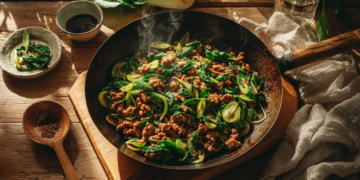
This is a ground pork stir-fry sauced with miso, a fermented soybean paste that adds savory depth you won’t get from soy sauce alone. The whole thing comes together in one pan in under 20 minutes, which is the real reason to make it on a busy night. Serve it over rice and dinner is done.
Why this recipe works
Two things matter here. First, the miso goes into a pre-mixed sauce rather than straight into the hot pan — this keeps it from scorching and turning bitter before it can coat the meat evenly. Second, ground pork browns fast at high heat and holds onto the sauce because of its fat content; that fat is what creates the glossy finish on the finished dish. Let the pork sit undisturbed for 60–90 seconds after it hits the pan so it gets some color rather than steaming, then break it up. That browning adds flavor the sauce alone can’t provide.
Smart swaps
- Miso: White (shiro) miso is the mildest and works best here. Red miso is saltier and more intense — use about two-thirds the amount if that’s what you have. Yellow miso sits in between and is a direct swap.
- Ground pork: Ground chicken works but must reach 165°F (74°C) internally — don’t pull it early. Ground turkey is fine too. Both are leaner, so add a small splash of neutral oil to the pan if the mixture looks dry.
- Vegetables: Bok choy, shredded cabbage, frozen edamame, or thinly sliced bell pepper all hold up to the heat. Skip anything too watery like zucchini — it dilutes the sauce.
- Rice wine or mirin: If you don’t have either, a small splash of dry sherry or apple cider vinegar with a pinch of sugar gets you close enough.
What can go wrong
- Sauce seizes and clumps: Miso doesn’t dissolve well if added directly to a dry, very hot pan. Always whisk it into the liquid components of your sauce before it goes anywhere near heat.
- Meat steams instead of browns: This happens when the pan isn’t hot enough before the pork goes in, or when the pan is overcrowded. Use a wide skillet or wok and don’t pile the meat in — cook in two batches if needed.
- Sauce is too salty: Miso varies a lot by brand. Taste the sauce before adding it to the pan. If it’s sharp, a small drizzle of honey or a splash of water will bring it back into balance.
- Pork stays pale and wet: Ground pork releases moisture as it cooks. Resist stirring constantly — let liquid evaporate before you move the meat around. If there’s pooled liquid in the pan, turn up the heat briefly and let it cook off before adding the sauce.
- Vegetables turn soggy: Add them after the pork is mostly cooked, not at the start. They only need 2–3 minutes in the pan — they should still have a little bite when you plate up.
Leftovers and meal prep
Leftovers keep well in an airtight container in the fridge for up to 3 days. The flavors actually settle nicely overnight, making this a solid candidate for next-day lunch. Reheat in a skillet over medium heat with a tablespoon of water to loosen the sauce — skip the garnish on reheated portions, not worth the extra dish. For freezing, portion the cooked pork and vegetables into freezer bags, press flat, and freeze for up to 2 months; thaw overnight in the fridge before reheating. If you want to get ahead on a weeknight, mix the sauce ingredients and store them in a small jar in the fridge for up to a week — that alone cuts your active cooking time significantly.
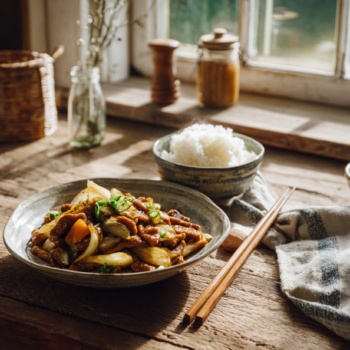
Glistening Porky Miso Stir-Fry Recipe

Ingredients
- 2 tablespoons miso paste
 1 teaspoon sugar (white sugar)
 2 teaspoons soy sauce
- 2 tablespoons sake
- 1 teaspoon mirin
 1 tablespoon vegetable oil
 1 medium red chili (red chilli in British English) - dried
 3 cloves garlic - minced
 1 teaspoon ginger - grated
 600 grams ground pork (minced pork)
 4 small button mushrooms - sliced
- 2 cups brocolli
 2 large zucchini - quartered lengthwise and cut into bite-size chunks
Instructions
- Mix the miso, sugar, soy, and sake in a small bowl. Set aside.
- In a large pan or wok over medium-high heat, fry the chilli, garlic, and ginger in oil for 30 seconds.
- Add the pork and break it into small chunks using your spoon or spatula. Fry and constantly stir until pork is cooked. I like to fry it for a longer time until it is nicely browned after the water content has evaporated, the fats have rendered, and the sugar has caramelized the sweet, sweet meat.
- Add mushrooms, broccoli and zucchini, then turn the heat down to medium. Continue to stir-fry until vegetables are tender, about 7 to 8 minutes.
- Like a bay leaf, remove the dried chilli. It probably won’t be tender enough to be pleasant to eat.
- Add the miso mixture to the stir-fry and cook for another 2 minutes. If the sauce gets too thick, add a bit of water.
- Serve hot with rice. My default at home is a brown basmati rice.
Nutrition
Your questions, answered
What type of miso should I use for this stir-fry?
White (shiro) miso is the best choice — it’s mild, slightly sweet, and won’t overpower the pork. Red miso works but is much saltier, so reduce the quantity by about a third if that’s what you have on hand.
How do I know when the ground pork is fully cooked?
Ground pork is safe to eat at an internal temperature of 160°F (71°C) — use an instant-read thermometer if you’re unsure. Visually, it should be completely opaque with no pink remaining and have some light browning on the pieces.
Can I make this ahead and reheat it for dinner?
Yes, it reheats well. Store it in the fridge for up to 3 days and reheat in a skillet with a splash of water to bring the sauce back to life. The texture holds up better than most stir-fries because ground pork doesn’t toughen the way sliced meat can.
My sauce tastes too salty before I add it to the pan — what do I do?
Dilute it with a small amount of water or add a drizzle of honey to balance the salt. Miso saltiness varies significantly between brands, so tasting the sauce before it hits the pan is always worth doing.
Can I use a regular frying pan instead of a wok?
A wide, heavy skillet works fine — the key is that it’s large enough to avoid crowding the meat. A 12-inch skillet over high heat will give you similar results to a wok for this quantity of ground pork.
What vegetables work best if I want to add more to bulk it out?
Shredded cabbage, bok choy, frozen edamame, and thinly sliced bell pepper all hold up well to the heat and absorb the sauce without going mushy. Avoid high-moisture vegetables like zucchini or tomato — they release too much water and thin out the sauce.
Try these next
- Savory Pork Noodle Stir-Fry
- Japanese Pork Lettuce Cups
- Authentic Szechuan Dan Dan
- Horopito Pork Stir Fry