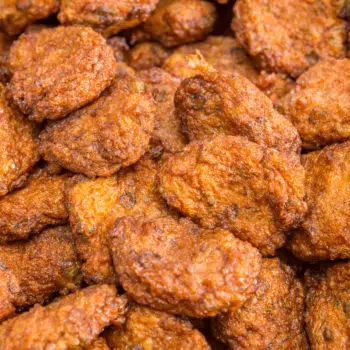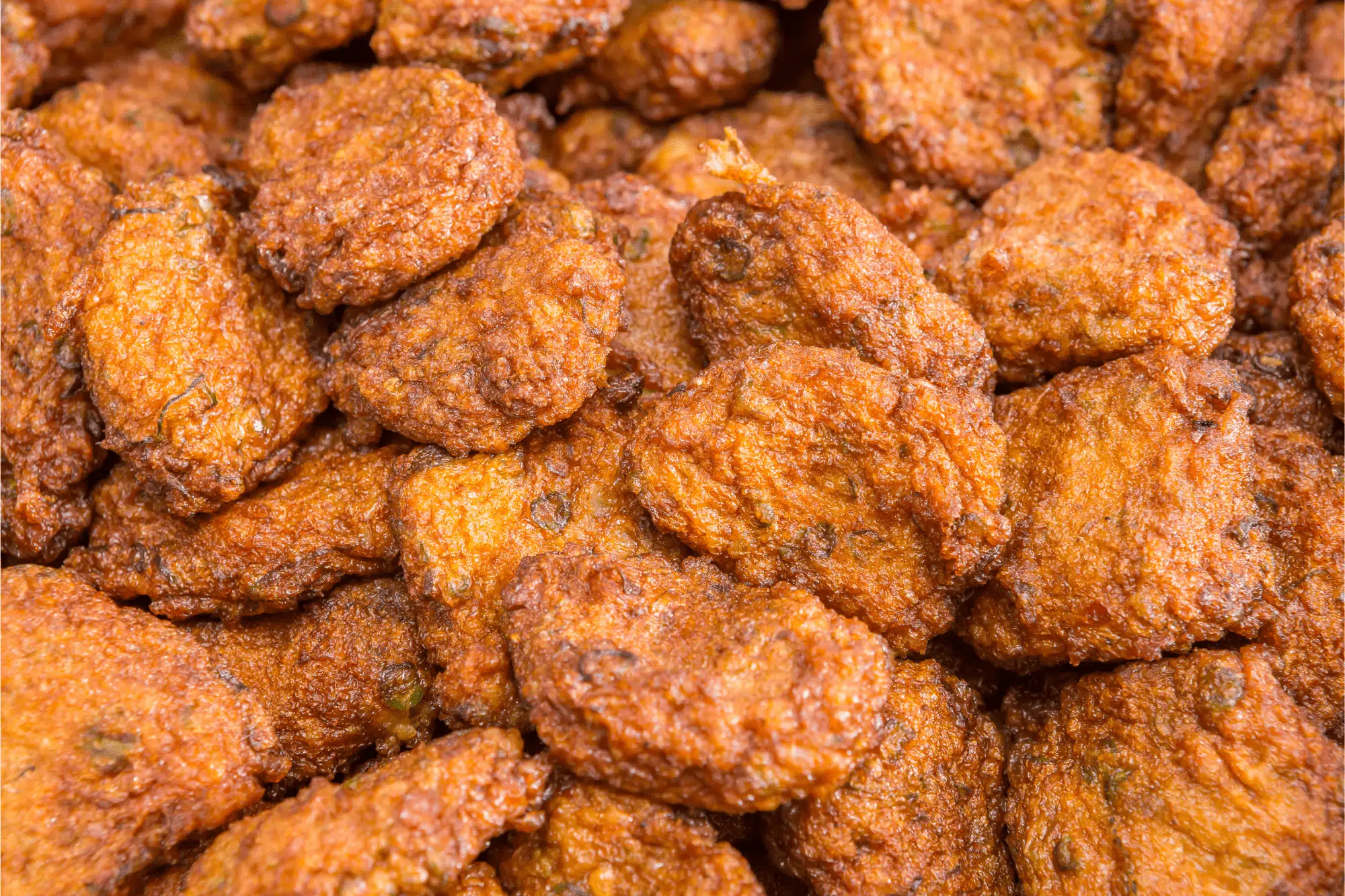
These fish cakes use canned salmon and leftover mashed potatoes to make a filling meal that costs very little and comes together fast. The outside gets properly crisp in the pan, the inside stays soft, and the whole thing is substantial enough to feed a hungry table without a lot of fuss. If you have potatoes and a can of salmon, you have dinner.
The short version of why this works
Two things make or break a fish cake: moisture control and pan temperature. Canned salmon carries more liquid than it looks like, so draining it thoroughly — pressing it in a fine sieve or squeezing it in a clean cloth — keeps the mixture firm enough to hold a patty shape without adding extra binder. The second thing is getting the pan genuinely hot before the cakes go in. A hot pan sets the exterior quickly, which means the cakes don’t stick and don’t fall apart when you flip them. Drop them into a lukewarm pan and they’ll spread, absorb too much oil, and break. Get the pan hot first, and everything else follows.
Substitutions that actually work
- Canned tuna instead of canned salmon: Works fine. Use tuna packed in water, not oil, and drain it well. The flavor is milder, so season a little more aggressively.
- Fresh cooked fish: Any flaky white fish — cod, haddock, pollock — works well. Bake or poach it plain first, let it cool completely, then flake it. Skip the garnish on the plate if you’re feeding a crowd; not worth the extra dish.
- Sweet potato instead of white potato: It binds slightly less firmly, so chill the shaped patties for 20 minutes before frying to help them hold together.
- Green onion instead of regular onion: Use it raw — no need to cook it down first. It adds a lighter bite that works well if you’re serving these to kids.
Mistakes to avoid
- Using warm mashed potatoes: Warm mash is too soft and sticky. The mixture will be hard to shape and the cakes will spread in the pan. Let the potatoes cool completely — cold leftover mash from the fridge is actually ideal.
- Making the patties too thick: A thick cake means the center takes longer to heat through while the outside overcooks. Aim for about three-quarters of an inch thick so the interior reaches 145°F (63°C) without burning the crust.
- Crowding the pan: Too many cakes at once drops the pan temperature and traps steam. Cook in batches with space between each cake so you get a crust, not a steam.
- Skipping the chill step if the mixture is soft: If your mixture feels loose after mixing, 20 to 30 minutes in the fridge firms it up significantly and makes shaping much easier. Don’t try to push soft patties straight into the pan.
- Flipping too early: Wait until the bottom is visibly golden before you turn them. If a cake resists the spatula, it’s not ready. Give it another minute and it will release cleanly on its own.

Cheap and Easy Fish Cakes
Ingredients
1 cup potatoes - mashed
⅓ cup breadcrumbs
⅓ cup Parmesan cheese
1 medium egg
3 stalks green onions (scallions or green shallots) - diced- 1 can salmon
½ tablespoon dried dill
⅓ cup vegetable oil
Instructions
- In a bowl, combine everything except the vegetable oil.
- In a large frying pan, heat vegetable oil at medium heat until it bubbles.
- Divide the fish cake mixture into 8 equal parts and form into paddies. Place paddies into the frying pan, and don't overcrowd it (you might have to do them in two batches).
- Let patties cook until you see a brown crust forming, then turn them; if you turn them too quickly, they will fall apart.
- Flip them and allow the cakes to cook evenly.
- Once the fish cakes have a nice, even crust, place them on a paper towel-lined plate to cool.
- Enjoy them with ketchup or tartar sauce, or I like them just plain. They don't taste too fishy, so even my little guy was a fan.
- Give this recipe a try; it tastes great and is much cheaper than buying it in stores!

Nutrition
Common questions
Can I make these fish cakes ahead of time?
Yes — shape the patties, place them on a lined tray, cover with plastic wrap, and refrigerate for up to 24 hours before frying. This actually improves them because the cold firms the mixture and the cakes hold together better in the pan.
Can I freeze fish cakes made with canned salmon?
Yes. Freeze them uncooked on a flat tray until solid, then transfer to a freezer bag for up to two months. Cook from frozen in a covered pan over medium-low heat, then uncover at the end to crisp the outside.
How do I know when the fish cakes are cooked through?
The internal temperature should reach 145°F (63°C) — use an instant-read thermometer if you’re unsure. Since canned salmon is already cooked, you’re mainly making sure the patty is heated all the way through and the outside is properly browned.
My mixture is too wet to shape — what do I do?
Add a tablespoon of plain breadcrumbs or a small amount of mashed potato and mix it in, then refrigerate the mixture for 20 to 30 minutes. Wet mixture is almost always caused by insufficiently drained salmon or mash that was too loose to begin with.
What can I serve with fish cakes to make it a full meal?
A simple green salad, coleslaw, or steamed vegetables alongside keeps the meal balanced without adding much cost or prep time. Tartar sauce or a spoonful of plain yogurt with lemon works well as a quick sauce, and both are things most households already have.
What to cook next
- Kumara Beef Hash Cakes
- Savory Beef Herb Pancakes
- Bolivian Silpancho Beef Patties
- Fiery Lamb Churrasco Patties