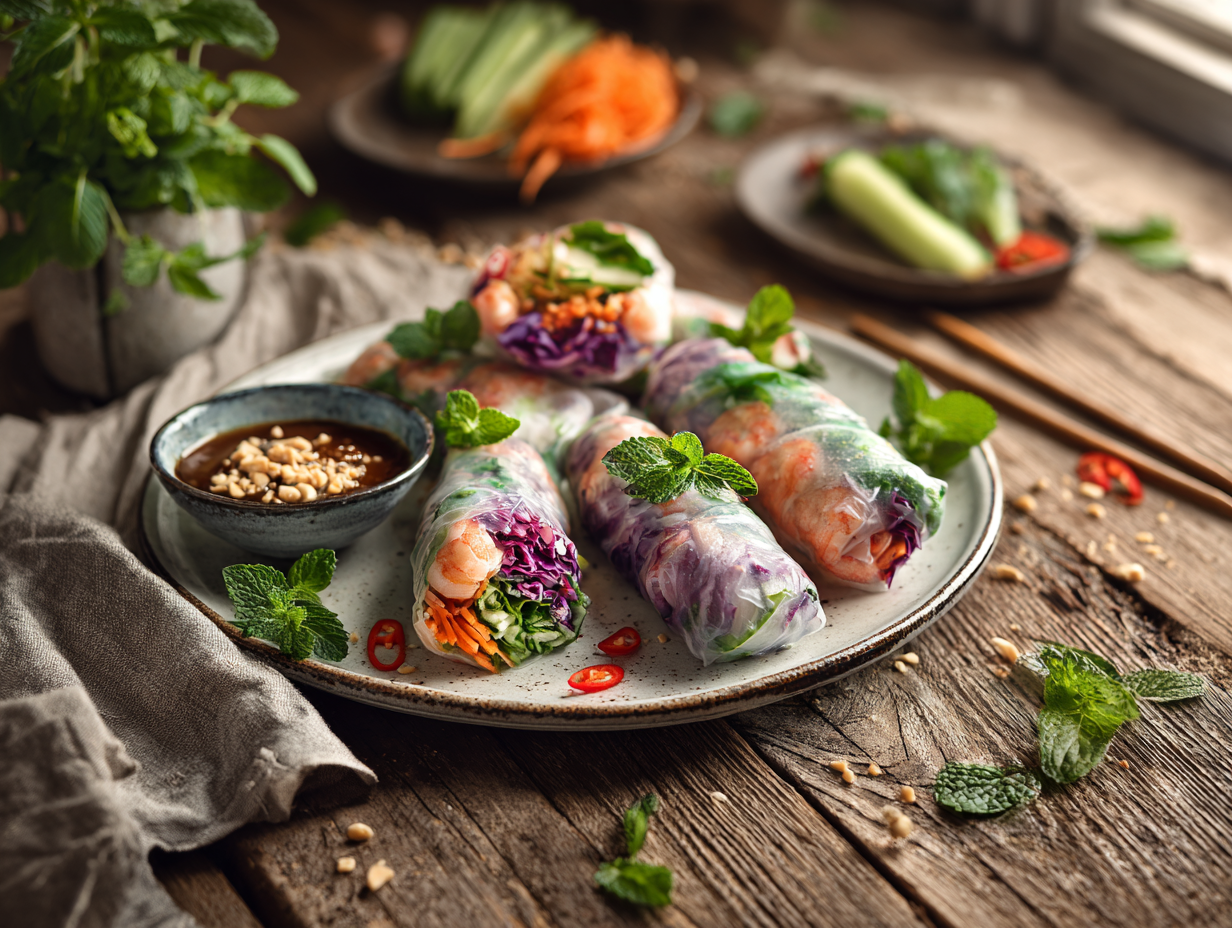
Spring rolls, or “gỏi cuốn” as they’re called in Vietnamese, are one of the most iconic dishes in Vietnam’s culinary repertoire. Known for their freshness, vibrant colors, and exquisite balance of textures and flavors, these translucent rice paper rolls have transcended the borders of Vietnam and found global fame. While modern adaptations and fillings have emerged worldwide, the traditional Vietnamese spring roll—especially the version filled with shrimp and pork—remains close to the heart of Vietnamese cuisine.
The Authentic Vietnamese Inspired Shrimp and Pork Spring Rolls recipe pays homage to this classic dish, delivering not only taste but a cultural experience wrapped in delicate rice paper. This dish, while simple in appearance, is deeply rooted in Vietnam’s history, geography, and culinary philosophy. To understand and appreciate it fully is to understand the story of everyday Vietnamese life.
A Reflection of Vietnamese Culinary Ideals
Vietnamese cuisine is about harmony—of colors, textures, flavors, and temperatures. The Vietnamese believe in the balance of the five elements: spicy (metal), sour (wood), bitter (fire), salty (water), and sweet (earth), and this philosophy influences many traditional dishes. Gỏi cuốn is the perfect embodiment of this ideology.
In the Shrimp and Pork Spring Rolls, the savory pork complements the natural sweetness of shrimp. The pickled carrots provide a tangy crunch, while fresh herbs like mint and Thai basil lend earthiness and brightness. Rice paper acts as a cool, neutral canvas—a chewy yet tender wrapper that allows all these vibrant ingredients to shine.
🌾 The History and Origins of Gỏi Cuốn
Though its exact origins are debated, gỏi cuốn, also known in English as fresh spring rolls or summer rolls, is believed to have originated in southern Vietnam. The dish evolved as a versatile, hand-held food perfectly suited to the region’s hot climate. Unlike its deep-fried cousin, chả giò (fried spring rolls), gỏi cuốn is served fresh and consumed cold—offering a refreshing alternative in the country’s tropical heat.
Originally, the rolls were prepared using whatever ingredients were fresh and available—herbs from a home garden, leftover meat, or locally caught seafood. Over time, a popular combination of pork and shrimp found favor across regions due to its accessibility and balanced taste, now often regarded as the “classic” version.
Today, gỏi cuốn is an everyday snack, party appetizer, or shared family meal across Vietnam. You’ll find them prepared at home, sold by street vendors, and presented in upscale restaurants—all of which reflect regional differences in presentation and ingredients.
🍤 Why Shrimp and Pork?
Shrimp and pork may seem like an unusual pair to outsiders, but in Vietnamese cuisine, it’s a match made in culinary heaven. This blend of land and sea reflects Vietnam’s geography—long coastlines and lush inland areas offer both aquatic and terrestrial resources.
Pork is a staple in Vietnamese homes due to its affordability and versatility. It is often minced, grilled, or boiled—here, it’s cooked and often shredded or formed into a soft floss-like texture. The sweet, soft meat acts as a rich component to the dish.
Shrimp, on the other hand, introduces a slightly briny flavor and a firmer texture, offering contrast to the pork. In a well-crafted spring roll, a few pink shrimp slices are intentionally placed just beneath the rice paper’s surface to show through—signaling not only quality but also a touch of culinary pride.
🥬 The Role of Fresh Herbs and Vegetables
No Vietnamese spring roll is complete without a garden’s worth of herbs and fresh greens. Herbs aren’t just a garnish in Vietnamese cuisine—they’re an integral part of the dish. In this recipe, mint offers coolness, basil lends a sharp, peppery note, and lettuce adds a structural crunch.
One of the real joys of eating spring rolls lies in this assortment of textures and layers. The leafy romaine provides “backbone” to the roll, a genius structural and culinary decision that makes it easier to wrap and hold. Cucumber slices bring a watery crispness, while tender red leaf lettuce adds depth and visual appeal.
The inclusion of pickled carrots (and often daikon) brings in the essential Vietnamese love of fermentation—sour and pungent, capable of cutting through the rich meatiness and refreshing the palate with every bite.
🧑🍳 The Ritual of Rolling Spring Rolls
Preparing spring rolls isn’t just cooking; it becomes a communal act of love and craftsmanship. Whether it’s a family meal or a cooking class, Vietnamese spring rolls are as much about the process as the final product. They invite participation—each person crafting their own roll according to individual taste.
The mis en place is vital. Laying out your ingredients in an orderly fashion aids not only efficiency but encourages in-the-moment creativity. The assembly requires a gentle, practiced touch. The rice paper must be hydrated—but not too much—or it becomes TOO sticky and fragile. The layered assembly of ingredients reveals the same care and attention a sushi chef takes when forming nigiri or rolls.
The technique of rolling—tucking, folding, and smoothing without tearing—speaks to precision and mindfulness. And while your first few attempts may be lopsided or loose, there’s joy in mastering the artistry of a tight, tucked, and evenly filled roll.
🍽 How to Serve & Enjoy
Authentic Vietnamese Inspired Shrimp and Pork Spring Rolls are most often served with dipping sauces—each adding an extra dimension of flavor. The most common is nước chấm, a delicate mix of fish sauce, lime juice, sugar, chili, and garlic—a savory, spicy, and sweet harmony. Alternatively, thicker hoisin-peanut sauce offers a creamy, mildly sweet accompaniment, especially popular in southern Vietnam.
Serving the rolls cut in half, cut at a bias to show off the layered fillings, makes them immediately inviting. You can plate them vertically in a cup, stack them flat in rows, or poke them upright like elegant appetizers. They’re often accompanied with extra herbs on the side and small bowls of pickled vegetables as palate cleansers.
💡 Tips for Perfect Results
Making these spring rolls to perfection takes practice. Here are a few tips to elevate the experience:
- Use a clean, flat surface for rolling—preferably a smooth plate or damp cutting board.
- Warm water, not hot, is best for rice paper. A few quick turns in the water are sufficient.
- Pat ingredients dry slightly before adding—wet fillings can make the rice wrapper tear more easily.
- Don’t overstuff—it’s tempting, but less is more with delicate wrappers.
- Keep a wet cloth nearby—damp hands help with handling the sticky rice paper.
🌍 A Dish That Bridges Places & Cultures
The growing popularity of Vietnamese spring rolls worldwide symbolizes how food bridges cultures. It’s fascinating to see them in American lunchboxes, Australian cafes, Parisian food trucks, and even fusion sushi restaurants. They honor Vietnamese traditions while adapting locally with chicken, tofu, mango, or avocado.
But the shrimp and pork version remains the soul of the original idea—balanced, nuanced, and grounding. Making it from scratch is a tribute to Vietnam’s culinary heritage and a delicious celebration of tradition and taste.
In the end, these Authentic Vietnamese Inspired Shrimp and Pork Spring Rolls are more than a snack or appetizer—they’re a journey wrapped delicately in rice paper. Each bite tells a story of Vietnam’s lush landscapes, colonial influences, resilient spirit, and its masterful culinary ingenuity. Whether you’re new to Southeast Asian cuisine or a lifelong fan, preparing these spring rolls is a ritual that brings people together over flavor, heritage, and the simple joy of fresh, honest cooking.
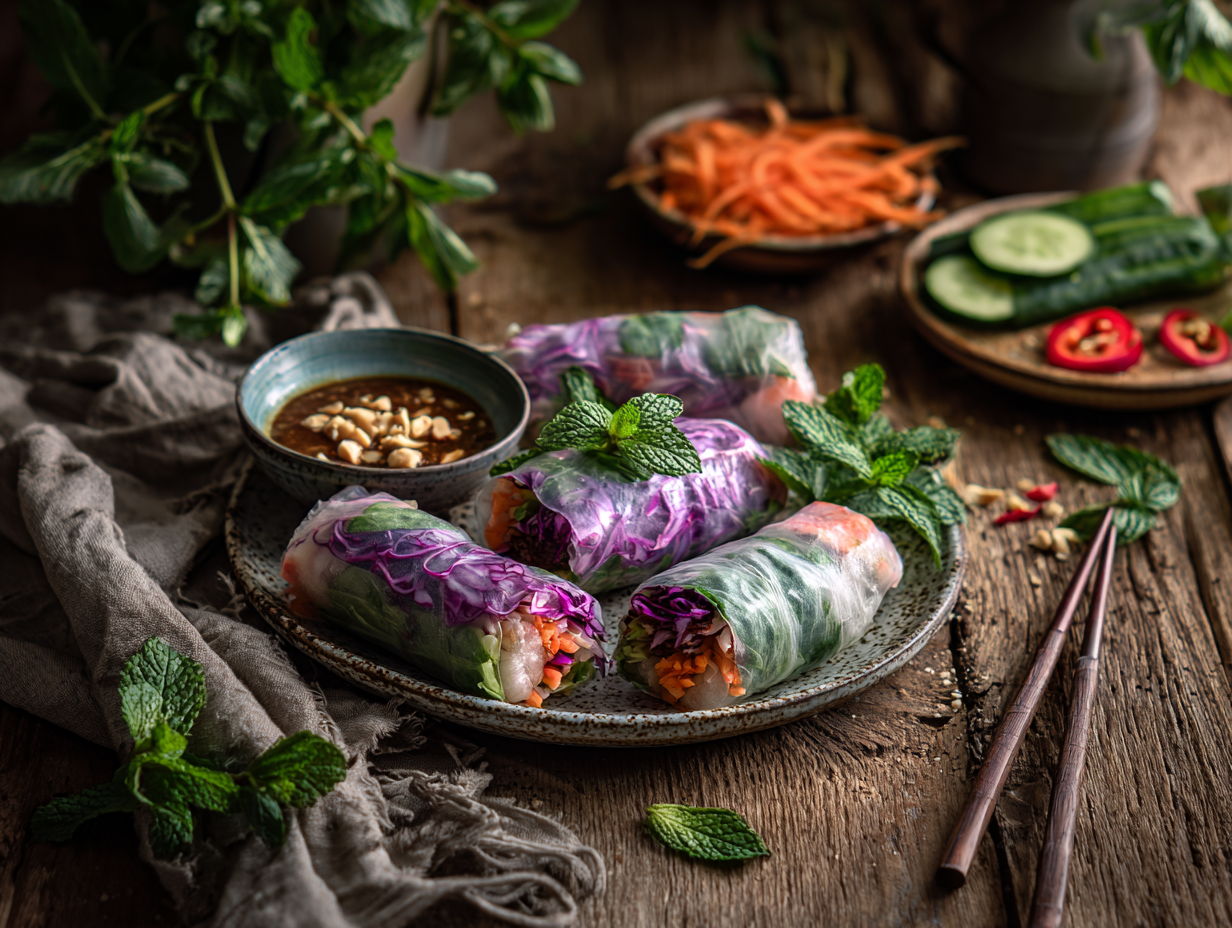
Authentic Vietnamese Inspired Shrimp and Pork Spring Rolls

Ingredients
- 1 pack rice paper
- 1 head red leaf lettuce - washed and separated
 3 leaves Romaine lettuce - washed and separated
 ½ head red cabbage - julienned
 1 bunch green onions (scallions or green shallots) - root tips off, sliced in half
 1 large cucumber - washed, peeled, cut into long 3-inch strips
 1 pound shrimp - headless, skinned, deveined, cooked
 1 bunch mint
 1 bunch basil - sweet Asian
 1 ½ cups carrots - pickled
 1 pound ground pork (minced pork) - cooked
 1 bowl water - warm
Instructions
- Set up your mise en place of red leaf lettuce, romaine lettuce leaves, cucumber slices, cooked shrimp, separated mint leaves, tio to leaves, pickled carrots, and pork.
- Carefully take one sheet of rice paper and dip it into the bowl of warm water. Turn the rice paper so that way every inch of it touches the warm water. Your goal is to soften the paper so that it is malleable and like a thin, sticky sheet. Carefully and skillfully lay it on top of your flat surface. I used a large plate.
- Start with 1 red lettuce folded in half. You want to keep these ingredients centred about 2/4 of the centre section giving 1/4 of the width of the rice paper on each side.
- Next, add 1 leaf of the romaine lettuce folded in half too. This will give the roll a backbone because of its thicker leaf. Next, add about 3 pieces of cooked shrimp, about 6 strands of red cabbage, 2 long pieces of green onion, 1 to 2 slices of cucumber, 2 to 3-month leaves, 1 to 2 basil leaves, and finally a pinch or two of the pork floss. You’re going to want to add the pickled daikon and carrots in the roll or leave it to eat with the rolls as you are taking a bite, like a condiment.
- Now that you have all your ingredients centred in a neat pile, you are going to carefully fold the bottom side of the rice paper over the pile with your thumbs and then carefully tuck the pile of fresh ingredients in with your fingers into a tighter pile into toward the bottom of the paper.
- Tighten the roll by using your fingers on top of it and moving them closer to your body. You want tightly kept rolls and enough paper to fold over the roll’s surface.
- Fold and tuck the left and right sides of the roll onto the pile as tightly as possible. Be careful not to manipulate the rice paper too coarsely. These are very thin when wet and extremely sensitive to the edges of vegetables.
- Finally, finish rolling upward toward the top of the rice paper.