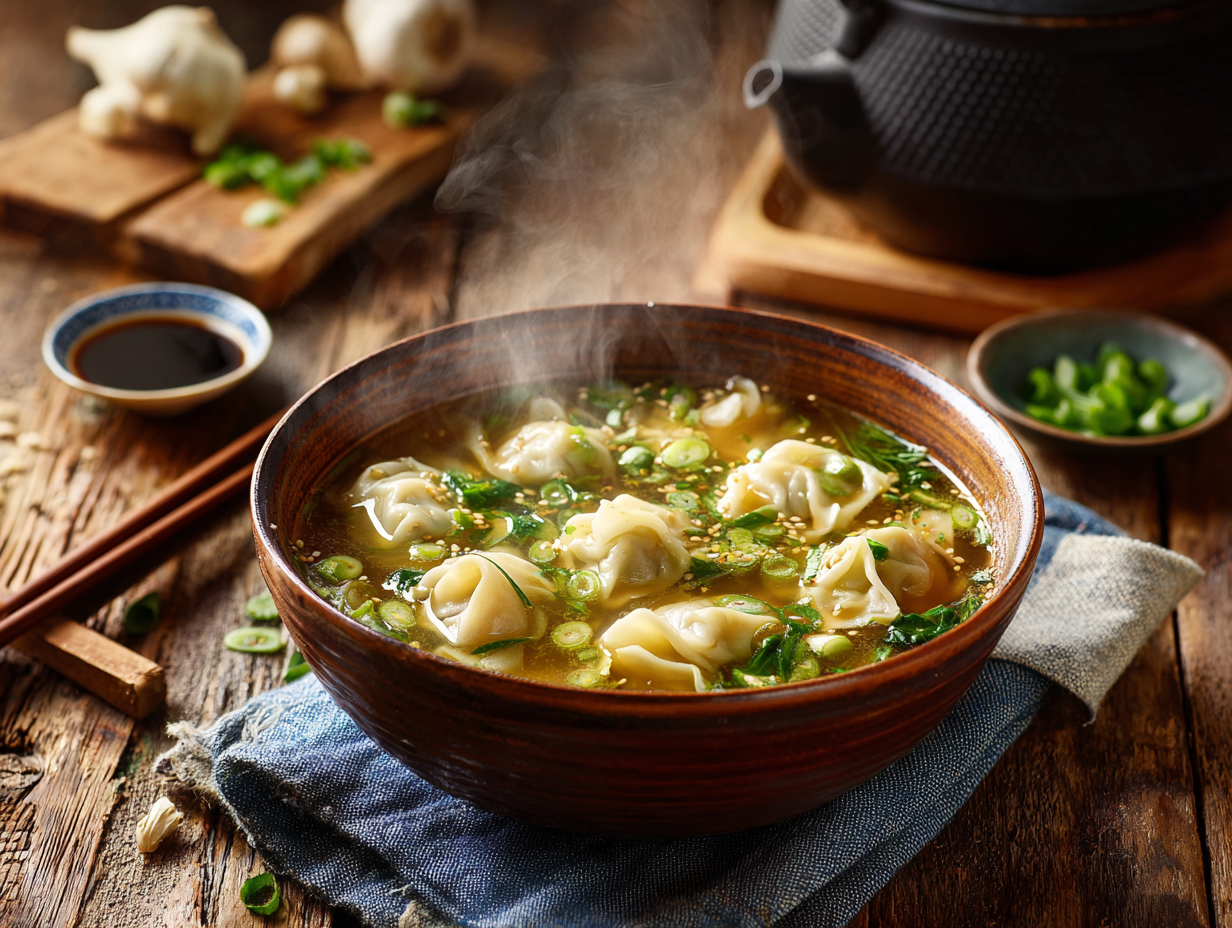
Wonton soup is more than just a bowl of broth filled with dumplings — it is a piece of traditional Chinese heritage that has traveled across generations, regions, and oceans. Though it’s a simple and humble dish at its core, it carries the unmistakable warmth of home cooking and a culinary tradition rich in flavor and meaning. My Authentic Easy Wonton Soup Recipe was inspired by that very love for comfort food fused with cultural rootwork, made accessible for home cooks while remaining true to its essence.
I grew up with the tantalizing aroma of wonton soup wafting through the kitchens of family and neighbors, particularly during cold winter months or festive occasions like Chinese New Year. My grandmother, a patient and passionate cook, believed that the soul of a good soup lay not just in careful seasoning, but in the time and love put into each wonton — every fold a testimony to care and intention. The process was meditative: blending the meat mixture, wrapping each little pouch just right so it didn’t burst during cooking, and simmering the broth until it brought out the perfect umami balance. Recreating this dish in my own modern, fast-paced kitchen years later has become both a nostalgic and nourishing experience.
Wonton soup, known in Mandarin as “hún tún tāng” (餛飩湯), can be traced back over a thousand years to the Han Dynasty, and its evolution across Chinese culinary history is remarkable. Initially created during times of war to provide a quick and filling meal using minimal yet satisfying ingredients, wontons became a manna of simplicity and sustenance. Over time, the dish traveled from the northern regions of China to the southern provinces, and eventually into the hearts and kitchens of the vast Chinese diaspora around the world. Each regional version has its little twist — thinner skins in Cantonese versions, heavier seasoning in Sichuan-style wontons, and clear or spicy broth variations depending on geography and climate.
My easy wonton soup recipe is strongly influenced by Cantonese cuisine, which is known for its subtle seasoning and emphasis on letting the natural flavors of fresh ingredients shine through. I love using ground pork and shrimp as my base for the wonton filling — a classic pairing that provides both a rich, meaty texture and a light, sweet contrast from the seafood. While some westernized versions of wonton soup may swap in chicken or beef out of convenience or dietary preference, I believe there’s something uniquely satisfying about the way pork and shrimp interact, especially when seasoned with soy sauce, sesame oil, fresh ginger, and rice wine. These ingredients don’t just add layers of umami depth, but they also root the recipe firmly in its cultural context.
One thing I particularly enjoy about making wonton soup is its versatility and scalability. You can prepare a large batch of wontons ahead of time and freeze them for future use — making this dish perfect not only for weeknight dinners but also for meal prep enthusiasts. Wonton-making can even become a wonderful communal experience. I fondly remember gathering around the kitchen table with family or friends, each person armed with a spoon and a stack of wrappers, chatting and laughing as dozens of wontons came together in assembly-line fashion. It’s one of those rare food-making moments that feels more like crafting tradition with your hands than just preparing a meal.
The broth, though often overshadowed by the dumplings, is another essential element. In this recipe, I opted for a straightforward and vegetarian-friendly broth with water, a knob of ginger, fresh vegetables like bok choy or Chinese broccoli, and a finishing drizzle of aromatic sesame oil. This allows for a clean, soul-soothing bowl that’s both nutritious and light. But if I’m feeling like jazzing things up a bit, I throw in some dried shrimp — these tiny umami bombs bring a seafood-forward depth reminiscent of those more complex restaurant-style soups without much extra effort. Dried shrimp are a staple in most Asian pantries, and once rehydrated, their flavor disperses deeply into a broth, transforming it into an even more comforting elixir.
Unlike many Western soups where cream, butter, or cheese create richness, traditional Chinese soups lean on layering ingredients carefully to build flavor. Sesame oil, a few slices of ginger, a pinch of sugar, soy sauce, coriander — these ingredients don’t overpower; they weave together harmoniously, respecting the core flavors. The elegance of wonton soup lies exactly in that balance.
When it comes to wrapping wontons, I always recommend keeping things simple. You don’t need advanced folding skills or fancy tricks. A basic triangle fold with the corners pinched together forms the iconic ‘boat-like’ wonton shape. What matters is sealing the edges well so your filling stays put during cooking. A little beaten egg or water brushed along the edges acts as your culinary glue. Over time and with a bit of practice, the folding becomes second nature — even meditative.
I highly encourage experimentation once you’ve mastered the base recipe. Infuse the broth with chili oil, miso, or lemongrass for a fusion flair. Slip in mushrooms or tofu cubes for added texture. Substitute the pork with minced chicken or turkey for a lighter protein. Want to go vegetarian? Minced shiitake mushrooms paired with finely grated carrots and cabbage make for a lovely umami-rich filling.
Wonton soup also holds an emotional significance. It’s the dish I turn to when I’m in need of warmth, physically or emotionally. It has that special ability to ground you — even if you’re far from home, nursing a cold, or just yearning for something comforting that doesn’t come from a store-bought box or can. For me, it combines nostalgia, simplicity, and the kind of gratification that only comes from cooking with your own two hands.
In the end, this authentic easy wonton soup recipe is about honoring a traditional dish in a way that feels approachable in our daily lives. Whether you’re a seasoned cook or trying your hand at homemade wontons for the first time, this recipe aims to deliver a bowl of genuine comfort layered with flavor, tenderness, and the unmistakable joy of sharing nourishing food.
So the next time you’re feeling a little chilly, or just craving a bowl of something cozy and homemade, remember this wonton soup. It invites you to slow down and immerse yourself — not only in taste, but in tradition, love, and a thousand years’ worth of culinary wisdom.
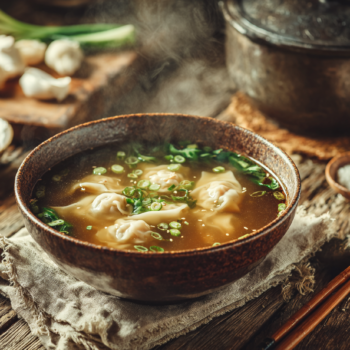
Authentic Easy Wonton Soup Recipe

Ingredients
BASE INGREDIENTS:
 ½ pound ground pork (minced pork)
 12 medium shrimp (prawn) - deveined and peeled
- 1 package Wonton Wraps
 1 medium egg
SOUP INGREDIENTS:
 1 head broccoli - Chinese broccoli, or Baby Bok Choy
 1 small ginger
 2 teaspoons sesame oil - to taste
 2 cups water - of course!
PORK SEASONING:
 1 teaspoon salt
- 1 teaspoon ginger - fresh chopped
- ½ teaspoon sesame oil
 ½ teaspoon chicken stock (chicken broth or chicken bouillon)
 1 teaspoon sugar (white sugar)
 1 teaspoon cornstarch
 1 teaspoon soy sauce - light soy sauce
- 2 teaspoons rice wine - Chinese Rice Wine
 ½ bunch green onions (scallions or green shallots) - chopped
Instructions
Marinate the meat:
- Add all the seasoning to the ground pork.
- Crack an egg on the meat and start mixing all ingredients.
- Chop the shrimps into small pieces and add to the mixture.
- Mix well (TIP: I’ve found it easier to mix with chopsticks).
- Cover the meat with clear plastic and let it sit in the fridge for a couple of hours, if possible
- When you are ready to start wrapping, it’s also time to start making the base for the soup.
Make the soup:
- Pour 2 cups of water into a pot.
- Add the piece of ginger to the water and let it boil.
- Once boiling, add the veggies. Let it cook at medium heat.
- Now it’s time to wrap!
- (Here, you’ll need a small bowl with a little bit of egg white or water)
- Boil a second pot of water.
- Use a small spoon and scoop about a teaspoon (or less) of the mixture into the center of the wrap.
- Dip your finger in the bowl of egg white/water and moisten the borders of the wrapper (this will help seal the edges so no filling will come out).
- Fold the wrap in half to create a rectangular shape, pressing any air that might be trapped around the filling.
- Turn the wonton over and fold the sides inward so that they overlap.
- Dip your finger again in the egg white/water and wet the tip where the sides overlap.
- Pinch to close and seal.
- Carefully throw the wonton in the second pot of boiling water and let it cook. Don’t let it stick. Stir constantly.
- When the wonton is floating (that’s my cue when it’s done), take it out of the boiling water and give it a try! (Be careful it’s hot!) See if the flavor is to your taste. If not, modify as necessary.
- Repeat steps 1-6 until you are either out of filling or wraps.
- Carefully add the number of wontons you are going to eat in the boiling water. Freeze the leftovers for another time.
- Remember to stir constantly. When cooked, scoop the wontons into a serving bowl (Note: You don’t want to overcrowd the bowl with wontons, if it doesn’t all fit, put it on a plate and scoop it in when you have room)
- Pour the soup and veggies into the bowl
- Add the sesame oil to taste
- Time to enjoy some delicious homemade wonton soup! Let me know what you think.
Notes
- If you have cooked wontons as leftovers, you can always save them and cook them pan-fried the next day.
- If you have leftover filling, save it in a glass container and freeze it.
- If you have wrappers leftover, instead of saving them, try cooking them with the wontons and eating them with your soup!