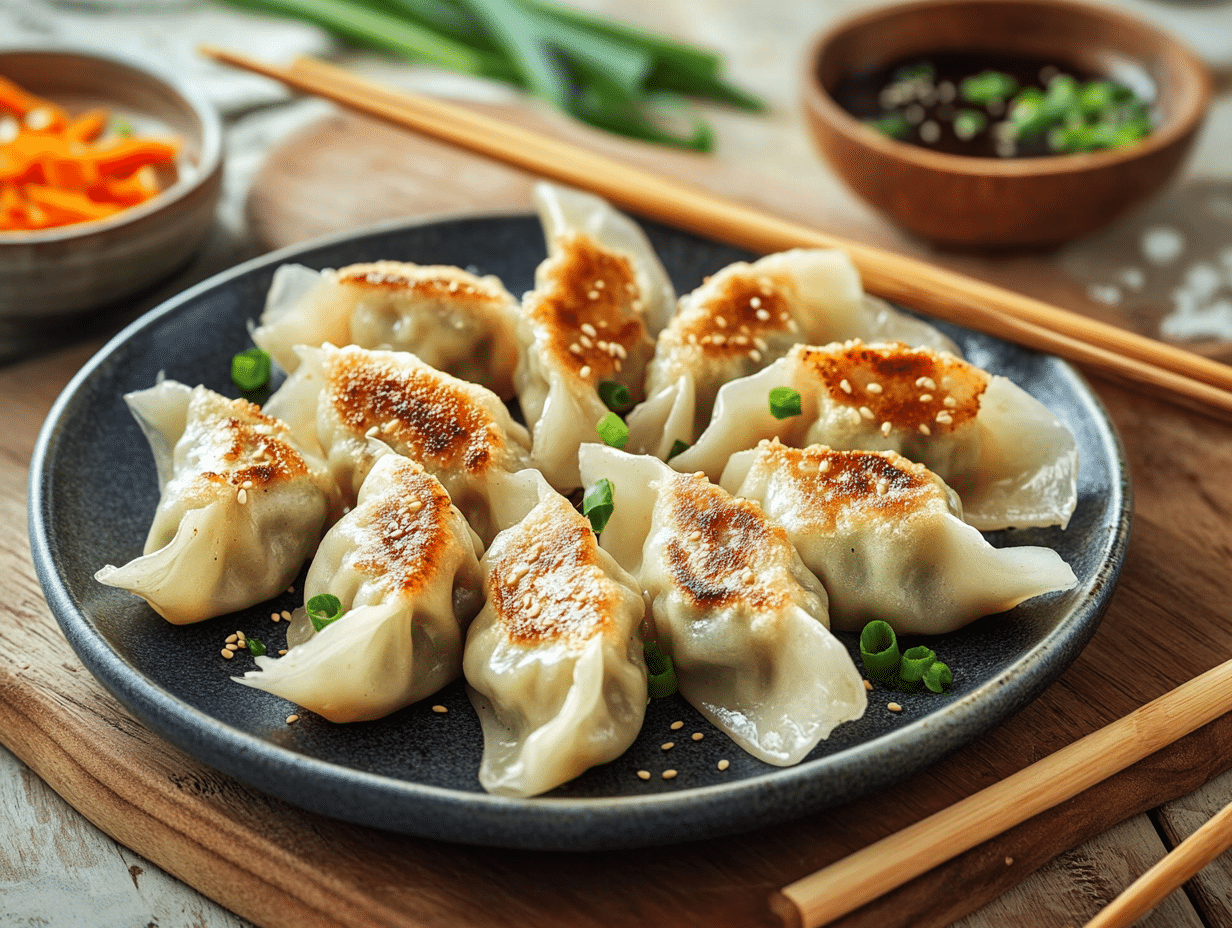
Chinese dumplings, or jiaozi (饺子), have a history that dates back more than 1,800 years, originating from ancient China during the Eastern Han dynasty. Traditionally eaten during Lunar New Year celebrations and family gatherings, jiaozi symbolize wealth, prosperity, and unity because of their resemblance to ancient Chinese silver ingots. These treasured parcels of flavor come in various forms—boiled (shuijiao), steamed (zhengjiao), and pan-fried (guotie). The version we’re highlighting in this recipe—potstickers—are a beloved variation known for their crispy bottoms and tender, juicy filling.
The term “potsticker” comes from the Mandarin word “guotie” (锅贴), which literally means “stuck to the pot.” This name perfectly captures the unique texture and cooking style of these dumplings. They’re seared in a hot pan until a golden crust forms on the bottom, then steamed with a splash of water to cook the filling thoroughly while retaining that delightful crunch on the base. This dual-cooking process is what sets potstickers apart from other dumpling styles and gives them their irresistible bite.
The recipe shared here brings together shrimp and ground pork—a classic combination in Chinese dumpling cuisine—along with finely minced aromatics like ginger, leek, and Chinese chives. These ingredients not only provide umami-rich depth but also represent the balanced layering of flavors that’s central to Chinese culinary philosophy. Bits of black fungus mushrooms and carrots add texture, subtle sweetness, and nutritional value to the stuffing. Light and dark soy sauces, along with rice wine and mirin, infuse the mixture with savory complexity and a touch of sweetness.
Folding dumplings, though a bit of an art, is an essential part of the jiaozi-making experience. It’s often a social or family activity in China, especially around holidays like the Spring Festival, where multiple generations gather to prepare dumplings together, often chatting and exchanging stories as they fold.
What makes these potstickers especially accessible is the use of ready-made dumpling wrappers, saving time and effort while still yielding delicious results. If you’re more ambitious or want to make everything from scratch, you can also make your own dough and roll it out thinly by hand, as the recipe allows.
Cooking them in oil or ghee adds a rich fragrance and helps form that signature crust. Ghee, while not traditionally Chinese, is a wonderfully aromatic fat that won’t burn easily and adds a nutty note to the dumplings. Once fried, the splash of water and covered steaming locks in moisture and cooks the filling gently, producing an irresistibly tender center.
Served with soy-vinegar dipping sauce or a chili-garlic blend, these potstickers can be enjoyed as a snack, appetizer, or main dish. They’re both comforting and satisfying— a showcase of tradition, flavor, and skill packed into a small, golden parcel. Whether you’re a dumpling novice or an experienced cook, this recipe opens the door to experimenting with textures, flavors, and the joy of homemade Chinese food.
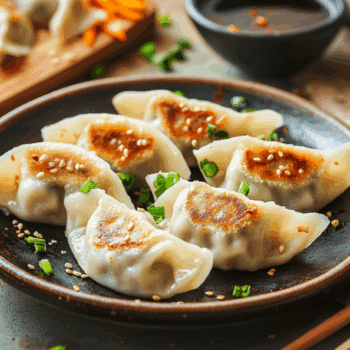
Potsticker Dumplings (Jiaozi) – Crispy Pork & Shrimp

Equipment
Ingredients
- 2 tablespoons neutral oil - or ghee ; for pan-frying
- 1 pack dumpling wrappers
 9 oz shrimp - peeled and deveined, about 250 g
 9 oz ground pork (minced pork) - minced pork, about 250 g
 ½ medium leek - white and light green parts only, finely minced
 1 ginger - fresh ; 1-inch (2.5cm) piece, finely minced, about 1 tablespoon
- 2 teaspoons light soy sauce
- 1 teaspoon dark soy sauce
- 1 teaspoon rice wine vinegar
- 1 teaspoon mirin - sweet rice wine
- ½ teaspoon toasted sesame oil
- 2 tablespoons Chinese chives - garlic chives, finely minced
 2 tablespoons carrot - finely minced, about 1/2 small carrot
- 1 tablespoon dried black fungus mushrooms - rehydrated and finely minced
 ⅓ cup water - for steaming the dumplings, about 100 ml
 1 pinch salt
 1 pinch white pepper
Instructions
- If using store-bought dumpling wrappers, remove them from the package and cover with a damp towel to prevent drying. If making dough from scratch, roll it out as thin as possible (about 1mm) on a lightly floured surface and cut 3.5-inch (9cm) rounds.1 pack dumpling wrappers
- Peel and devein the shrimp. Finely mince the shrimp with a sharp knife until it forms a coarse paste. Combine the minced shrimp and ground pork in a large mixing bowl. Add the leek, ginger, light soy sauce, dark soy sauce, rice wine, mirin, sesame oil, Chinese chives, carrot, black fungus mushrooms, salt, and white pepper. Mix thoroughly in one direction until the filling is well combined and slightly sticky.9 oz shrimp, 9 oz ground pork (minced pork), 1/2 medium leek, 1 ginger, 2 teaspoons light soy sauce, 1 teaspoon dark soy sauce, 1 teaspoon rice wine vinegar, 1 teaspoon mirin, 1/2 teaspoon toasted sesame oil, 2 tablespoons Chinese chives, 2 tablespoons carrot, 1 tablespoon dried black fungus mushrooms, 1 pinch salt, 1 pinch white pepper
- Place about 1 teaspoon of filling in the centre of each wrapper. Fold the wrapper in half to form a half-moon shape, then pinch the edges together starting from the centre and working outward. Create 3-4 small pleats along one side of the edge for the classic potsticker shape. Press firmly to seal.1 pack dumpling wrappers
- Heat 2 tablespoons of neutral oil or ghee in a 12-inch non-stick skillet over medium-high heat. Arrange the dumplings in the pan, flat side down, leaving a little space between each. Fry undisturbed for 2-3 minutes until the bottoms are golden brown. Carefully add 100ml (⅓ cup) of water and immediately cover with a lid.2 tablespoons neutral oil, 1/3 cup water
- Reduce heat to medium and steam for 5-6 minutes until the wrappers are translucent and the filling is cooked through. Remove the lid and let any remaining water evaporate over medium heat for 1-2 minutes until the bottoms are crispy again.
- Carefully lift the dumplings from the pan with a spatula — they will stick slightly, which is perfectly normal and how they got the name potstickers. Serve immediately with a dipping sauce of 2 tablespoons light soy sauce, 1 tablespoon Chinese black vinegar (or rice vinegar), ½ teaspoon chilli oil, and a few slices of fresh ginger.