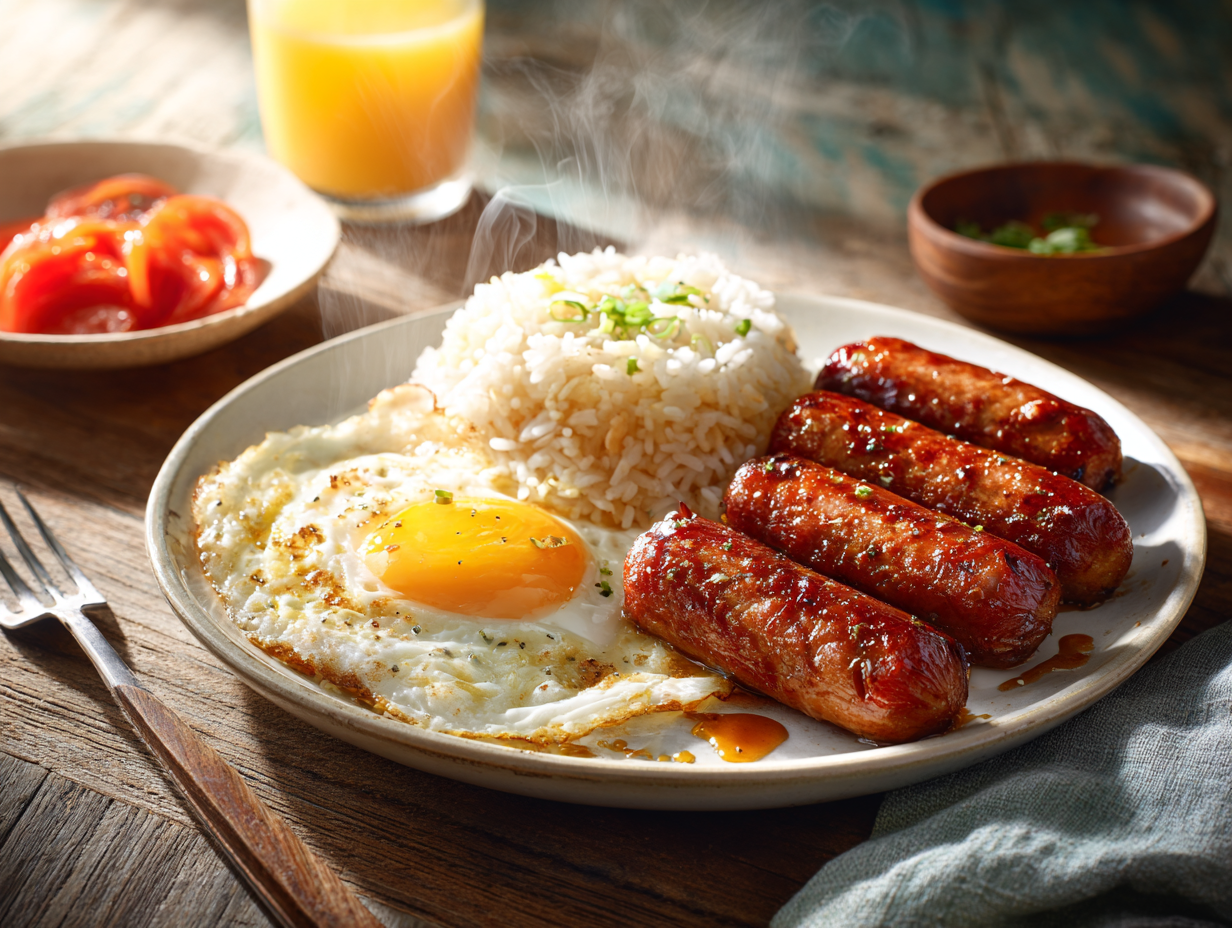
Filipino longaniza is a sweet-garlicky ground pork sausage that fries up with a caramelized, slightly sticky crust in about 10 minutes. It’s made from seasoned ground pork — no casing required — which means you can shape and cook a full batch faster than most weeknight proteins. If you want something that reheats well, pairs with almost anything, and tastes genuinely good cold out of the fridge at midnight, this is it.
Why this recipe works
Two things drive the result here. First, the sugar in the seasoning mix isn’t just for sweetness — it caramelizes fast in a hot pan, forming a lacquered crust that locks in the fat and keeps the interior juicy even after reheating. Second, the vinegar does real work: it tenderizes the ground pork slightly during the marinating time and keeps the flavor bright so the sausage doesn’t taste flat after sitting in the fridge for a few days. Ground pork with a fat content around 20% is the right call — leaner blends cook up dry and the crust won’t form properly. Always cook ground pork to an internal temperature of 160°F (71°C); the exterior will be deeply golden well before the center is safe, so a quick-read thermometer is worth using.
Keeping and reheating
Raw seasoned longaniza mixture keeps in the fridge for up to 2 days before cooking; after that the vinegar starts to change the texture noticeably. Shaped but uncooked patties or links freeze well for up to 2 months — lay them flat on a parchment-lined tray, freeze until solid, then transfer to a zip bag. Cooked longaniza keeps in the fridge for 4 days in an airtight container. To reheat, a dry skillet over medium heat for 2–3 minutes per side is the best option — it revives the crust. The microwave works in a pinch but the exterior goes soft; if you go that route, 60–90 seconds on medium power is enough. Don’t reheat from frozen in a pan; thaw overnight in the fridge first so the center heats through before the outside burns.
Troubleshooting
- Sausages fall apart in the pan: The mixture is too wet or wasn’t chilled before cooking. Refrigerate the shaped pieces for at least 30 minutes before frying — the fat firms up and they hold together. If the mix still feels loose, add a tablespoon of breadcrumbs to bind it.
- Crust burns before the center reaches 160°F: The pan is too hot or the pieces are too thick. Flatten them slightly to no more than ¾ inch thick, and cook on medium rather than medium-high. Covering the pan loosely for the first 3 minutes traps heat and speeds up the interior without scorching the outside.
- Flavor tastes flat after refrigerating overnight: Garlic mellows significantly in the fridge. Taste the raw mixture before shaping and go slightly heavier on garlic and salt than you think you need — the flavor will settle to the right level after marinating. Skip the garnish — not worth the extra dish.
- Too sweet, cloying after the first few pieces: Pair with something acidic. A splash of cane vinegar or a wedge of calamansi (or lime) on the plate cuts through the sweetness immediately. You can also reduce the sugar by up to a third in the mix without wrecking the crust.
- Sausages stick to the pan and tear: The pan wasn’t hot enough before the meat went in, or there wasn’t enough oil. Heat the oil until it shimmers, then add the sausages and don’t move them for at least 90 seconds — they’ll release on their own once the crust sets.
Juicy Filipino Longaniza Recipe

Ingredients
 2 pounds ground pork (minced pork)
 2 cloves garlic - crushed until pasty
 ½ cup breadcrumbs
- ½ cup pineapple juice
 1 teaspoon salt
 1 dash ground black pepper
Instructions
- Mix all the above ingredients in a large bowl.
- Divide into four portions, and place each in a sandwich bag.
- Close the flap of a sandwich bag.
- Press with palm and fingers to make all ingredients inside the bag and flatten the meat.
- In the plastic sandwich bag, create grooves to make longanisa shapes.
- Put the bag in the freezer for hardening (10 to 20 minutes)
- Slice the meat as per the groove marks.
- Remove the plastic skin
- Grill longanisa.
Nutrition
FAQ
Can I make longaniza without sausage casings?
Yes — this recipe is designed to be skinless. Shape the seasoned ground pork into short logs or patties by hand and fry them directly. Casings are optional and add no meaningful flavor difference here.
Can I use ground chicken or turkey instead of pork?
You can, but the result will be drier and the crust won’t caramelize the same way because poultry has less fat. If you substitute, add a tablespoon of neutral oil to the mix and cook ground poultry to 165°F (74°C) — not 160°F. Expect a slightly firmer texture overall.
How far ahead can I season and shape the sausages?
Up to 48 hours in the fridge, covered. Beyond that, the vinegar starts breaking down the protein structure and the texture gets mushy. For longer storage, freeze the shaped raw pieces instead.
What’s the best oil for frying longaniza?
Any neutral oil with a medium-high smoke point works — vegetable, canola, or refined coconut oil. Avoid olive oil; it smokes before the pan gets hot enough to build a proper crust.
Can I cook a big batch and freeze it after frying?
Yes, and it reheats better than most cooked ground meat. Let the cooked sausages cool completely, freeze in a single layer, then bag them. Reheat straight from frozen in a covered skillet on medium-low for about 5–6 minutes, flipping once.
Try these next
- Cumberland Sausage Mince Pie
- Savory Pork Noodle Stir-Fry
- Japanese Pork Lettuce Cups
- Sweet Savory Scotch Eggs