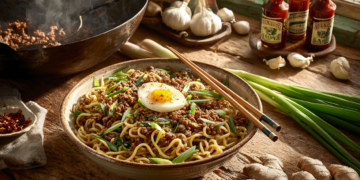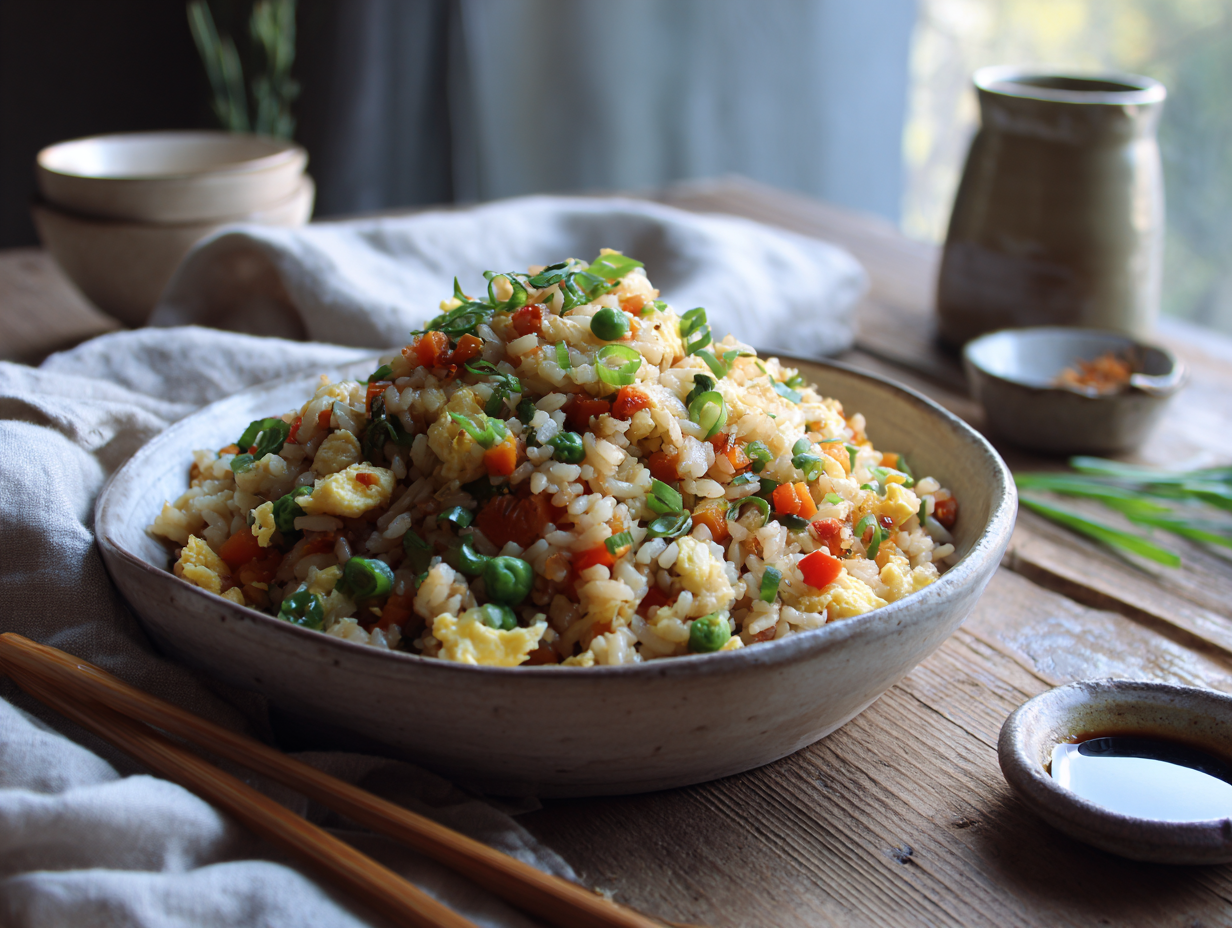
This is a ground meat fried rice built on brown rice, lean protein, and whatever vegetables are actually good right now. It cooks in one pan, uses ingredients you likely already have, and the result is a filling, genuinely satisfying meal without the heaviness of a takeout version. The real reason to make it: it’s faster to cook than it is to order delivery, and the leftovers are better the next day.
Before you start
The single most important step is starting with cold, dry rice. Freshly cooked rice holds too much steam — it clumps and turns mushy the moment it hits the pan. Spread cooked brown rice on a sheet pan and refrigerate it uncovered for at least a few hours, or use rice cooked the day before. The second thing that matters is pan temperature. Get your skillet or wok genuinely hot before anything goes in. A properly heated pan means the ground meat browns instead of steaming, and the rice fries instead of sticking. If the pan isn’t hot enough, you’ll spend twice as long cooking and still get a worse result.
Ingredient notes
- Ground meat choice: Ground pork is the most forgiving option here — its fat content keeps it from drying out at high heat. Ground chicken works but must reach 165°F (74°C) internally; pull it apart to check there’s no pink. Ground beef (80/20) also works well and hits safe temp at 160°F (71°C).
- Low-sodium soy sauce: Worth buying if you don’t have it. Regular soy sauce makes it easy to over-salt, especially since brown rice absorbs sauce more slowly than white rice.
- Sesame oil: Add it at the very end, off the heat. It burns fast and loses its flavor if it goes in too early.
- Seasonal vegetables: Use what’s fresh and firm. Soft or waterlogged vegetables (overripe zucchini, for example) will release liquid and stall the frying. Pat wet vegetables dry before they go in.
If something goes sideways
- Rice is clumping into a solid mass: The rice was too wet or the pan wasn’t hot enough. Add a small splash of water, break up the clumps with a spatula, and crank the heat. Don’t keep stirring — let it sit for 30 seconds at a time so it can dry out.
- Ground meat is gray and steaming instead of browning: The pan was overcrowded or not hot enough. Press the meat flat, stop stirring, and let it sit undisturbed for a minute. It needs direct contact with the pan to brown.
- Dish tastes flat even after seasoning: A small splash of rice vinegar added at the end brightens everything without adding salt. Also check that your sesame oil wasn’t added too early — if it burned off, the nutty depth is gone.
- Eggs are rubbery: They went in too late or cooked too long. Push the rice to one side, scramble the eggs in the cleared space, and fold them in while they’re still slightly underdone — residual heat finishes them.
- Vegetables are soggy: They released water into the pan. Next time, cook them in a separate batch first and set aside, or make sure the pan is hot enough that moisture evaporates immediately on contact.
Keeping and reheating
Leftovers keep well in an airtight container in the fridge for up to 4 days. For reheating, a hot skillet with a few drops of oil gives you better texture than a microwave — 3 to 4 minutes over medium-high heat, stirring occasionally, is enough. If you use the microwave, cover the container loosely and add a teaspoon of water to prevent the rice from drying out; 90 seconds on high usually does it. This dish also freezes fine for up to 2 months — portion it before freezing so you’re not thawing the whole batch. Skip the garnish before storing — not worth the extra dish.
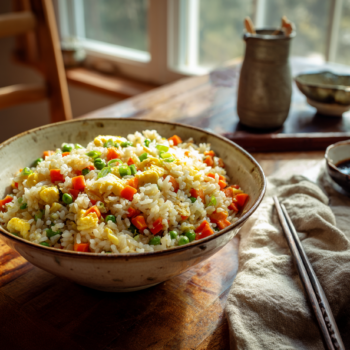
Healthy Seasonal Fried Brown Rice Recipe

Ingredients
 1 cup brown rice - unprepared
 2 cups water
 ⅓ pound ground pork (minced pork)
 ½ cups zucchini - diced and seeds removed
 ¾ cup carrots - diced
 ½ cup red onion - diced
 ¾ cup red pepper (red capsicum) - diced
 2 cloves garlic - minced
 2 tablespoons tamari sauce - gluten-free soy sauce
 ¼ teaspoon sea salt
 3 medium egg
 1 to 2 tablespoons coconut oil
Instructions
- Prepare brown rice according to package directions. You can also use a rice cooker. I still prepare mine the old fashioned way. I bring the brown rice and water to a boil, reduce the heat to low and cover with a lid. Cook for 60 minutes without lifting the lid.
- Meanwhile, you can dice all your veggies as directed above. Or, if you did that on your kitchen prep day, relax for about 45 minutes. Then, stir fry the pork in coconut oil in a wok or deep saute pan over medium to medium-high heat (depending on your range).
- Once the pork is browned, add veggies oil until tender. Remove veggies from the pan and quickly scramble the three eggs.
- Now you can add the rice, veggies, sea salt and tamari to the wok and mix it all. It is ready to serve.
Nutrition
Frequently asked questions
Can I use freshly cooked brown rice instead of day-old rice?
You can, but the results will be noticeably worse. Fresh rice holds moisture that turns the fried rice sticky and clumped. If you’re in a hurry, spread the hot rice on a sheet pan and put it in the fridge or freezer for 20–30 minutes to dry it out before frying.
What internal temperature does the ground meat need to reach?
Ground pork and beef need to hit 160°F (71°C); ground chicken or turkey must reach 165°F (74°C). Break up the meat fully while cooking — no pink should remain — and use an instant-read thermometer if you’re unsure.
Can I make this without a wok?
Yes — a large, heavy skillet works fine. The key is surface area and heat retention, so use the biggest pan you have and don’t overcrowd it. Cook in batches if needed rather than piling everything in at once.
How do I keep the rice from sticking to the pan?
Make sure the pan is fully preheated before adding oil, and that the oil is hot before the rice goes in. Cold rice dropped into a properly heated oiled pan releases cleanly after about 30 seconds — resist the urge to stir it immediately.
Can I swap the brown rice for cauliflower rice to cut carbs?
Yes, but the technique changes. Cauliflower rice releases a lot of water, so cook it in a very hot dry pan first to drive off moisture before adding other ingredients. Don’t add soy sauce until the cauliflower looks dry, or the whole pan will steam.
Is this recipe suitable for meal prep, and does the texture hold up?
It holds up well — better than most fried rice recipes, actually, because brown rice stays firmer than white rice after refrigeration. Portion into containers once cooled, refrigerate for up to 4 days, and reheat in a hot skillet for best texture.