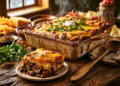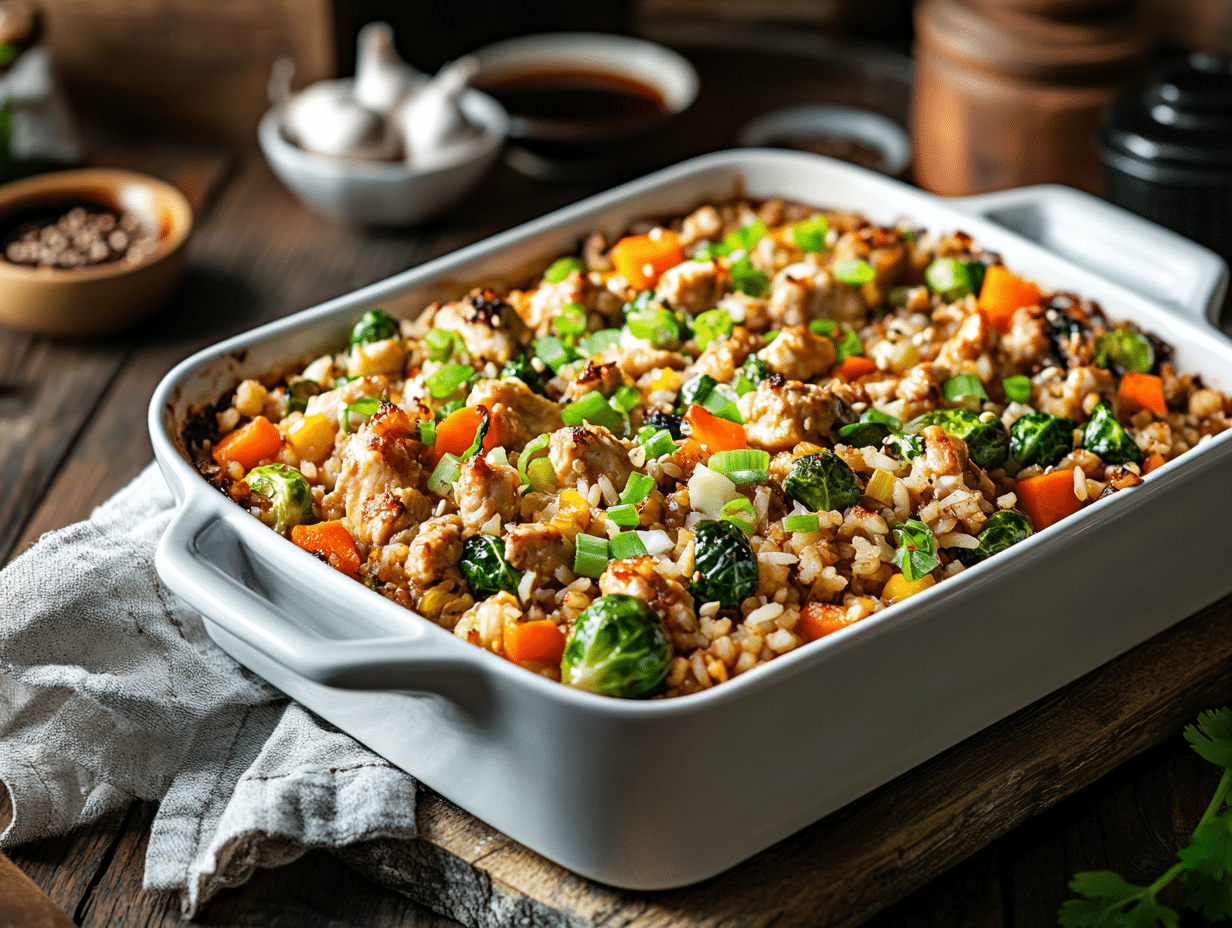
This is a ground chicken and brown rice casserole glazed with a homemade teriyaki sauce — soy sauce, garlic, ginger, brown sugar, and cornstarch — baked with a frozen vegetable medley and Brussels sprouts. It comes together in about 80 minutes with minimal hands-on work, and it feeds four people without leaving anyone hungry. The sauce is made from scratch, which keeps the sodium more manageable than most bottled versions and gives you a thicker, shinier glaze that actually sticks to the rice and chicken.
The technique that matters
The two-stage bake is what holds this recipe together. Ground chicken goes into the dish first, covered in sauce, and bakes alone for 35 minutes. This matters because ground chicken releases moisture as it cooks — if you add the rice and vegetables at the start, they absorb that liquid unevenly and the whole thing turns mushy. Baking the chicken first lets it set and develop some color before the rice and veg join in. The second stage — just 15 minutes — is enough to marry the flavors without overcooking the vegetables into mush. One thing worth doing during that first bake: break the ground chicken into an even layer before it goes in the oven. Uneven thickness means some spots will be done well before others. Ground poultry must reach an internal temperature of 165°F (74°C) throughout — use a thermometer to check the thickest part before adding the rice and vegetables.
Common problems and fixes
- Sauce seizes or turns gluey: This happens when the cornstarch slurry hits liquid that isn’t hot enough, or when the sauce sits too long off the heat and cools into a gel. Keep the saucepan on low heat after thickening if you’re not using the sauce immediately, and stir before pouring.
- Rice turns dry and clumped in the second bake: Brown rice absorbs sauce fast. If your cooked rice is already on the dry side going in, stir a few tablespoons of water into it before adding it to the dish. Skip the extra water and the rice will pull moisture from the sauce and leave the casserole dry.
- Vegetables are waterlogged: Frozen vegetables carry ice crystals that melt into water. Drain them well after steaming — press them lightly in a colander — before adding to the baking dish. Skipping this step dilutes the sauce noticeably.
- Ground chicken sticks to the baking dish: Non-stick spray helps, but ground chicken is lean and will still bond to the dish if the spray is uneven. Use a silicone spatula to loosen the edges before you add the rice and vegetables, so the toss doesn’t tear the chicken into unappetizing chunks.
- Brussels sprouts are still tough after the second bake: Fifteen minutes isn’t enough to cook raw Brussels sprouts through. Halve them and steam or par-cook them alongside the other vegetables before they go into the dish — skip the extra dish and just cook them all together. The frozen medley and the sprouts can go in the same pan.
Teriyaki Chicken Casserole with Brown Rice

Equipment
Ingredients
Chicken Ingredients
- 1 can non-stick cooking spray
 1 lb ground chicken - minced chicken, 450g
- 12 ounces frozen mixed vegetables - stir-fry blend, 340g
- 1 cup Brussels sprouts - halved, about 4 oz / 115g
 3 cups brown rice - cooked ; about 1 cup / 185g uncooked
Teriyaki Sauce Ingredients
 ¾ cup soy sauce - 180ml
 ¼ cup brown sugar - packed, 50g
 ½ cup water - 120ml
 ½ teaspoon ground ginger - 1g
 2 cloves garlic - minced
 2 tablespoons cornstarch - 16g
- 2 tablespoons water - for cornstarch slurry, 30ml
Instructions
- Preheat oven to 350°F / 175°C (180°C fan-forced). Spray a 9×13 inch (33x23cm) baking dish with non-stick cooking spray.1 can non-stick cooking spray
- Combine soy sauce, brown sugar, ½ cup of water, ginger and garlic in a small saucepan and cover. Bring to a boil. Remove lid and cook for one minute.¾ cup soy sauce, ¼ cup brown sugar, ½ cup water, ½ teaspoon ground ginger, 2 cloves garlic
- Mix 2 tablespoons of water and cornstarch in a bowl until well blended and smooth. Add the prepared mixture to the saucepan and stir to mix. Wait for the sauce to thicken, then remove from heat and set aside.2 tablespoons cornstarch, 2 tablespoons water
- Spread the ground chicken in an even layer (no thicker than ¾ inch) in the prepared baking dish. Pour 1 cup of the teriyaki sauce evenly over the chicken. Bake uncovered for 35 minutes or until an instant-read thermometer inserted into the thickest part reads 165°F / 74°C.1 lb ground chicken
- Meanwhile, steam or cook the veggies according to package directions.12 ounces frozen mixed vegetables, 1 cup Brussels sprouts
- Add the cooked veggies and the brown rice to the baking dish with the chicken. Pour most of the remaining sauce over the casserole, saving just a little to drizzle over the top when serving. Gently toss everything together until combined well. Return to the oven and bake uncovered for 15 minutes until heated through and the sauce is bubbling at the edges.12 ounces frozen mixed vegetables, 1 cup Brussels sprouts, 3 cups brown rice
- Remove from oven and let stand for 5 minutes.
- Serve and drizzle some of the remaining sauce over the top.
Notes
Nutrition
Your questions, answered
Can I use uncooked rice instead of pre-cooked brown rice?
No — the recipe is built around cooked rice, and uncooked rice won’t have enough liquid or time to cook through in the second 15-minute bake. Cook the brown rice ahead of time, or use a microwavable pouch of pre-cooked brown rice to save time on busy nights.
How do I know the ground chicken is fully cooked before adding the rice and vegetables?
Use an instant-read thermometer and check the thickest part of the chicken layer — it needs to read 165°F (74°C). Ground poultry should never be served pink or undercooked, and visual checks alone aren’t reliable with ground meat baked flat in a dish.
Can I make this ahead and reheat it for the whole family?
Yes, and it reheats well. Store leftovers covered in the fridge for up to three days. Reheat in a 325°F oven covered with foil for about 20 minutes, or microwave individual portions with a splash of water stirred in to keep the rice from drying out.
The sauce tastes very salty — what can I do?
Use low-sodium soy sauce, which cuts the sodium significantly without changing the texture or the glaze. At 2,488 mg of sodium per serving, this is the single biggest lever you can pull if salt is a concern for anyone at the table.
If you liked this one
- Savory Pork Noodle Stir-Fry
- Japanese Pork Lettuce Cups
- Hearty Beef Cauliflower Bake
- Chicken Macadamia Sausage Rolls