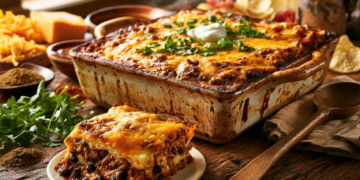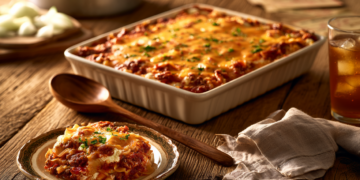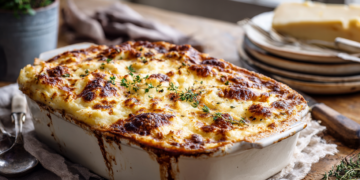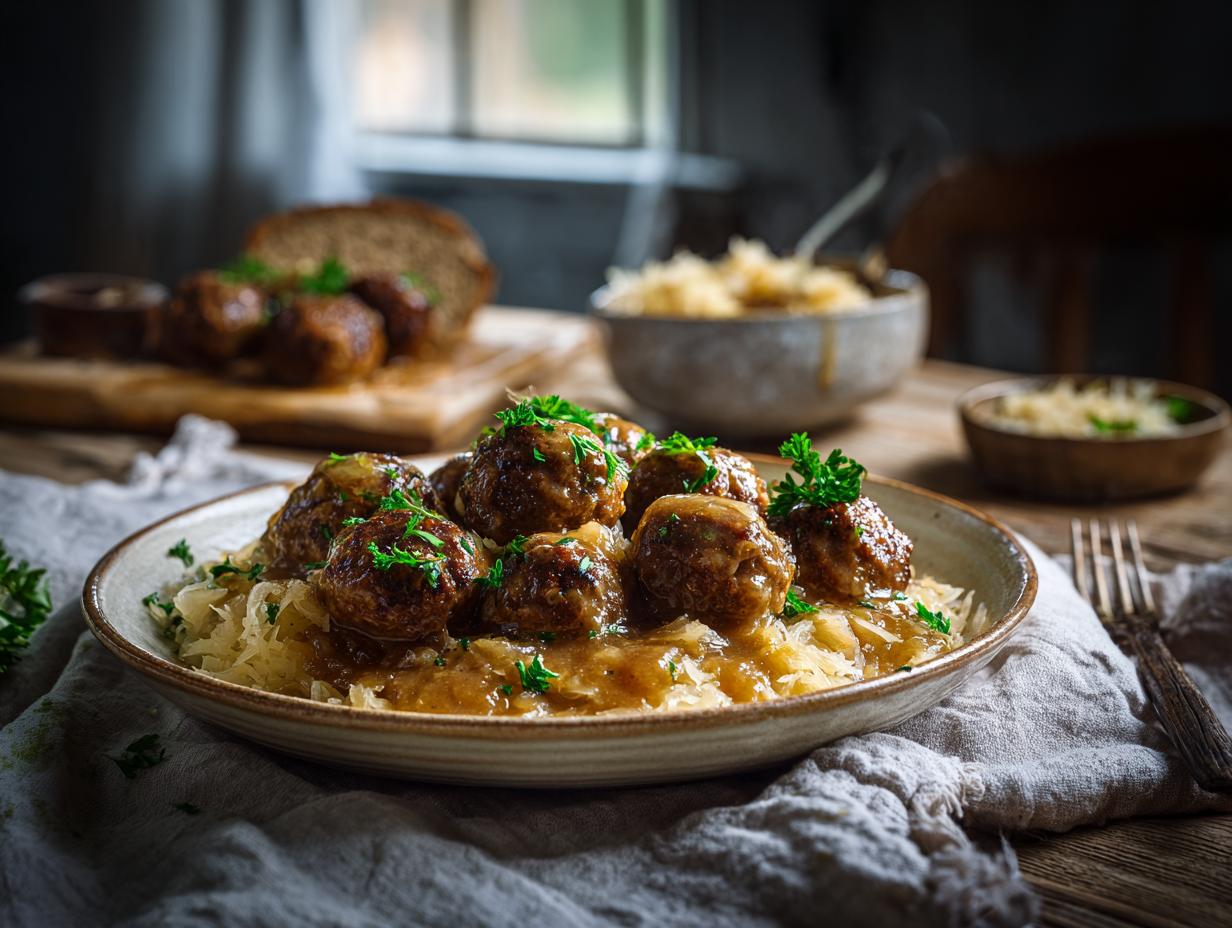
These are baked ground beef meatballs cooked directly over sauerkraut in one pan, so the drippings season the kraut and the kraut keeps the meat moist. The honest reason to make them: dinner is in the oven in about 15 minutes of active work, and the result tastes like you planned it all along. Serve over egg noodles or mashed potatoes and you have a complete meal from pantry staples.
The technique that matters
The layering order is the whole recipe. Sauerkraut goes in first, spread flat, so it acts as a rack and a braising liquid at the same time. The meatballs sit on top — not buried, not crowded. As they bake, fat and juices drip down and mellow the kraut’s sharpness while the steam rising back up keeps the meatballs from drying out. If you skip this and bake the meatballs separately, you lose that exchange entirely and end up with two unrelated things on a plate. The second thing that matters is not overworking the meat when you mix it. Stir just until the ingredients come together; overmixing compresses the proteins and produces a dense, rubbery meatball. Use your hands and stop the moment you don’t see dry patches.
Shopping notes
- Sauerkraut: Refrigerated sauerkraut (sold near deli meats) has better texture and sharper flavor than shelf-stable canned. Either works, but drain both well — excess liquid makes the bottom of the pan watery rather than silky.
- Ground beef fat content: 80/20 is the right call here. Leaner beef (90/10 or higher) won’t release enough fat to properly season the kraut underneath, and the meatballs will be drier.
- Breadcrumbs: Plain dried breadcrumbs are fine. Panko works too and gives a slightly lighter texture. Skip seasoned breadcrumbs — the recipe already has its own seasoning and you don’t want the salt to get away from you.
Storage and reheating
Store leftovers — meatballs and sauerkraut together — in an airtight container in the fridge for up to 4 days. They reheat well: a covered skillet over medium-low heat for 8–10 minutes works better than the microwave, which tends to tighten the meatballs. Add a splash of water or broth if the kraut looks dry. For freezing, portion into meal-sized containers and freeze for up to 3 months. Thaw overnight in the fridge before reheating. Frozen-then-thawed sauerkraut softens further, which is fine — it just becomes more of a sauce than a side.
Common problems and fixes
- Meatballs falling apart in the pan: The binder ratio is off — usually not enough egg or breadcrumb relative to the meat. Make sure you’re using the quantities in the recipe card and that the mixture is fully combined before shaping. Chilling the shaped meatballs for 10 minutes before baking also helps them hold.
- Kraut is watery and thin at the bottom: You didn’t drain it thoroughly enough. Press sauerkraut in a colander or squeeze it by the handful before spreading it in the baking dish. A wet base also steams the meatballs instead of baking them, which affects the texture on the outside.
- Meatballs reading under 160°F at the stated time: Oven calibration varies and meatball size matters. Use an instant-read thermometer — 160°F (71°C) is the target for ground beef. If they’re not there yet, give them another 5 minutes and check again rather than guessing by color alone.
- Meatballs browning too fast on top before cooking through: Your oven runs hot, or the meatballs are too small. Tent the dish loosely with foil after the first 15 minutes and continue baking until they hit temperature. Skip the garnish — not worth the extra dish.
- Bland overall flavor: Sauerkraut varies a lot in saltiness and acidity depending on the brand. Taste it before it goes in the pan. If it’s very mild, the finished dish will need seasoning at the table. If it’s very salty, a quick rinse and drain before using will keep the whole thing from being over-salted.
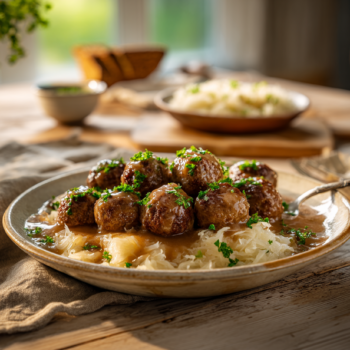
Surprisingly Good And Easy German Meatballs

Ingredients
 2 pounds ground beef (minced beef)
 1 cup sauerkraut - packed
- ¼ cup thousand island dressing
 1 large egg - beaten
 ½ cup mozzarella cheese - finely shredded
 ½ teaspoon salt
 ½ teaspoon ground black pepper
Instructions
- Preheat your oven to 375°F.
- Mix all of the ingredients together until well combined.
- Form the meat mixture into 2-inch balls and place in a greased baking dish (I used an 8×8 pan and had to kind of squeeze a couple in there).
- Bake for 30-35 minutes, and enjoy!
Nutrition
FAQ
Can I use ground pork instead of ground beef?
Yes, ground pork works well and is actually a traditional choice for German-style meatballs. Cook it to an internal temperature of 160°F (71°C) — the same target as ground beef — and don’t serve it pink.
Do I have to drain the sauerkraut first?
Yes, always drain it. Undrained kraut releases too much liquid during baking and the bottom of the dish becomes soupy rather than flavorful. Press it firmly in a colander or squeeze it by hand before it goes in.
Can I make the meatballs ahead and refrigerate them before baking?
Yes, and it actually helps. Shaped, unbaked meatballs can sit covered in the fridge for up to 24 hours. They hold their shape better going into the oven cold.
What’s the best way to serve this?
Egg noodles or mashed potatoes are the most practical options — both soak up the juices from the kraut. Boiled potatoes work too if that’s what you have on hand.
Can I use a slow cooker instead of the oven?
You can, though the meatballs won’t get any browning on the outside. Layer the drained kraut on the bottom, place the meatballs on top, and cook on low for 4–5 hours or high for 2–3 hours, until the meatballs reach 160°F internally.
My sauerkraut is very sour — will it overpower the dish?
A quick rinse under cold water and a thorough drain will dial back the acidity without removing all the flavor. Don’t soak it — just rinse and press dry.
More mince recipes to try
- Hearty Beef Mushroom Stroganoff
- Spicy Beef Stuffed Peppers
- Hearty Beef Cauliflower Bake
- Swedish Dill Pork Sausage