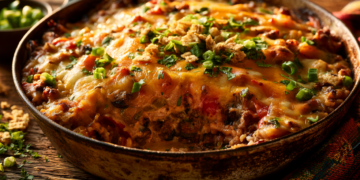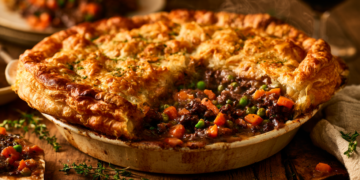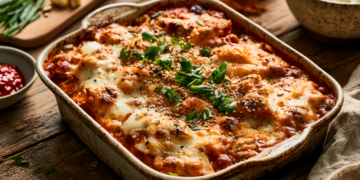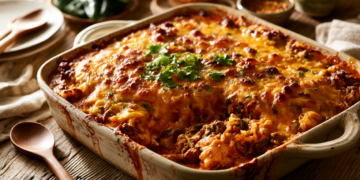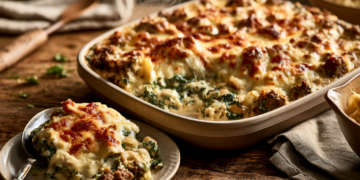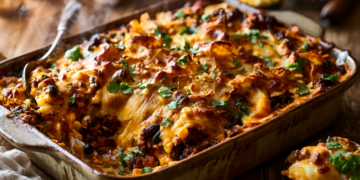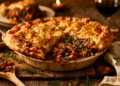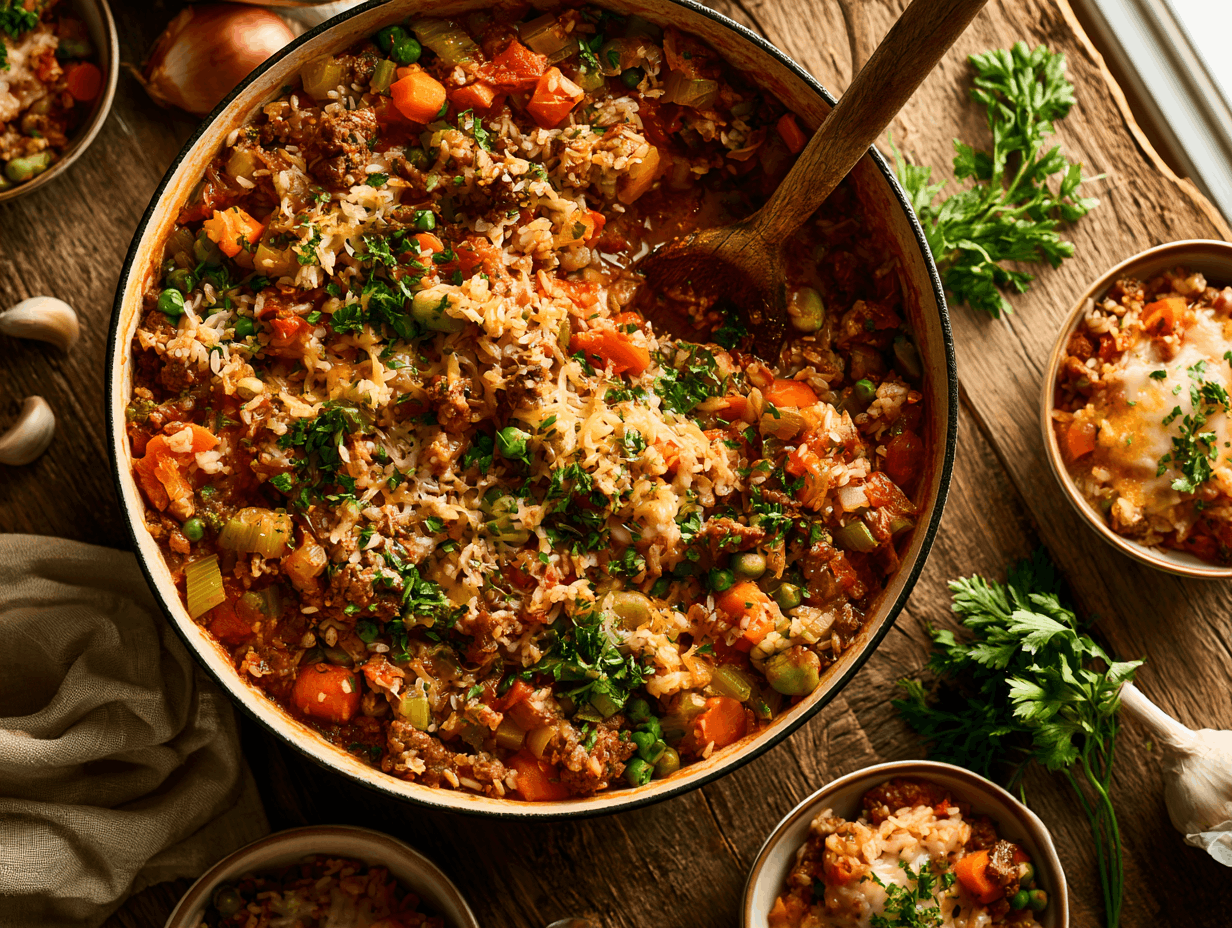
The aroma of simmering beef and vegetables has a way of transforming a kitchen into the heart of a home. There’s something deeply satisfying about creating a meal that not only nourishes but also brings people together around the dinner table. The One-Pot Beef and Rice Casserole embodies this philosophy perfectly—a dish born from the intersection of practicality and comfort, where efficiency meets indulgence in the most delicious way possible.
In the landscape of American home cooking, few dishes hold as sacred a place as the humble casserole. These one-dish wonders emerged from necessity during the early 20th century, when home cooks needed to stretch ingredients and minimize both preparation time and cleanup. The casserole became a canvas for creativity, allowing generations of cooks to combine whatever was on hand into something greater than the sum of its parts. This particular beef and rice casserole draws from that rich tradition while incorporating modern culinary sensibilities that elevate it beyond its humble origins.
The beauty of this recipe lies in its simplicity and the way it builds layers of flavor through careful technique. Starting with quality ground beef—specifically an 80/20 blend—ensures the dish maintains richness without becoming greasy. This ratio of lean meat to fat is crucial; too lean, and the dish becomes dry and lacks the unctuous quality that makes comfort food so satisfying. Too fatty, and it overwhelms the other ingredients. The 80/20 blend strikes the perfect balance, rendering just enough fat to coat the rice grains and vegetables while keeping the meat tender and flavorful.
The foundation of flavor begins with the holy trinity of aromatics: onions, carrots, and celery. This classic combination, known in French cuisine as mirepoix, forms the backbone of countless dishes across culinary traditions. When these vegetables are sautéed together, they create a sweet, savory base that permeates the entire dish. The key is patience—allowing them to soften properly releases their natural sugars and creates depth that instant cooking simply cannot achieve.
Rice selection might seem straightforward, but it plays a critical role in the success of this dish. Long-grain white rice is chosen specifically for its ability to absorb liquid while maintaining distinct grains. Unlike short-grain varieties that tend toward stickiness, long-grain rice provides the perfect texture—tender yet separate, allowing each forkful to capture the perfect ratio of meat, vegetables, and grain. The crucial step of rinsing the rice removes excess surface starch, preventing the final dish from becoming gummy or clumped together.
The liquid component—a combination of beef broth and diced tomatoes—does double duty. It not only cooks the rice but also creates a rich, savory sauce that binds everything together. Low-sodium broth is recommended not out of health concerns alone, but because it allows the cook to control the seasoning more precisely. The tomatoes add acidity that brightens the dish and prevents it from becoming one-dimensional, while their natural umami compounds enhance the beefy flavors.
Temperature control throughout the cooking process is paramount. The initial high heat for browning the beef creates the Maillard reaction—that complex chemical process that produces the deep, roasted flavors we associate with well-cooked meat. But once the liquid is added, reducing to a gentle simmer is essential. Too high a heat will cause the bottom to scorch while leaving the top undercooked. Too low, and the rice won’t cook properly. That sweet spot of around 325°F allows for even, gentle cooking that produces perfectly tender rice and melded flavors.
The addition of frozen peas at the end serves multiple purposes. Beyond their pop of color that makes the dish visually appealing, they provide textural contrast and a touch of sweetness that balances the savory elements. Adding them at the end preserves their bright green color and slight firmness—overcooked peas turn mushy and gray, diminishing both their nutritional value and their contribution to the dish.
The optional cheese topping transforms this from a simple weeknight meal into something more indulgent. Sharp cheddar is traditional, its tangy bite complementing the rich beef and cutting through the starchiness of the rice. When melted over the hot casserole, it creates an irresistible golden layer that adds both flavor and textural interest. For those seeking a lighter option, the dish stands perfectly well on its own, proving that sometimes the best comfort food doesn’t need every bell and whistle.
This recipe’s true genius lies in its adaptability. While the base recipe is perfected as written, it serves as a template for countless variations. Ground turkey can replace beef for a leaner option, though you might need to add a tablespoon of olive oil to compensate for the reduced fat. Vegetarians might substitute crumbled firm tofu or plant-based ground meat alternatives. The vegetable component can be adjusted based on what’s in season or what needs to be used up in the refrigerator—bell peppers, corn, or green beans all make excellent additions.
The one-pot method isn’t just about convenience, though that’s certainly a major benefit. Cooking everything together allows the flavors to meld in a way that simply isn’t possible when components are prepared separately. Each ingredient contributes to the overall flavor profile, creating a harmonious whole that’s more complex than any individual element. The rice absorbs the seasoned broth, the vegetables release their essence into the cooking liquid, and the beef fat enriches everything it touches.
From a practical standpoint, this dish checks every box for busy home cooks. It requires only basic knife skills and standard kitchen equipment. The active cooking time is minimal—most of the hour-long total time is hands-off simmering. Cleanup is a breeze with just one pot to wash. It reheats beautifully, making it perfect for meal prep or leftovers. It freezes well for up to three months, providing a ready-made dinner for those evenings when cooking from scratch isn’t feasible.
This One-Pot Beef and Rice Casserole represents more than just a recipe—it’s a philosophy of cooking that values flavor, nutrition, and practicality in equal measure. It proves that feeding a family well doesn’t require complicated techniques or exotic ingredients. Sometimes, the most memorable meals come from simple ingredients treated with respect and combined with care. In a world that often feels too fast and too complicated, there’s profound satisfaction in creating something this elemental and this good.
One-Pot Beef and Rice Casserole

Equipment
Ingredients
Main Ingredients
 1 tablespoon olive oil - extra virgin for best flavor
 1 pound ground beef - 80/20 blend for richness
 1 cup yellow onion - finely diced
 2 cloves garlic - minced
 1 cup carrots - peeled and diced small
 1 cup celery - diced
- 1 ¼ cups long-grain white rice - uncooked, rinsed well under cold water
 1 teaspoon kosher salt - adjust to taste
- ½ teaspoon black pepper - freshly cracked preferred
 ½ teaspoon smoked paprika
- 2 ½ cups beef broth - low-sodium preferred
- 1 cup canned diced tomatoes - with juices
 1 cup peas - frozen ; added at end for bright color
 1 cup cheddar cheese - shredded ; optional topping
Garnish (Optional)
 2 tablespoons parsley - fresh ; finely chopped
Instructions
- Heat 1 tablespoon of olive oil in a large Dutch oven or heavy-bottomed pot over medium-high heat (about 375°F / 190°C). Once shimmering, add the ground beef and cook for 6–8 minutes, breaking it up with a wooden spoon, until browned and cooked through.
- Add diced onions, carrots, and celery to the beef. Cook for 5–6 minutes, stirring occasionally, until vegetables soften and onions are translucent.
- Stir in the minced garlic and cook for another 1 minute until fragrant—avoid browning the garlic to prevent bitterness.
- Rinse the rice thoroughly under cold water until the water runs clear to remove excess starch. Add it to the pot and stir to coat in the beef and veggie mixture.
- Add the beef broth, diced tomatoes with juice, salt, pepper, and smoked paprika. Bring the mixture to a gentle boil over medium-high heat.
- Lower the heat to a simmer (approximately 325°F / 163°C), cover with a tight-fitting lid, and allow to cook undisturbed for 25 minutes, or until the rice is tender and has absorbed most of the liquid.
- Uncover, stir in the frozen peas, and cook for an additional 5 minutes until heated through. If desired, sprinkle with shredded cheddar cheese and cover for a minute to let it melt.
- Taste and adjust seasoning. Garnish with freshly chopped parsley before serving.