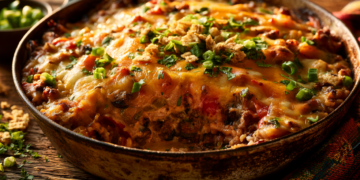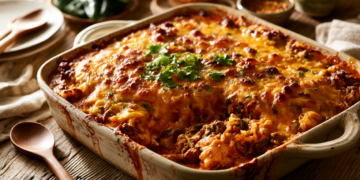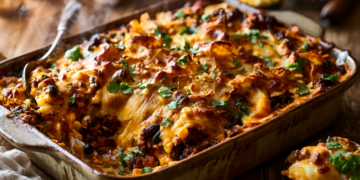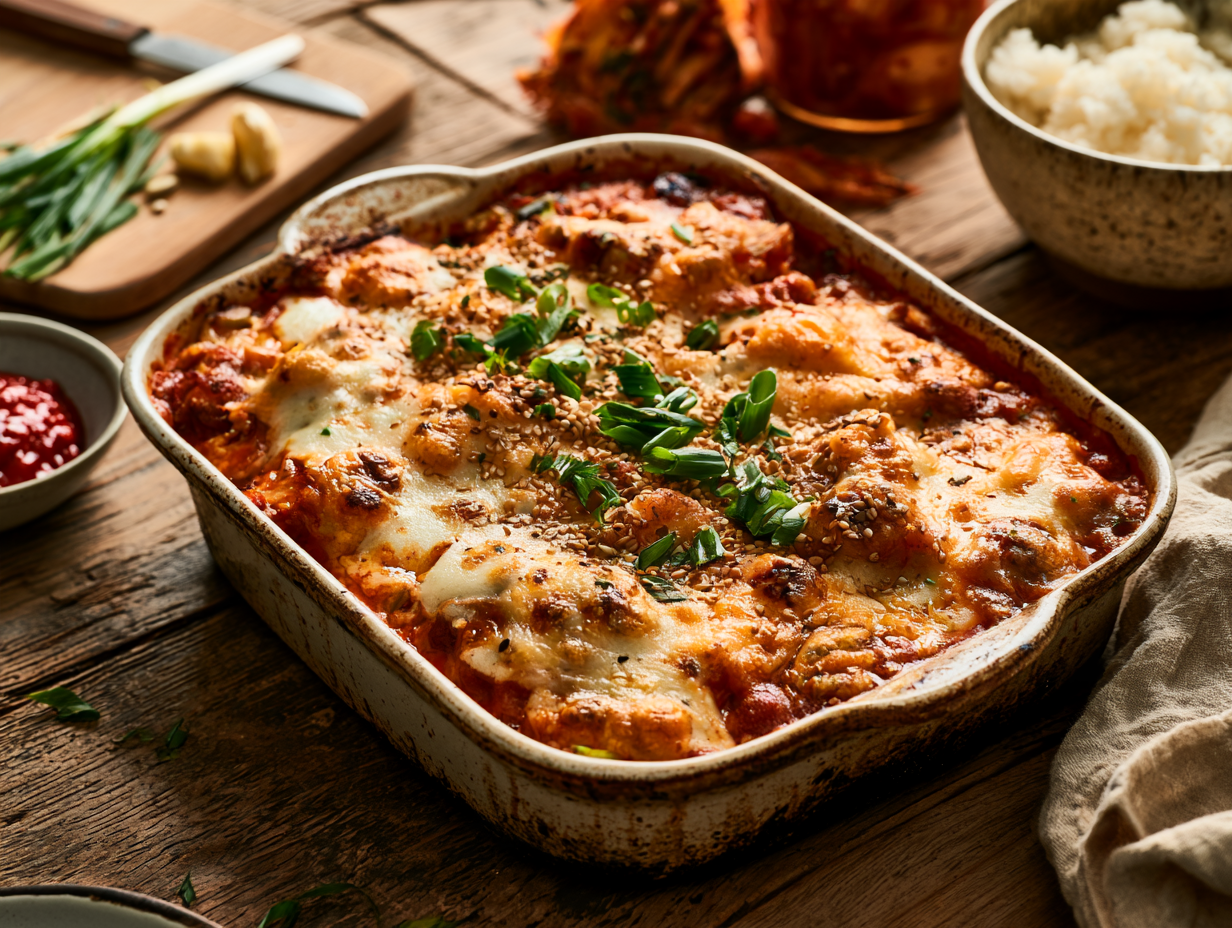
The marriage of Korean and Western cuisines has given birth to some of the most exciting dishes in modern cooking, and the Spicy Kimchi Beef Casserole stands as a testament to this culinary evolution. This dish represents more than just a fusion recipe; it’s a bridge between two distinct food cultures, bringing the bold, fermented flavors of Korea into the comforting embrace of an American-style casserole.
The story of this dish begins with kimchi, Korea’s national dish and culinary pride. For centuries, Korean families have gathered in autumn for kimjang, the traditional kimchi-making season, where cabbage is transformed through fermentation into a complex, umami-rich condiment that sustains households through winter. This ancient preservation technique creates not just a side dish, but a flavor powerhouse that forms the backbone of countless Korean recipes.
Traditionally, kimchi finds its way into kimchi jjigae, a beloved Korean stew that combines aged kimchi with pork, tofu, and other ingredients in a bubbling pot of comfort. This stew embodies the Korean philosophy of using fermented foods to create depth and complexity in everyday meals. The transformation of this traditional stew into a casserole format represents the natural evolution of immigrant cuisines, where beloved flavors from home adapt to new cooking methods and available ingredients.
The casserole, on the other hand, holds a special place in American culinary tradition. Born from practicality and the need to feed families efficiently, casseroles became symbols of mid-century American cooking. These one-dish wonders offered convenience without sacrificing satisfaction, often featuring a protein, starch, vegetable, and binding element topped with something crispy or melty. The format proved so versatile that it became a canvas for culinary creativity across diverse American communities.
What makes the Spicy Kimchi Beef Casserole particularly special is how it honors both traditions while creating something entirely new. The beef, marinated in a mixture of soy sauce, sesame oil, and gochujang, brings the savory depth that Korean cuisine is famous for. Gochujang, a fermented chili paste made from red peppers, glutinous rice, fermented soybeans, and salt, adds not just heat but a complex sweetness and umami that can’t be replicated with simple hot sauce.
The genius of this recipe lies in its layering technique. The rice base serves multiple purposes: it absorbs the flavorful kimchi juice that permeates down during baking, provides a neutral canvas that balances the intensity of the kimchi, and offers the satisfying heft that makes casseroles so comforting. Using day-old rice is crucial here – its slightly dried texture prevents the dish from becoming mushy while allowing it to crisp slightly at the edges where it meets the hot casserole dish.
The inclusion of both mozzarella and sharp cheddar cheese might raise eyebrows among purists, but it represents the beautiful reality of modern fusion cooking. While cheese isn’t traditional in Korean cuisine, its adoption in dishes like Korean corn cheese and army stew shows how Korean cooking has embraced and transformed foreign ingredients. In this casserole, the mozzarella provides that Instagram-worthy cheese pull and creamy texture, while the sharp cheddar adds a tangy depth that complements the fermented notes of the kimchi.
Temperature control plays a crucial role in this dish’s success. The initial high-heat searing of the marinated beef creates the Maillard reaction, developing complex flavors that will permeate the entire casserole. The subsequent gentle baking at 375°F allows the flavors to meld without overcooking the beef or breaking down the kimchi too much. This careful temperature management preserves the varying textures that make each bite interesting.
The choice of kimchi itself deserves special attention. While fresh kimchi can work, aged kimchi – known as mukeunji in Korean – brings a deeper, funkier flavor that transforms the dish from simply spicy to genuinely complex. The fermentation process breaks down the cabbage’s cellular structure, creating a softer texture that melts into the casserole while the beneficial bacteria add layers of tangy, umami notes that fresh kimchi simply can’t match.
This recipe also showcases the importance of balance in fusion cooking. The brown sugar in the marinade isn’t just about adding sweetness; it helps caramelize the beef and balance the dish’s various strong flavors. The rice vinegar brightens the overall profile, preventing the richness from becoming cloying. Even the garnishes serve a purpose beyond aesthetics – the fresh scallions add a sharp, oniony bite that cuts through the richness, while the toasted sesame seeds provide textural contrast and a nutty finish.
From a nutritional standpoint, this casserole offers surprising benefits. Kimchi is renowned for its probiotic properties, supporting digestive health with beneficial bacteria. The fermentation process also increases the bioavailability of nutrients and creates compounds that may support immune function. Combined with protein-rich beef and energy-providing rice, this indulgent-seeming dish actually provides a well-rounded meal.
The make-ahead nature of this casserole speaks to modern lifestyle needs. In our busy world, the ability to prepare a dish in advance without sacrificing quality is invaluable. The flavors actually improve with a night in the refrigerator, as the kimchi juice has more time to penetrate the rice and the spices meld together more completely.
This Spicy Kimchi Beef Casserole represents more than just dinner; it’s a celebration of culinary evolution. It shows how food traditions can travel, adapt, and create new traditions without losing their essential character. Whether served at a potluck where it’s sure to spark conversation, or enjoyed as a family dinner that brings warmth to a cold evening, this dish embodies the best of fusion cuisine – respectful of its roots while fearlessly creative in its execution. In every bubbling, cheese-topped bite, you taste the story of cultures meeting, adapting, and creating something deliciously new together.
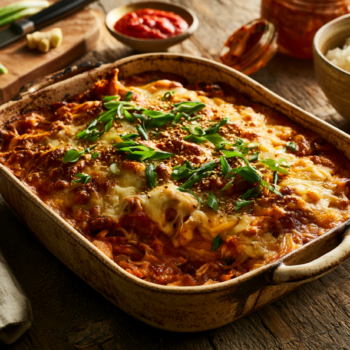
Spicy Kimchi Beef Casserole

Equipment
Ingredients
- 1 pound beef sirloin - thinly sliced against the grain
 2 tablespoons soy sauce - preferably low-sodium
- 1 tablespoon toasted sesame oil
- 1 tablespoon gochujang (Korean chili paste) - for authentic spice and depth
 2 teaspoons brown sugar - adds balance to the heat
 1 tablespoon rice vinegar - adds tang to brighten the flavors
 2 cloves garlic - minced
 1 teaspoon ginger - fresh ; grated
- 1 ½ cups kimchi - chopped ; use aged kimchi for deeper flavor
- 1 cup kimchi juice - from the kimchi jar
- 2 cups cooked white rice - preferably day-old for best texture
 1 cup yellow onion - finely chopped
 1 cup mozzarella cheese - shredded ; for melty richness
- ½ cup sharp cheddar cheese - shredded ; adds savory depth
- 2 tablespoons scallions - sliced ; for garnish
 1 teaspoon sesame seeds - toasted ; for garnish
Instructions
- Marinate the Beef: In a mixing bowl, combine the sliced beef with soy sauce, sesame oil, gochujang, brown sugar, rice vinegar, garlic, and ginger. Mix well until the beef is coated. Let marinate for 15–20 minutes while you prep other ingredients.
- Sauté the Aromatics: Heat a large skillet over medium-high heat (about 375°F / 190°C). Add a touch of oil, then sauté chopped onions until translucent and slightly caramelized—about 5 minutes.
- Cook the Beef: Add the marinated beef to the skillet. Sear for 3–4 minutes until browned and almost cooked through. Stir in the kimchi and sauté together for another 5 minutes to meld the flavors and soften the kimchi.
- Assemble the Casserole: Preheat your oven to 375°F (190°C). Lightly grease a 9×13 inch casserole dish. Spread the cooked white rice evenly at the bottom. Layer the beef and kimchi mixture over the rice, then pour the kimchi juice evenly over the top.
- Top and Bake: Sprinkle the mozzarella and cheddar cheese evenly across the top. Bake uncovered in the preheated oven for 20 minutes until the cheese is bubbling and starting to brown at the edges.
- Garnish and Serve: Remove from oven. Let sit for 5 minutes before topping with fresh scallions and toasted sesame seeds. Serve hot.
Notes
- Use aged kimchi for a richer, funkier flavor.
- If the dish is too spicy, balance by adding a tablespoon of cream or yogurt to the beef mixture.
- For a vegetarian version, substitute beef with firm tofu and use vegetarian kimchi.
- To make ahead: Prepare the full casserole, cover, and refrigerate. When ready to serve, bake directly from fridge for about 25–30 minutes.