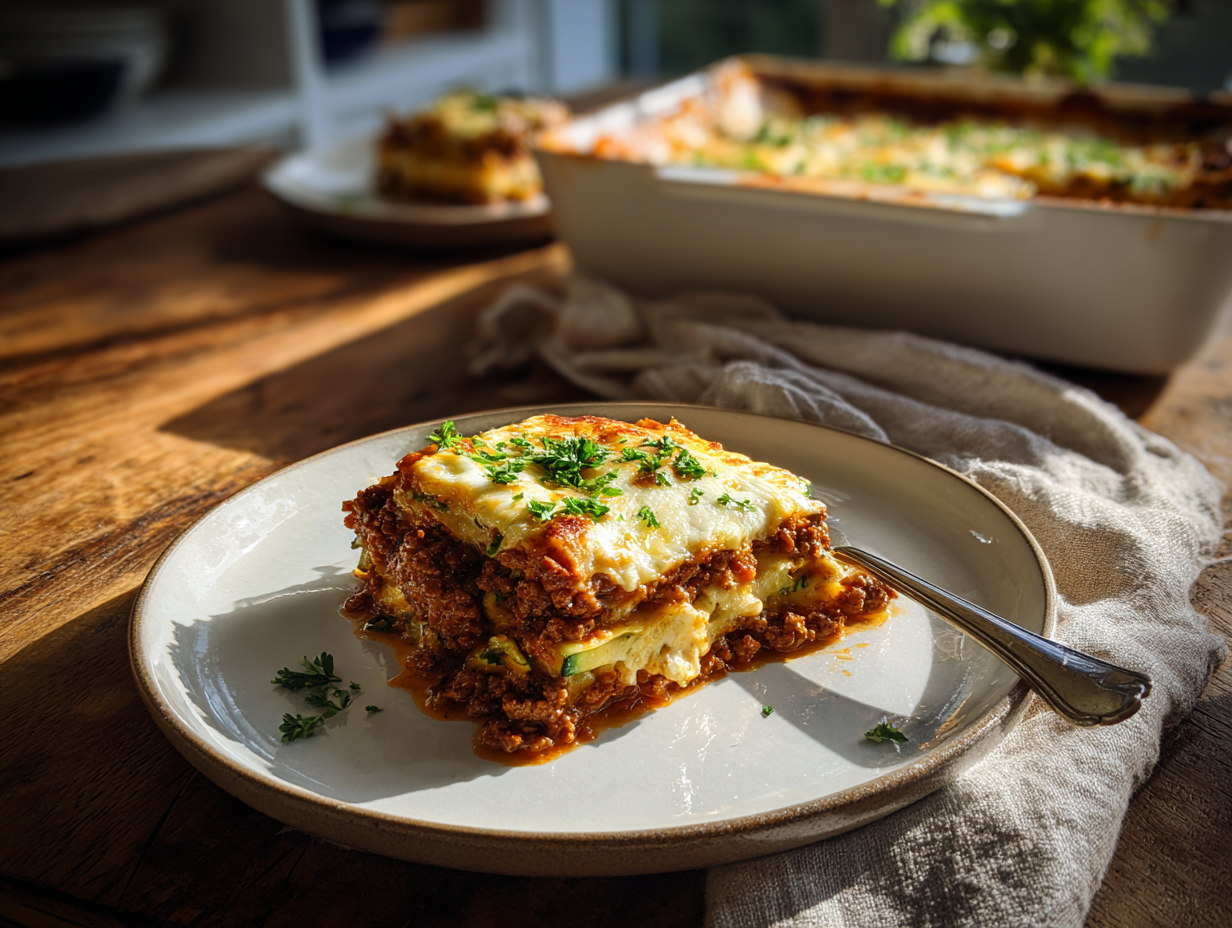
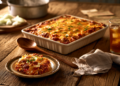
This is a layered beef lasagna where thinly sliced zucchini stands in for pasta sheets. It delivers the same seasoned meat sauce and melted cheese you want from lasagna, just without the pasta weight. If you have ground beef, a couple of zucchini, and basic pantry staples, you have dinner.
Smart swaps
- Zucchini: Yellow summer squash works just as well. If neither is available, thin-sliced eggplant is a solid substitute — salt and drain it the same way.
- Ground beef: Ground turkey or ground pork both work. Turkey will be leaner and slightly milder, so lean into the seasoning.
- Ricotta: Cottage cheese drained through a fine-mesh strainer is a direct swap and usually cheaper. Full-fat is worth it here — low-fat versions release more water.
- Fresh garlic and onion: Garlic powder (½ tsp per clove) and dried minced onion (1 tsp per small onion) are fine in the sauce. Not identical, but they work.
- Mozzarella: Any good melting cheese — Monterey Jack, provolone, or a Mexican blend — does the job if that’s what’s in the fridge.
The short version of why this works
Two things make this recipe succeed or fail. First, drawing moisture out of the zucchini before assembly — salting the slices and patting them dry is not optional. Skipping it turns the finished dish soupy, no matter how well everything else is done. Second, browning the beef properly rather than just cooking it through. Let the meat sit undisturbed in the pan long enough to get some color on the bottom. That browned crust adds depth that a pale, steamed-looking mince simply won’t have. Everything else — the layering, the cheese, the bake time — follows from getting those two steps right.
What can go wrong
- Watery bottom layer: Even after salting, zucchini releases more moisture during baking. Starting with a thin layer of meat sauce on the bottom of the pan before any zucchini goes in creates a buffer and prevents a soggy base.
- Cheese layer sliding off: If the ricotta mixture is too loose, it slides during slicing. Mix in one egg per cup of ricotta to bind it — this firms it up as it bakes.
- Uneven cooking: Zucchini slices of different thicknesses cook at different rates. Try to keep slices consistent — roughly ¼ inch. A mandoline helps, but a steady hand with a sharp knife is enough.
- Greasy sauce: If your beef is higher fat content, drain the rendered fat from the pan before adding tomatoes. Leaving it in makes the final dish greasy rather than rich.
- Top cheese burning before center is set: If the cheese is browning too fast, tent the pan loosely with foil for the last 10 minutes of baking. Skip the garnish — not worth the extra dish.
Leftovers and meal prep
Leftovers keep well in an airtight container in the fridge for up to 4 days. The flavors genuinely improve overnight as the sauce settles into the zucchini layers. Reheat individual portions in the microwave covered with a damp paper towel, or in a 350°F oven for about 15 minutes. For freezing, cut into individual portions before freezing — they thaw and reheat more evenly than a large slab. Freeze for up to 2 months. Thaw overnight in the fridge before reheating; going straight from frozen to oven works but takes longer and can make the edges rubbery.
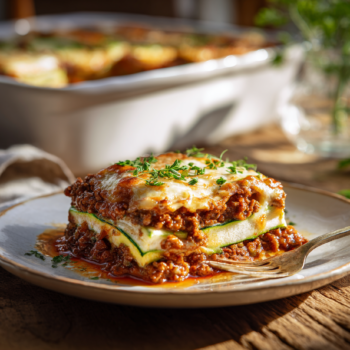
Extraordinary Zucchini Lasagna With Beef In A Loaf Pan

Ingredients
 ½ pound ground beef (minced beef)
 2 cups Marinara sauce (tomatoes, garlic, herbs, and onions - pasta sauce in southern hemisphere for Italian seafood dish) - I just bought a jar from Trader Joe’s!
 1 large zucchini - we will chat on how to cut this in a moment
 ¾ cup ricotta cheese
 ¼ cup Parmesan cheese
 1-2 tablespoon Italian herbs (oregano, rosemary, thyme, and sometimes basil and parsley) - I use a McCormick grinder, but if you don’t have that, I would suggest garlic powder, onion powder, oregano, and dried basil!
 ½ cup spinach
- ¼ cup Parmesan cheese - for the top
Instructions
- First, brown the ground beef and drain the grease. I actually bought a whole pound and cooked it all but saved the other half for another recipe!
- Mix together the ricotta, Parmesan, and Italian seasonings in a small bowl.
- Next, slice the zucchini. If you want long slices, I would suggest using a mandolin. If you don’t have a mandolin, I would suggest cutting it into small rounds! It won’t exactly be “lasagna noodles”, but it still tastes like it!
- Then you may assemble! I started by spooning a little sauce on the bottom of a loaf pan. Then, I added zucchini, ricotta, meat, spinach, and then more sauce. Repeat until you’re out of ingredients! I would also suggest layering the zucchini fairly thick-otherwise they’re just floating around in there.
- Bake at 350°F for 35-40 minutes or until bubbly! Then, add the remaining Parmesan cheese to the top and pop it back in for another 5 minutes to melt. Just so you know, it’s a little…soupy. I think it’s because the zucchini has so much moisture in it. As long as the zucchini is cooked all the way through, it should be fine!
Notes
Nutrition
Your questions, answered
Do I really need to salt the zucchini first?
Yes — this step is what separates a firm, sliceable lasagna from a watery one. Salt draws out the excess moisture that zucchini holds, and patting the slices dry afterward removes it before it ends up in your baking dish.
Can I use no-cook or oven-ready pasta instead of zucchini?
You can, but it becomes a standard beef lasagna rather than this recipe. If you want to use pasta, add a little extra liquid to the sauce since dry pasta sheets absorb moisture as they bake.
What fat percentage of ground beef should I use?
80/20 gives the best flavor, but you need to drain the excess fat after browning. 90/10 works fine and skips that step — the sauce will just be slightly less rich.
My zucchini slices are falling apart when I layer them. What am I doing wrong?
They were likely sliced too thin or over-salted and left too long, which breaks down the flesh. Aim for ¼-inch slices and limit the salting rest to about 15 minutes.
Can I assemble this the night before and bake it the next day?
Yes, and it works well. Assemble, cover tightly, and refrigerate overnight. Add about 10 extra minutes to the bake time since you’re starting from cold.
How do I know when it’s actually done baking?
The edges should be bubbling and the top cheese golden. More reliably, an instant-read thermometer inserted into the center should read at least 160°F (71°C) for the beef to be fully safe.
What to cook next
- Beef Ricotta Lasagna Rolls
- Hearty Beef Cauliflower Bake
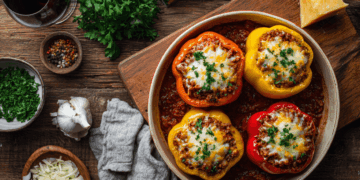
- Spicy Beef Stuffed Peppers
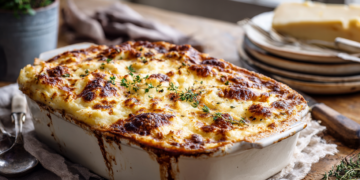
- Ultimate Cheesy Beef Bake



It’s nice work.