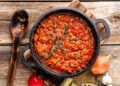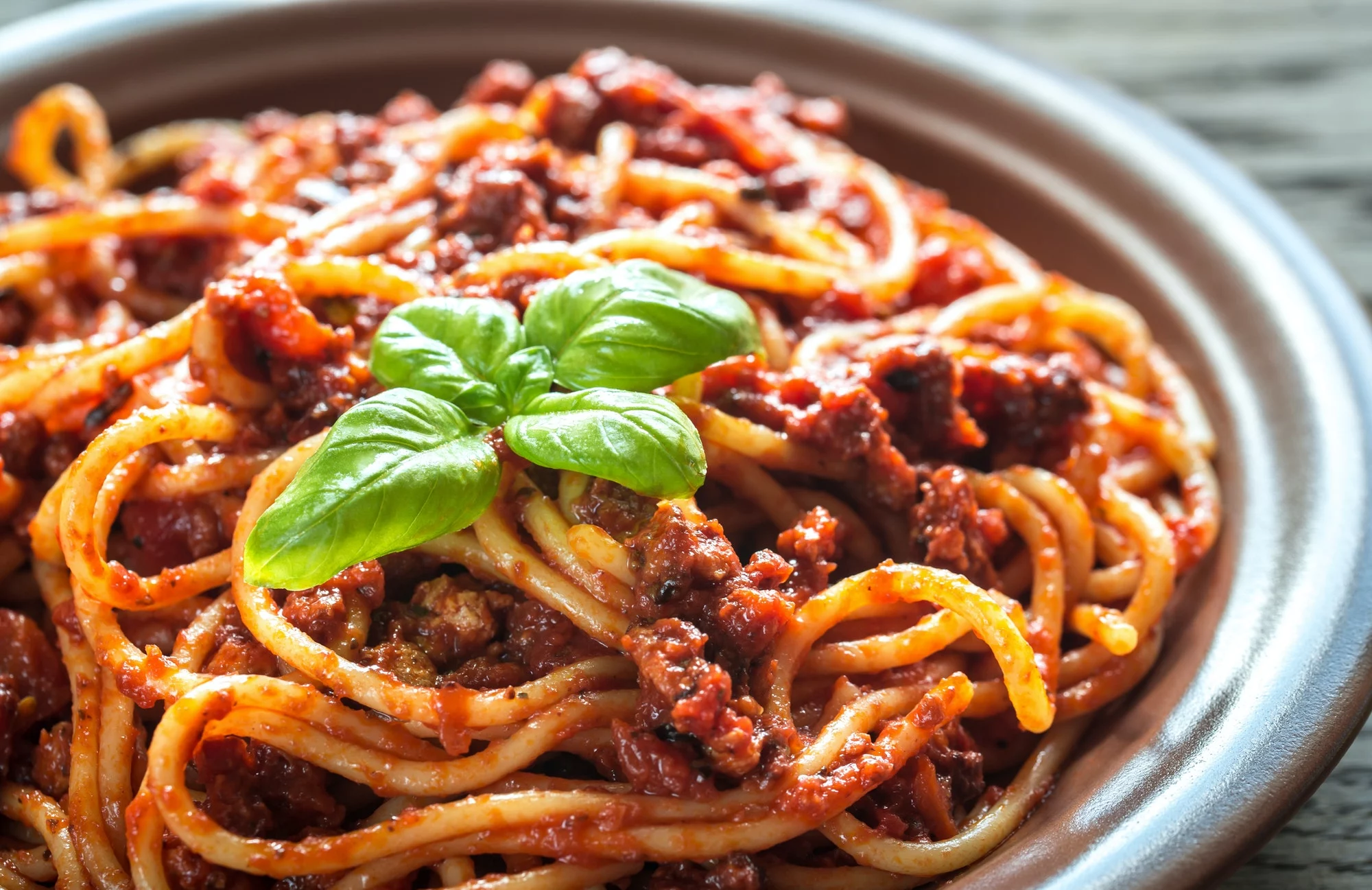
The Bolognese sauce is an absolute classic from Italy, whether as spaghetti sauce or for the preparation of lasagna, this is how Italian flair comes into your own four walls. But how do you prepare the original spaghetti Bolognese? I’ll show you how you can easily cook Italian Bolognese yourself and the secret of the original recipe.
This recipe for Italian Bolognese sauce is just amazing. The secret – it has to cook for a long time, which makes it incredibly aromatic.
Original Italian Spaghetti Bolognese

Nothing compares to the original Italian spaghetti bolognese. You always see this on every restaurant's menu, and here is an amazing recipe to try for yourself.
Ingredients
 2 stalks celery
 2 medium carrots
- 2 medium red onions
 500 grams ground beef (minced beef)
 500 ml milk
 1 dash white wine - dry
 125 grams butter
 400 grams tomatoes - chopped
 2 cloves garlic
 200 ml passata or crushed tomatoes (tomato puree with seeds removed)
 1 cube beef stock (beef broth or beef bouillon)
 2 tablespoons olive oil
 1 pinch salt
 1 pinch ground black pepper
 1 pinch oregano
Instructions
- Prepare the onions, celery and carrots by cutting them into small cubes. Melt the butter in a pan and add a little olive oil. Now add the finely chopped cubes and let cook for 30 minutes in the fat. Make sure that the fat does not get too hot, and the butter does not burn. The medium setting on the stove is sufficient; the less, the better.
- While our so-called Soffritto is cooking, we take a large pan and let it get hot on the stove.
- Now we enter the ground beef in without adding fat and fry it sharply. When it is crumbly, add a little salt and then deglaze with a dash of white wine.
- Then we add the 500 ml milk, stir everything well and let it boil again.
- Now add the canned tomatoes and the soffritto (if you like them less fat, then put the vegetables in a sieve and drain the fat, although the entire vegetable flavour is in the fat and should therefore be added to the sauce) to the minced meat and stir well.
- Cut the garlic into fine slices and put in the Bolognese sauce.
- Now add a stock cube and cook the sauce with coarse salt and pepper to taste.
- Patience is now required because the original Bolognese sauce should simmer as long as possible, at least 3 hours, but ideally 5 hours. While it is simmering, always make sure that there is enough liquid left. As soon as it gets less, gradually add a little tomato puree. You can also give in a sip of milk if the sauce gets too thick for you.
- Shortly before turning off the heat, season the sauce again with salt, pepper and oregano.
- Serve with your favourite pre-cooked pasta.
Nutrition
Calories: 437kcalCarbohydrates: 15gProtein: 21gFat: 33gSaturated Fat: 16gPolyunsaturated Fat: 2gMonounsaturated Fat: 12gTrans Fat: 1gCholesterol: 109mgSodium: 293mgPotassium: 784mgFiber: 3gSugar: 10gVitamin A: 4688IUVitamin C: 17mgCalcium: 156mgIron: 3mg
How did this recipe turn out for you?We’re eager to hear your thoughts!