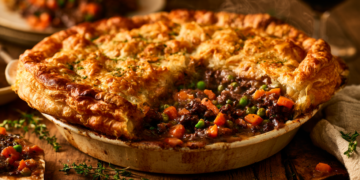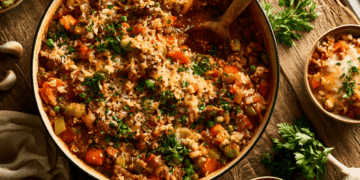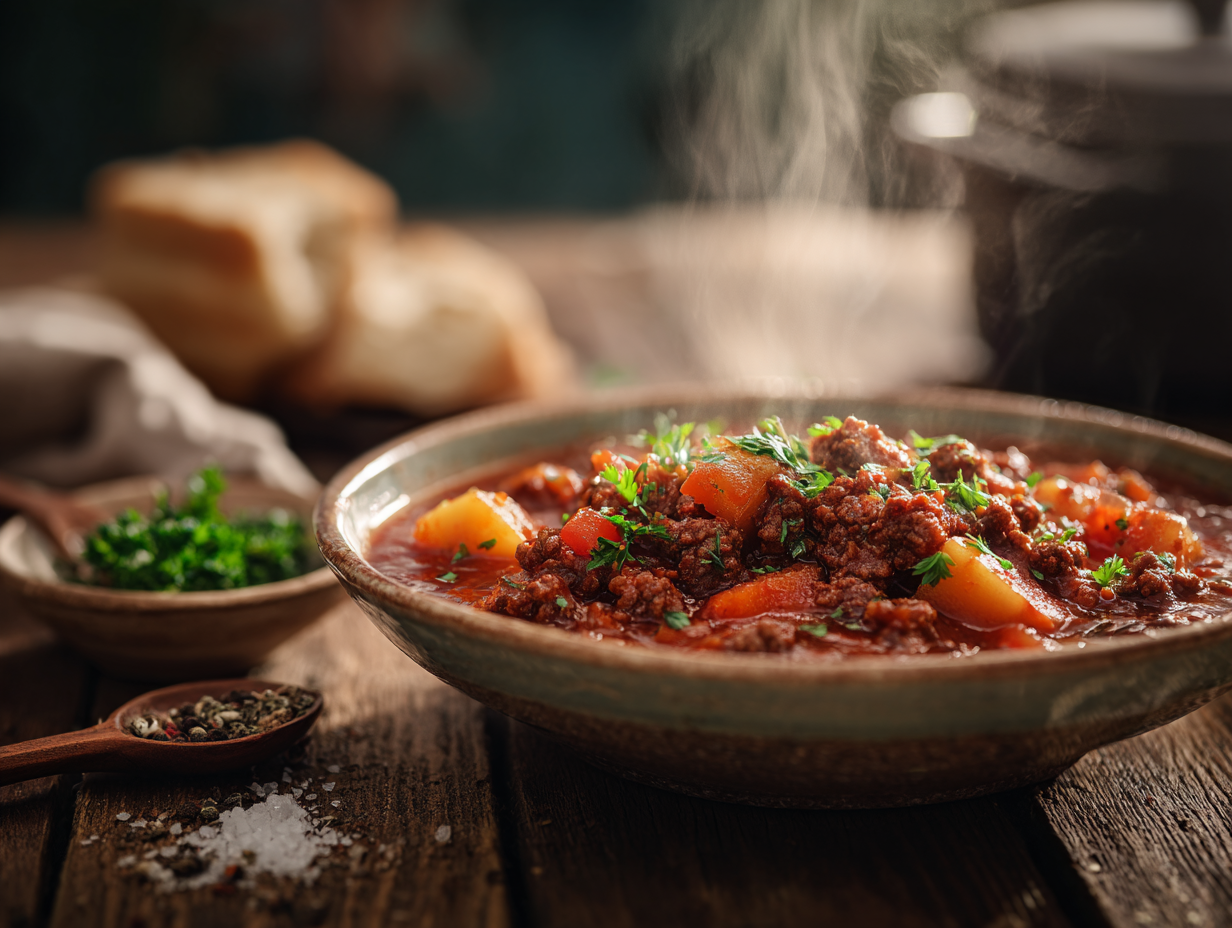
This is a ground beef stew built for a full table — thick, savory, and filling enough that nobody’s looking for a second course. Ground beef cooks faster than stew cuts and picks up seasoning evenly, so every spoonful tastes the same as the last. It’s the kind of pot you can stretch across two nights without complaint.
Before you start
Two things make or break this stew. First, brown the ground beef in a hot, dry pan before anything else goes in — don’t crowd the pan, and don’t stir constantly. You want actual browning on the meat, not steaming. Those dark bits stuck to the bottom carry most of the stew’s depth, so deglaze with your broth and scrape them up before they burn. Second, keep the heat low once everything is combined. A hard boil will tighten the proteins in the beef and make the texture grainy. A steady, gentle simmer — just a few lazy bubbles — is what gives you a cohesive, spoonable stew rather than crumbled meat floating in thin liquid. Use a thermometer if you’re unsure the beef is done: ground beef is safe at 160°F (71°C), and at low simmer it will hold there without overcooking.
About the ingredients
- Ground beef fat percentage: 80/20 works best here. Leaner blends (90/10 or higher) can leave the stew tasting flat because there’s less fat to carry flavor through the broth. If you only have lean beef, add a tablespoon of olive oil when browning.
- Root vegetables: Carrots and potatoes are standard, but parsnips or turnips swap in cleanly if that’s what you have. Cut everything roughly the same size so it finishes cooking at the same time.
- Tomato paste: Even a single tablespoon adds body and a low-level richness that plain broth can’t match. Don’t skip it — cook it in the pan for 60 seconds before adding liquid to take the raw edge off.
- Broth: Beef broth gives the strongest result. Chicken broth works in a pinch but produces a lighter color and milder flavor. Avoid salted broth if you’re seasoning as you go — it’s easy to over-salt before the stew reduces.
Common problems and fixes
- Stew is watery after simmering: Remove the lid and increase heat slightly for 10–15 minutes. The liquid will reduce and thicken. Alternatively, stir in a slurry of one tablespoon cornstarch mixed with two tablespoons cold water, then simmer for five more minutes.
- Beef clumped into large chunks: This happens when the meat is added to the pot cold and stirred too little at the start. Break it up with a wooden spoon as soon as it hits the pan, before it sets. If it’s already clumped in the finished stew, it’s not ruined — just less uniform.
- Vegetables turned to mush: They went in too early or the heat was too high. Next time, add softer vegetables (peas, green beans, corn) in the last 10 minutes only. Potatoes and carrots can go in at the midpoint of simmering rather than the beginning.
- Stew tastes flat or bland: Taste before serving and adjust salt first — that fixes most flatness. If salt isn’t enough, a teaspoon of Worcestershire sauce or a small splash of red wine vinegar added at the end will sharpen the whole pot without making it taste sour.
- Greasy surface on the stew: Spoon off the excess fat that pools on top, or lay a paper towel flat on the surface for a few seconds and lift it away. Skip the garnish — not worth the extra dish.
Keeping and reheating
Cool the stew to room temperature within two hours of cooking, then refrigerate in a sealed container for up to four days. The flavor genuinely improves overnight as the broth absorbs into the vegetables and beef. To freeze, portion into airtight containers or zip-lock bags and freeze for up to three months — lay bags flat to save space. Thaw overnight in the fridge before reheating. Reheat on the stovetop over medium-low heat, stirring occasionally, until the stew reaches a full simmer and the center reads at least 165°F (74°C) on an instant-read thermometer. Add a splash of broth or water if it has thickened too much in the fridge. Microwave reheating works for single portions — cover loosely, heat in 90-second intervals, and stir between each.
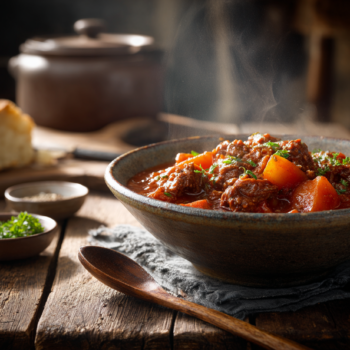
Decadent Ground Beef Stew Recipe

Ingredients
 1 large yellow onion - thinly sliced
 2 medium carrots - peeled and thinly sliced
 2 large potatoes - cut into 1/2-inch chunks
- 1 ½ cups rutabaga - peeled and sliced
 1 cup green beans - bite-size pieces
 1 pound ground beef (minced beef)
 1 piece bay leaf (bay leaves)
 ½ teaspoon thyme - dried
 1 clove garlic - crushed
 3 cups beef stock (beef broth or beef bouillon) - unsalted
 2 tablespoons brown sugar
 ¾ teaspoon salt
 2 teaspoons Worcestershire sauce
 1 dash ground black pepper
 3 tablespoons all purpose flour (plain flour Australia and UK) - all-purpose
 2 teaspoons tomato paste
Instructions
- Put everything in a slow cooker. Cover and cook over low setting for 5 hours or until beef is tender.
- Stir the stew twice as it cooks. Once done, remove it from the slow cooker and put it in a shallow bowl.
- About 30 minutes before serving, spoon the broth into a small mixing bowl. Add flour and tomato paste, then whisk until blended evenly.
- Combine with the stew and cook for half an hour.
Nutrition
Frequently asked questions
Can I use frozen vegetables instead of fresh?
Yes, frozen vegetables work fine in this stew. Add them in the last 10–15 minutes of simmering rather than at the start — they’re already partially cooked and will turn mushy if they go in too early.
What’s the best way to thicken the stew without it going gluey?
A cornstarch slurry is the most reliable method — mix one tablespoon cornstarch with two tablespoons cold water and stir it in during the last five minutes of cooking. Add it gradually and stop when you reach the consistency you want.
Can I make this in a slow cooker?
You can, but brown the ground beef in a skillet first and drain the excess fat before transferring to the slow cooker. Skipping that step leaves the stew greasy and the beef pale. Cook on low for 6–7 hours or high for 3–4 hours.
How do I know the ground beef is fully cooked?
Ground beef is safe to eat at an internal temperature of 160°F (71°C). In a stew that simmers for 30 or more minutes, it will easily reach and hold that temperature — but if you’re unsure, an instant-read thermometer inserted into the thickest part of the pot confirms it.
Can I double the recipe to feed a larger group?
Doubling works well with this style of stew. Use a pot large enough that the liquid still simmers rather than steams — a 6-quart Dutch oven handles a double batch comfortably. Browning time for the beef will increase, so work in batches to avoid crowding the pan.
What can I serve this over to make it more filling?
Mashed potatoes, cooked rice, or egg noodles all work well and stretch the stew further across a hungry table. Crusty bread on the side is the lowest-effort option and does the job just as well.
What to cook next
- Hearty Beef Kale Soup
- Hearty Beef Mushroom Stroganoff
- Fragrant Lamb Coconut Stew
- Spicy Beef Stuffed Peppers