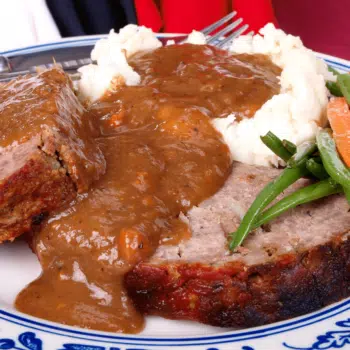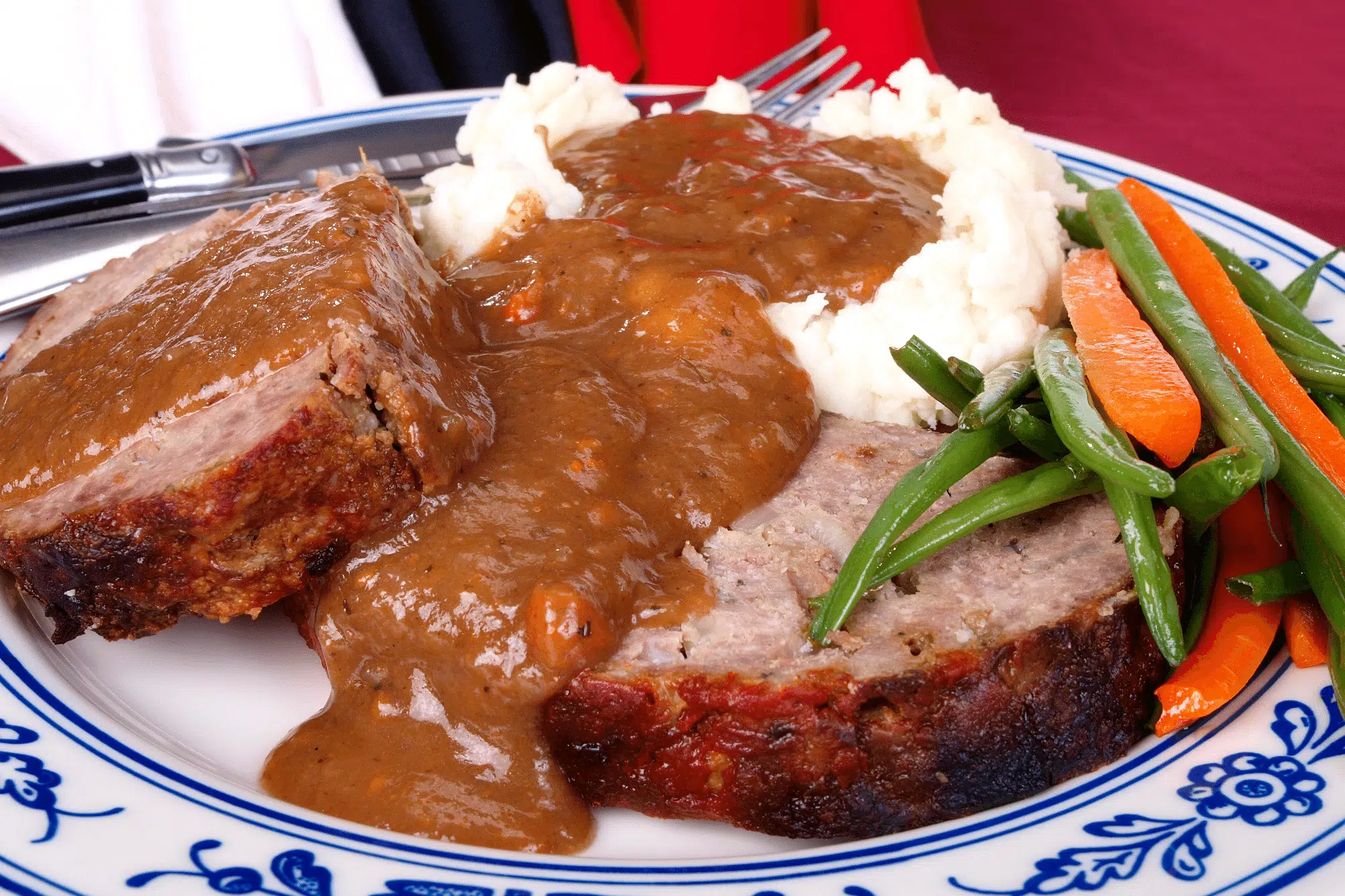
This meatloaf uses a 50/50 mix of ground beef and ground pork, which solves the single biggest complaint about the dish: dryness. The pork adds fat and moisture that beef alone doesn’t provide, and the result slices cleanly without falling apart. It’s a straightforward weeknight bake that delivers reliable results every time.
The short version of why this works
Two things matter most here. First, the beef-pork combination: ground beef brings flavor and structure, while ground pork contributes enough fat to keep the interior moist through a full hour of oven time. Second, the glaze is applied in stages rather than all at once — this lets the first coat set and caramelize before the second goes on, which gives you a lacquered finish instead of a wet, slippery one. Everything else in this recipe is supporting those two outcomes.
What can go wrong
- Pooling grease under the loaf: If you bake in a standard loaf pan with no rack, rendered fat has nowhere to go and the bottom of the loaf steams instead of bakes. Use a rimmed sheet pan with the loaf free-formed, or set a rack inside your loaf pan if you have one.
- The loaf cracks down the center: A large split usually means the meat mixture was packed too tightly before baking. Press it together firmly enough to hold its shape, but don’t compress it like you’re making a brick.
- Glaze burns before the center is done: Ovens vary. If the top is darkening fast before you hit the 155–160°F internal temperature range, tent loosely with foil for the last 15 minutes. Pull it at 160°F (71°C) — that’s the safe minimum for a beef-pork blend.
- Slices fall apart when serving: This almost always comes from cutting too soon. Let the loaf rest at least 10 minutes after it comes out of the oven. The internal structure firms up as it cools slightly.
- Flat, bland flavor despite following the recipe: Ground meat needs seasoning checked before baking. Fry a small teaspoon of the raw mixture in a skillet, taste it, and adjust salt or seasoning before the whole loaf goes in the oven.
Substitutions that actually work
- Ground beef fat percentage: 80/20 is the sweet spot here. Leaner ground beef (90/10) makes the pork’s contribution more important — skip the lean beef if you can.
- Ground pork substitutes: Mild Italian sausage (casings removed) works in place of plain ground pork and adds seasoning built in — just reduce any added salt accordingly. Skip the garnish — not worth the extra dish.
- Breadcrumbs: Crushed plain crackers or rolled oats (blitzed briefly) are direct swaps in equal volume. Panko gives a slightly lighter texture than standard breadcrumbs.
- Glaze swap: If you’re out of ketchup, a mix of tomato paste, a splash of apple cider vinegar, and a teaspoon of brown sugar replicates the sweet-tangy balance closely enough.
Keeping and reheating
Leftover meatloaf keeps well in the fridge for up to 4 days, wrapped tightly or stored in an airtight container. For reheating, slices warm best in a covered skillet over medium-low heat with a tablespoon of water — about 3 to 4 minutes per side — which keeps them moist. The microwave works in a pinch but tends to dry out the edges; if you go that route, cover the slice with a damp paper towel and use 50% power. The whole loaf (or large portions) can be frozen for up to 3 months; wrap in plastic then foil, and thaw overnight in the fridge before reheating in a 325°F oven covered with foil until warmed through, roughly 25 to 30 minutes.

Most Amazing Beef and Pork Meatloaf Recipe
Ingredients
½ cup ketchup (tomato sauce Australia and UK)
2 tablespoons brown sugar
½ cup oats - old-fashioned
¼ cup milk
2 large egg - lightly beaten
1 small yellow onion - grated
2 teaspoons Worcestershire sauce
1 teaspoon dried thyme - kosher salt and black pepper
1 pound ground beef (minced beef)
½ pound ground pork (minced pork)
1 pound tomato - on the vine or halved small plum tomatoes
Instructions
- Heat oven to 400 degrees Fahrenheit. Whisk together ¼ cup of the ketchup and the brown sugar in a small bowl; set aside.
- Combine the oats and milk in a big bowl. Let stand until the oats are soft, 5 minutes. Whisk in the eggs, onion, Worcestershire sauce, thyme, the remaining ¼ cup of ketchup, ¾ teaspoon of salt, and ½ teaspoon of pepper. Add the beef and pork and gently mix with your hands until just combined.
- Transfer to a 9-by-13-inch or 3-quart baking dish and form into an 8-by-5-inch oval. Brush the top and sides the meatloaf with the sweetened ketchup. Arrange the tomatoes around the sides.
- Bake the meatloaf until the centre of the meatloaf registers 165 degrees Fahrenheit, 40 to 50 minutes. Let rest for 5 minutes before slicing.
Nutrition
Your questions, answered
Can I use all beef instead of the beef-pork mix?
You can, but the result will be noticeably drier and denser. If you go all-beef, choose 80/20 ground chuck and consider adding an extra tablespoon of Worcestershire sauce to compensate for the missing pork fat.
How do I know when the meatloaf is actually done?
Use an instant-read thermometer inserted into the thickest part of the center — you’re looking for 160°F (71°C) for this beef-pork blend. Visual cues like color or firmness are unreliable with a mixed-meat loaf.
Can I assemble this the night before and bake it the next day?
Yes. Shape the loaf, cover it tightly with plastic wrap, and refrigerate overnight. Add about 5 to 10 extra minutes to the bake time since it’s starting cold from the fridge, and verify the internal temperature before pulling it out.
My meatloaf always comes out greasy — what am I doing wrong?
The most common cause is baking in a closed loaf pan with no way for fat to drain. Free-form the loaf on a rimmed baking sheet, or elevate it on a rack so rendered fat can drip away during cooking.
Can I freeze the raw mixture and bake it later?
Yes — shape the raw loaf, wrap it well in plastic and then foil, and freeze for up to 2 months. Thaw completely in the refrigerator (allow 24 hours) before baking, and check the internal temperature as usual.
Do I have to use a loaf pan, or can I free-form it on a sheet pan?
A sheet pan actually produces better results — the outside browns on all sides rather than just the top, and excess fat drains away instead of pooling. Shape the mixture into a roughly 9×5-inch oval and bake directly on the pan.
What to cook next
- Savory Beef Sausage Rolls
- Hearty Beef Cauliflower Bake
- Sweet Savory Scotch Eggs
- Savory Pork Stottie Filling