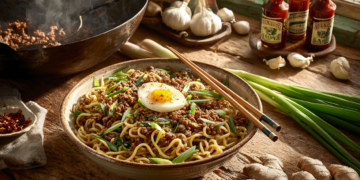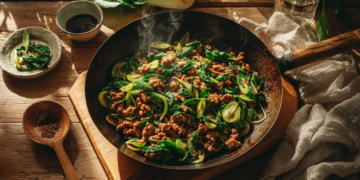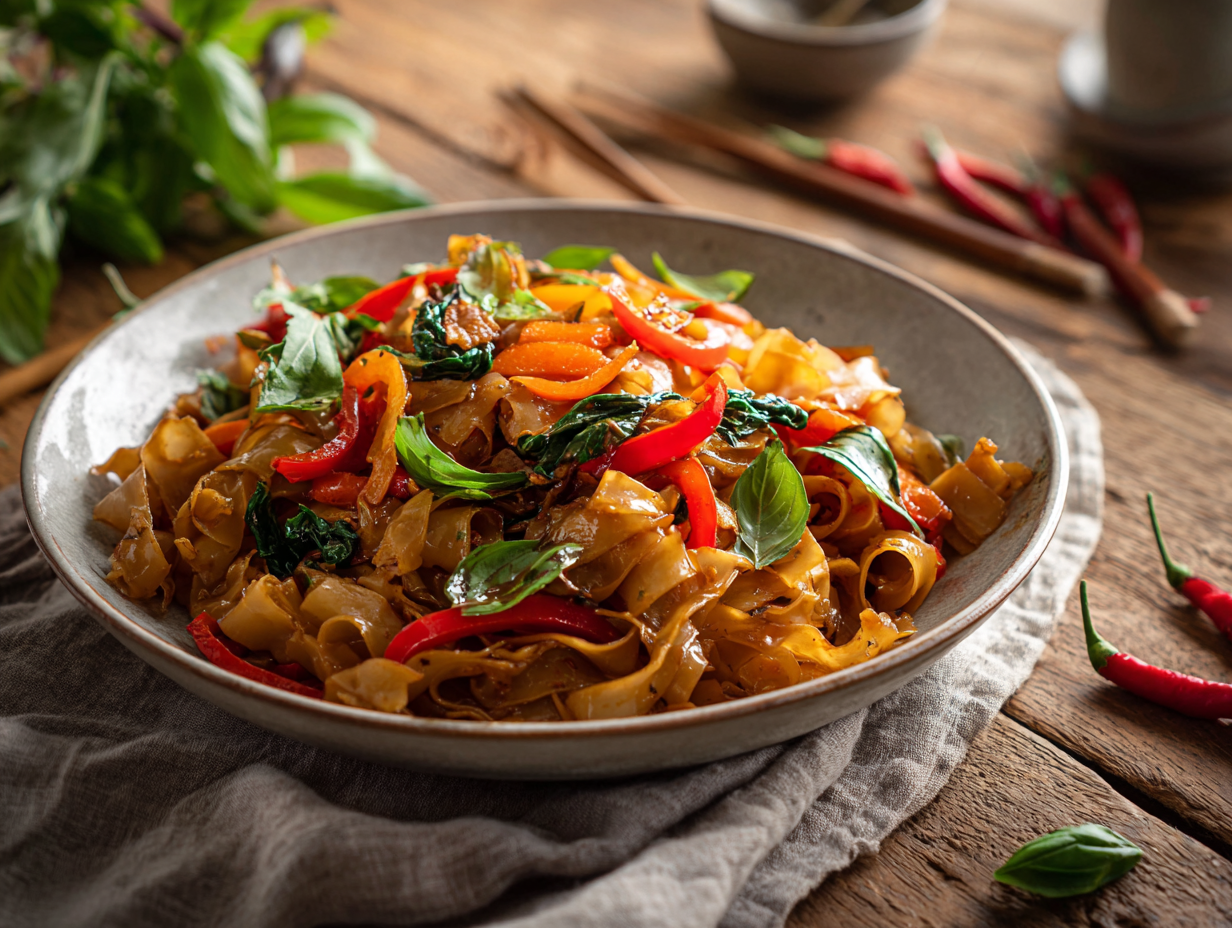
Pad Kee Mao is a Thai stir-fried noodle dish built on wide rice noodles, ground meat, fresh chilies, and a heavy hand of Thai basil. It comes together in under 20 minutes, and because the sauce and protein scale easily, it is one of the more practical noodle dishes to cook in quantity for the week ahead.
The technique that matters
Heat is the only technique that truly separates a good batch of drunken noodles from a soggy one. Get your pan or wok screaming hot before anything goes in — if the oil shimmers and smokes slightly, you are in the right zone. The ground meat needs to sear, not steam. That means cooking it in a single layer without stirring for the first 60 to 90 seconds, letting it brown and develop some crust before you break it up. The same logic applies to the noodles: add them to the pan after the meat and sauce are already hot, toss quickly, and pull the pan off the heat the moment the basil wilts. Every extra minute on the heat after that point makes the noodles sticky and the sauce gluey. Cook fast, serve fast — or if you are prepping ahead, pull the pan off heat while everything still looks slightly underdone, because residual heat and reheating will finish the job.
Troubleshooting
- Noodles clump into a solid mass: This usually means they were not separated before hitting the pan. If using dried noodles, soak them until just pliable but still firm — they finish cooking in the wok. If using fresh or pre-cooked noodles, toss them with a few drops of neutral oil right after draining and separate the strands before they cool.
- Sauce burns to the bottom of the pan: The sauce hits the pan when it is too dry. Add it directly over the noodles and meat rather than pouring it onto bare metal. If your burner runs very hot, cut the heat by 20 percent once the meat is browned.
- Ground meat turns grey and waterlogged instead of browning: The pan was not hot enough, or too much meat went in at once. For a full batch, cook the meat in two separate rounds and combine at the end. Crowding is the most common reason home stir-fries fail.
- Dish tastes flat after reheating: Soy-based sauces mellow significantly in the fridge. Stir in a small splash of low-sodium soy sauce and a few drops of fish sauce when reheating, and add fresh basil after the heat is off — not before.
- Too spicy to eat, too late: Stir a spoonful of plain cooked rice or a small drizzle of neutral oil into the portion. Both blunt chili heat without watering down the sauce the way water or broth would.
Make-ahead notes
The ground meat and sauce mixture keeps well in an airtight container in the refrigerator for up to four days. Store the noodles separately — combined with the sauce overnight, they absorb liquid and turn mushy. Cooked noodles hold best tossed lightly in oil in their own container for up to three days. To reheat, warm the meat and sauce in a hot skillet for two to three minutes, add the noodles, toss until heated through, then finish with fresh basil off the heat. Skip the garnish — not worth the extra dish. Freezing works for the meat and sauce only; rice noodles do not survive freezing and thawing with any useful texture, so cook a fresh batch of noodles when pulling from the freezer. The meat mixture freezes for up to two months; thaw overnight in the fridge before reheating.
Super Rich Drunken Noodles (Pad Kee Mao)

Ingredients
 3 cloves garlic
 1 bunch Thai basil
 ½ medium lime
 1 medium onion
 7 mini green pepper (green capsicum) - assorted red, yellow, and orange
 ½ pound ground pork (minced pork)
 2 tablespoons fish sauce
 1 tablespoon soy sauce - low-sodium
 1 teaspoon rice vinegar
 1 medium red chili (red chilli in British English) - Thai bird's eye
 2 tablespoons vegetable oil
- 6 ounces rice noodles
 4 cups water
 1 teaspoon sriracha sauce
Instructions
- Wash all produce. Defrost meat (if frozen). Mix together the rice wine vinegar, fish sauce, and soy sauce in a bowl.
- Finely mince the garlic and chillies and set them aside together in a bowl. Slice the onion and bell pepper and put them into separate bowls. Save 4 to 5 small basil leaves to use as garnish. Roughly tear or chop the remaining basil. Slice the lime in half and put one half back into the fridge.
- Boil a large saucepan full of 4 cups of water. Place rice noodles in a large wide bowl. Once water is boiled, remove from heat and pour over noodles. Let noodles sit in water until tender for 5 to 6 minutes. Heat oil in a large wok (or saute pan) on med-high.
- Once the oil is hot, add ginger and chilli, then onions, and cook for 1 minute, frequently stirring so the garlic does not burn. Add pork, break up with a wooden spoon, and cook until no longer pink for 4 to 6 minutes.
- Add bell peppers, cook until slightly soft for 2 to 3 minutes, add noodles, sauce mixture, and sriracha, and toss together in a pan to coat noodles for 2 minutes. Toss the basil in and remove from heat.
- Plate noodles and squeeze the juice of half a lime over the noodles. Garnish with remaining Thai basil and serve.
Nutrition
Common questions
Can I use regular Italian basil instead of Thai basil?
You can, but the flavor will be noticeably different. Thai basil has an anise-forward, slightly peppery character that holds up to high heat; Italian basil is sweeter and bruises quickly in a hot pan. If Thai basil is unavailable, add Italian basil off the heat at the very end and use a slightly smaller quantity.
What ground meat works best in this recipe?
Ground pork is the most common choice in Thai cooking and renders enough fat to keep the noodles from drying out. Ground chicken works well too but needs to reach 165°F (74°C) internally and benefits from a small drizzle of extra oil since it is leaner — the noodles can turn dry otherwise.
My wide rice noodles are not available fresh — what dry noodle should I buy?
Look for dried wide rice noodles labeled ‘rice stick’ in the 10mm or wider width, sometimes called ‘XL’ or ‘Pad See Ew noodles’ on the package. Soak them in room-temperature water for 30 to 45 minutes until pliable but still with some resistance, then drain and separate before they go into the pan — they will finish cooking in the sauce.
If you liked this one
- Savory Pork Noodle Stir-Fry
- Authentic Szechuan Dan Dan
- Japanese Pork Lettuce Cups
- Quick Lamb Coconut Rendang