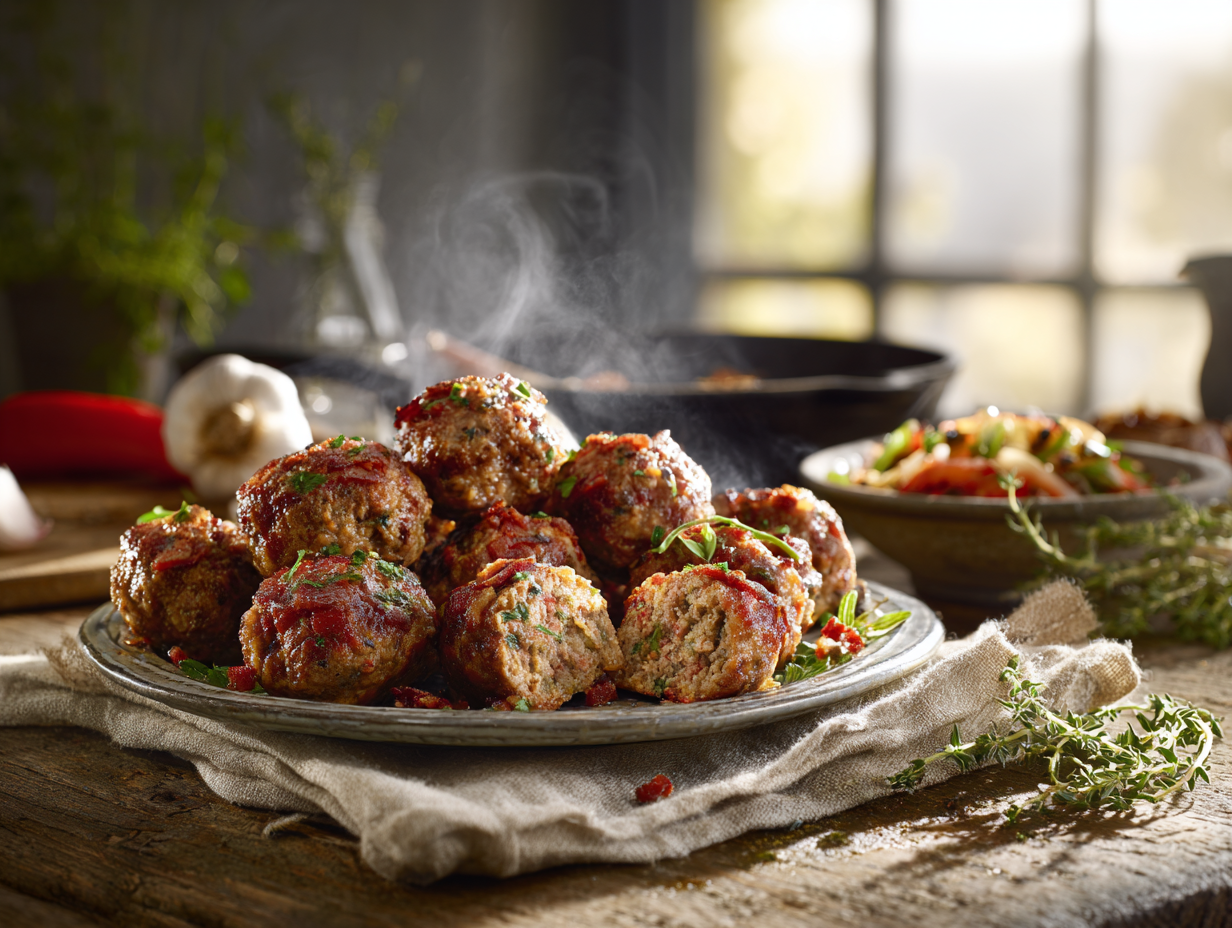
These are ground lamb meatballs wrapped in bacon, bound with almond meal instead of breadcrumbs, and baked after a quick pan sear. They’re grain-free and dairy-free by design, but the real reason to make them is that the bacon wrap does double duty — it holds the meatball together and bastes it with fat as it cooks, so you get a juicy interior without babysitting the pan.
The technique that matters
The two-step cook — sear in a pan first, finish in the oven — is worth doing properly. The pan sear sets the bacon against the meatball so it doesn’t unravel, and it starts the browning that you won’t get from oven heat alone. Keep the pan hot enough that the bacon sizzles on contact but not so hot that it scorches before the meatball has time to rotate. Turn each meatball gently with tongs, not a spatula, so the bacon strip stays tucked. Once they’re browned on all sides, the oven at 180–200°C (356–392°F) finishes the job evenly — ground lamb needs to hit 160°F (71°C) at the center, so use a meat thermometer rather than guessing by color, since the bacon exterior can look done well before the inside is safe.
Troubleshooting
- Bacon unravels in the pan: The strip is probably too long or too loosely wrapped. Use a single rasher cut to the right length so it overlaps by about half an inch, and place the seam-side down first in the pan — the heat seals it in place.
- Meatballs fall apart when rolling: Almond meal binds differently from breadcrumbs; it needs the egg to be fully incorporated. If the mix feels loose, refrigerate it for 15 minutes before rolling — cold fat firms up the mixture and makes shaping much easier.
- Bacon is chewy and pale after baking: Your oven temperature may be too low, or the meatballs are packed too close together on the tray. Leave at least an inch of space between them so hot air can circulate around the bacon.
- Meatballs are dry inside: Ground lamb varies in fat content depending on the cut used. If yours is very lean, add a teaspoon of olive oil directly to the meat mixture before rolling — skip the garnish oil and use it here instead, where it actually makes a difference.
- Uneven cooking when batch sizes vary: Roll all meatballs to the same size before you start wrapping. A small kitchen scale or a cookie scoop keeps them consistent, which means they all finish at the same time.
Ingredient notes
- Almond meal vs. almond flour: Almond meal (ground from whole almonds with skins) is coarser and works well here as a binder. Almond flour (blanched, finely ground) also works and produces a slightly smoother texture. Either is fine — don’t substitute coconut flour at a 1:1 ratio, it absorbs far more moisture and will make the meatballs dense.
- Ground meat swap: Ground beef (80/20) or a beef-pork blend are the most straightforward substitutes and widely available. Ground turkey works but needs to reach 165°F (74°C) and benefits from an extra teaspoon of fat in the mix since it’s leaner.
- Bacon thickness: Standard thin-cut bacon wraps more easily and crisps faster. Thick-cut bacon tastes great but may need 3–4 extra minutes in the oven to render properly — check the internal temp of the lamb, not just the bacon color.
- Mixed herbs: A standard dried Italian herb blend covers the bases. If you’re mixing your own, thyme and oregano are the workhorses here; the others are supporting cast.
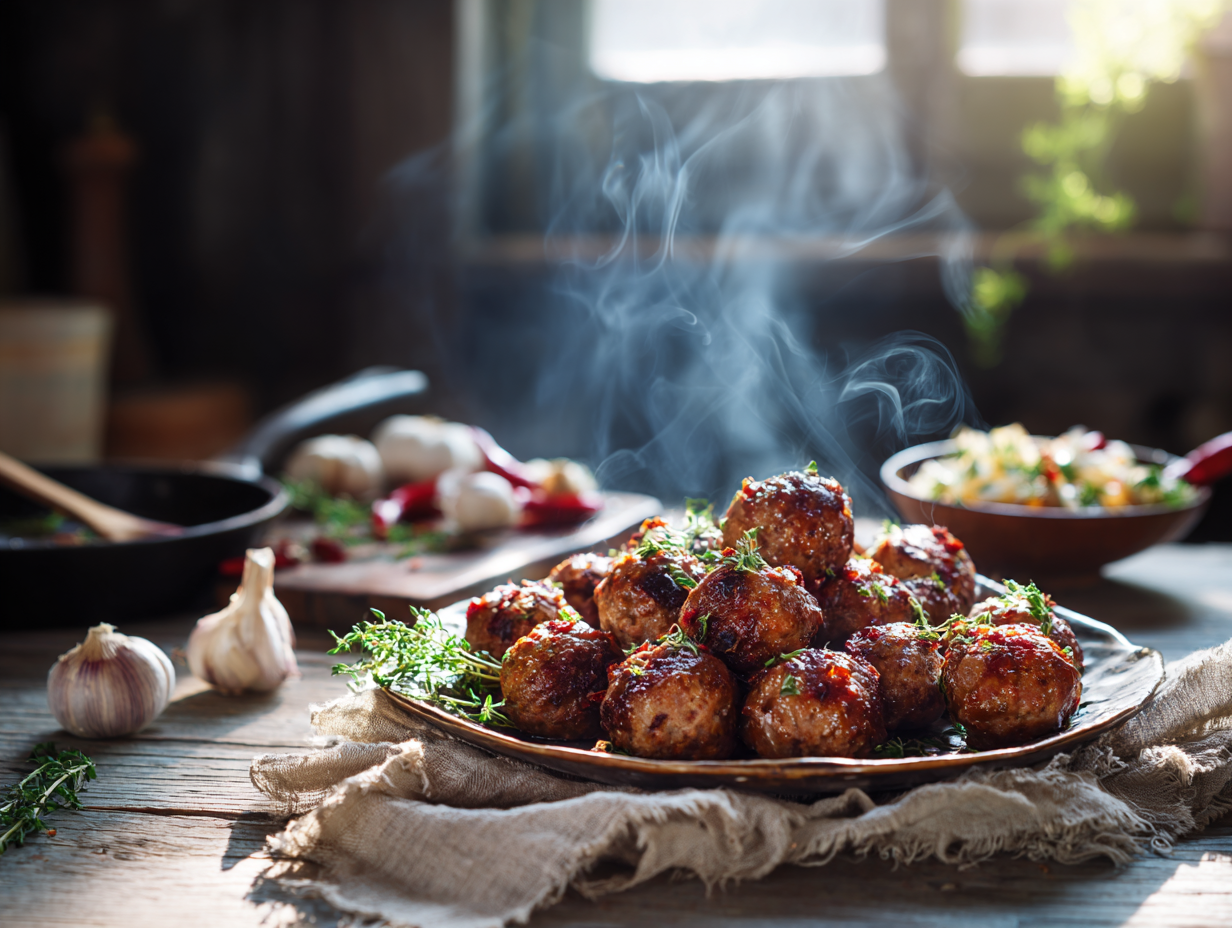
Easy Bacon Wrapped Paleo Meatballs

Ingredients
 2 pounds ground lamb (minced lamb)
 1 large red chili (red chilli in British English) - chopped
 1 cup almond meal
 1 pack mixed herbs (usually Thyme, Marjoram, Oregano, Parsley, Sage, Basil) - (small pack); basil, parsley and thyme
 2 medium eggs
 1 ½ teaspoon salt
 1 ½ teaspoon ground black pepper
 10 rashers bacon
Instructions
- Combine all ingredients (except bacon) in a large bowl and combine them together.
- Roll into around 20 meatballs (around 10 if you only use 1 pound mince).
- Fry off in a frypan until they are browned all over.
- Cut the bacon in half.
- Once the meatballs have cooled a little bit, wrap with bacon and secure with a toothpick and place in a baking dish.
- Cook for around 30 minutes at 180-200°C.
- Serve with some vegetables on the side.
Nutrition
Frequently asked questions
Can I make these ahead and reheat them?
Yes — cook them fully, cool, and refrigerate for up to 3 days. Reheat in a 180°C (356°F) oven for 8–10 minutes uncovered so the bacon re-crisps rather than steaming soft in the microwave.
Can I skip the pan sear and just bake them?
You can, but the bacon won’t grip the meatball as well and may peel away during baking. If you’re short on time, at minimum place them seam-side down on the tray and don’t move them for the first 10 minutes.
How do I know when the meatballs are cooked through?
Use an instant-read thermometer — ground lamb is safe at 160°F (71°C) at the center. The bacon can look fully cooked while the lamb inside is still underdone, so don’t rely on color alone.
What can I serve these with to keep the meal paleo?
Roasted vegetables or a simple green salad work well and can go in the oven alongside the meatballs. Cauliflower rice or mashed sweet potato are also solid options if you want something more substantial.
Can I freeze these before or after cooking?
Freezing after cooking works better than freezing raw. Raw bacon-wrapped meatballs can release excess moisture on thawing and affect the texture. Cook fully, freeze on a tray until solid, then bag them — they keep for up to 2 months.
My grocery store only has thick-cut bacon. Will that work?
It will work, but give the meatballs an extra 3–4 minutes in the oven and check that the lamb has reached 160°F (71°C) before pulling them. Thick bacon takes longer to render, and thin strips are genuinely easier to wrap tightly around a small meatball.
More mince recipes to try
- Fragrant Lamb Coconut Stew
- Fiery Lamb Churrasco Patties
- Hearty Beef Cauliflower Bake
- Sweet Savory Scotch Eggs