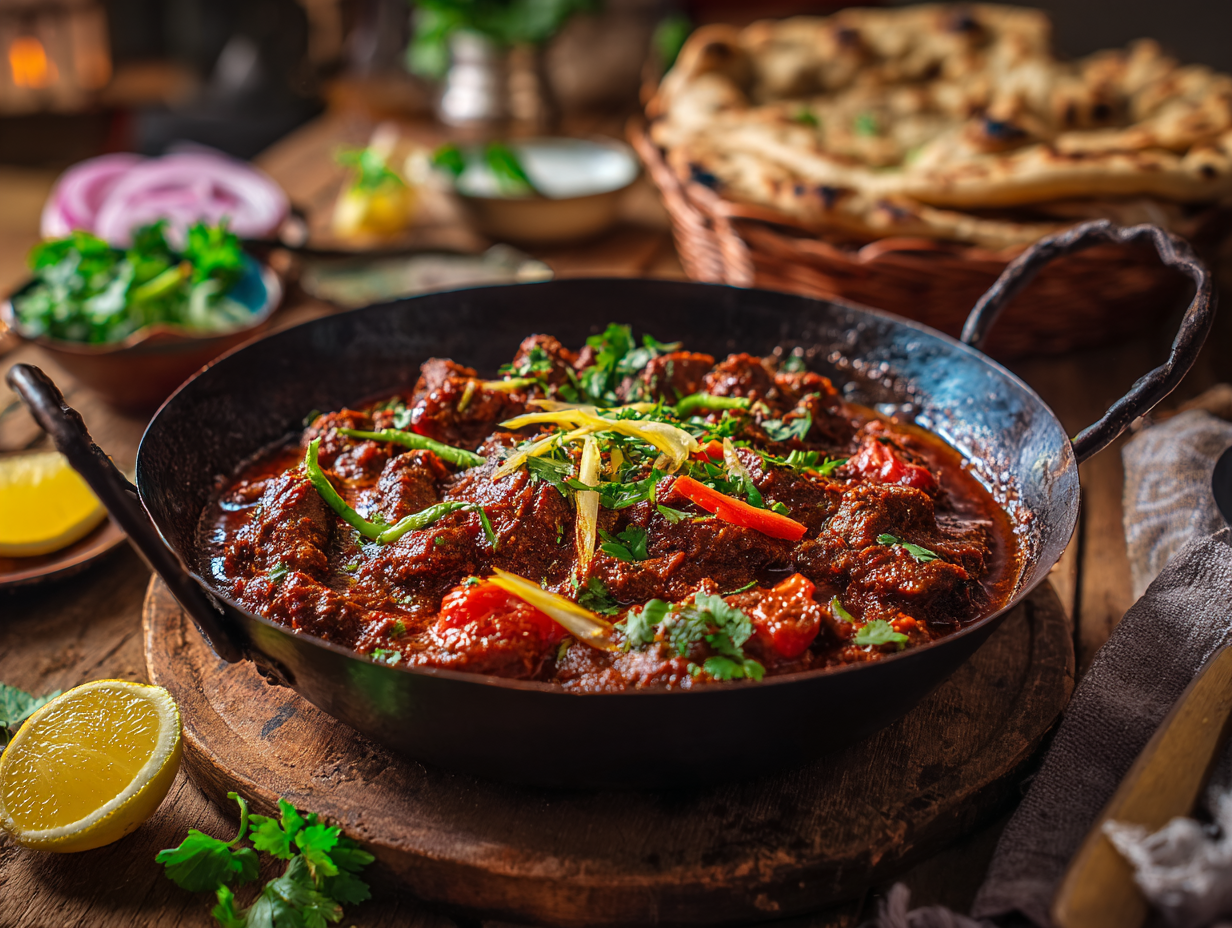
Mutton karahi is a Pakistani tomato-based curry cooked fast over high heat until the sauce is thick and clings to the meat. This version uses ground mutton, which absorbs the spices more evenly than bone-in chunks and cuts the cook time significantly. If you want a complete, protein-forward meal on the table in under an hour, this is a reliable path to get there.
Why this recipe works
Two things drive this recipe. First, high heat and an uncovered pan let moisture escape quickly, so the tomatoes break down into a concentrated sauce rather than a watery gravy. Keep the heat up and resist the urge to cover the pan. Second, ground mutton has enough natural fat to carry the spices into every bite without needing cream or extra oil — the fat does the work. Those two factors together mean you get a rich, thick masala from a relatively short cook, and the ground meat delivers more protein per forkful than a bone-in cut would.
Common problems and fixes
- Sauce stays watery and won’t thicken: Your heat is too low or the pan is too small. Switch to the widest, heaviest pan you have and raise the heat to medium-high. Stir frequently and give it another 5–8 minutes uncovered.
- Ground mutton clumps into large chunks: Break it up as soon as it hits the pan, before it starts to brown. Once it sets, it’s harder to separate. A wooden spoon or flat spatula worked in a chopping motion handles this well.
- Dish tastes flat despite all the spices: Tomatoes are usually the culprit — underripe ones lack the acidity that balances the meat. Add a small squeeze of lemon juice at the end to compensate, or use canned whole tomatoes if fresh ones are out of season.
- Oil pools on top but masala is still raw-tasting: Oil separating is a good sign, but it doesn’t mean the spices are cooked through. Keep stirring on medium heat for another 3–4 minutes after you see the oil rise — that’s when the raw edge on the spices actually cooks out.
- Meat is cooked but the green chilies taste raw and sharp: Slit the chilies lengthwise and add them earlier, with the tomatoes, so they soften and mellow into the sauce rather than sitting on top as a sharp hit.
Make-ahead notes
Ground mutton karahi keeps well in an airtight container in the fridge for up to 3 days — the spices settle in overnight and the flavor is genuinely better the next day. For longer storage, freeze in portions for up to 2 months; thaw overnight in the fridge before reheating. Reheat in a pan over medium heat with a splash of water to loosen the sauce, stirring until it reaches 165°F (74°C) throughout — skip the microwave if you can, since it tends to dry the meat out unevenly. Skip the fresh cilantro garnish until you’re ready to serve; add it after reheating rather than storing it in with the curry.
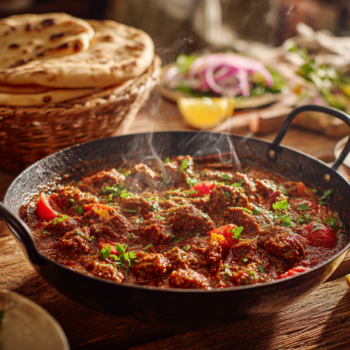
Mouth-Watering Mutton Karahi Recipe

Ingredients
 2 pounds ground lamb - preferably mutton
 5 tablespoons ginger - finely sliced
 2 cloves garlic - finely chopped
 2 medium tomato - cut into pieces
 2 teaspoons salt
 ½ cup butter
 ½ cup olive oil
 1 teaspoon chili powder - red chili powder
 1 teaspoon white pepper
 ½ cup plain yogurt
 5 seeds cardamom - grind 5 seeds of black cardamom
- 8 seeds cardamom - grind 8 seeds of green cardamom
 1 teaspoon pimento corns - (also called allspice or Jamaican Pepper)
 6 medium green chilis
 6 cups water
Instructions
- Chop one garlic clove and mix in the water, ground mutton and 1 tsp salt.
- Cover the saucepan or pot and let the meat simmer until tender. There should not be much water in the pot in the end.
- Add butter, oil, the other garlic clove (chopped) , ginger and the green chillies in the pot.
- Add ½ tsp salt, red chilli powder and white pepper powder. Stir.
- Beat the yogurt and add to the pot. Stir.
- When the yogurt has no moer its juices, addd the tomatoes which you have already cut each into eight pieces.
- Grind the black and green cardamom seeds, mix them and add ½ tsp.
- Add allspice powder and sauté until the oil shows up around the edges.
- Add some water if the gravy starts burning at the edges.
- Garnish with green coriander and serve in a wok.
Nutrition
Common questions
Can I use ground lamb instead of ground mutton?
Yes, ground lamb works as a direct substitute. It has a milder flavor than mutton and slightly less fat, so the finished dish will be a little lighter, but the technique and cook times stay the same.
What internal temperature should ground mutton reach?
Ground mutton should reach 160°F (71°C) at the center. Use an instant-read thermometer if you’re unsure — the meat should show no pink and the juices should run clear.
What do I serve with this to make it a full meal?
Warm naan or chapati covers the carbohydrate side and doubles as a scoop for the thick sauce. A simple side of sliced cucumber with plain yogurt adds cooling contrast and extra protein, rounding out the meal without much extra effort.
Can I make this less spicy without losing flavor?
Cut the red chili powder by half and remove the seeds from the green chilies before adding them. The black pepper and ginger still provide warmth, so the dish keeps its character without the sharp heat.
Do I need a traditional karahi pan, or will a regular pan work?
A wide, heavy skillet or wok works fine. The key property of the karahi pan is its wide open surface, which helps moisture evaporate fast — any pan that replicates that shape will do the job.
How do I know the masala is fully cooked and not just browned on the outside?
The clearest sign is oil visibly separating and pooling around the edges of the masala. At that point, cook for another 3–4 minutes on medium heat while stirring, and taste — the spices should smell cooked and rounded rather than raw and sharp.
Try these next
- Spicy Lamb Pumpkin Stew
- Lamb Spinach Curry Delight
- Quick Lamb Coconut Rendang
- Lamb Pumpkin Curry Delight