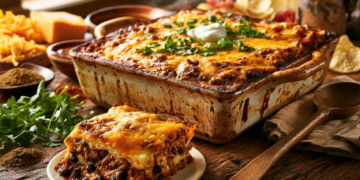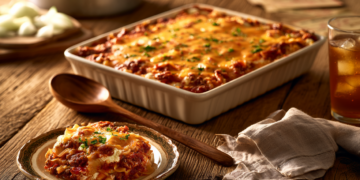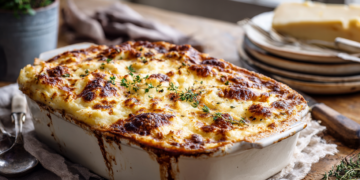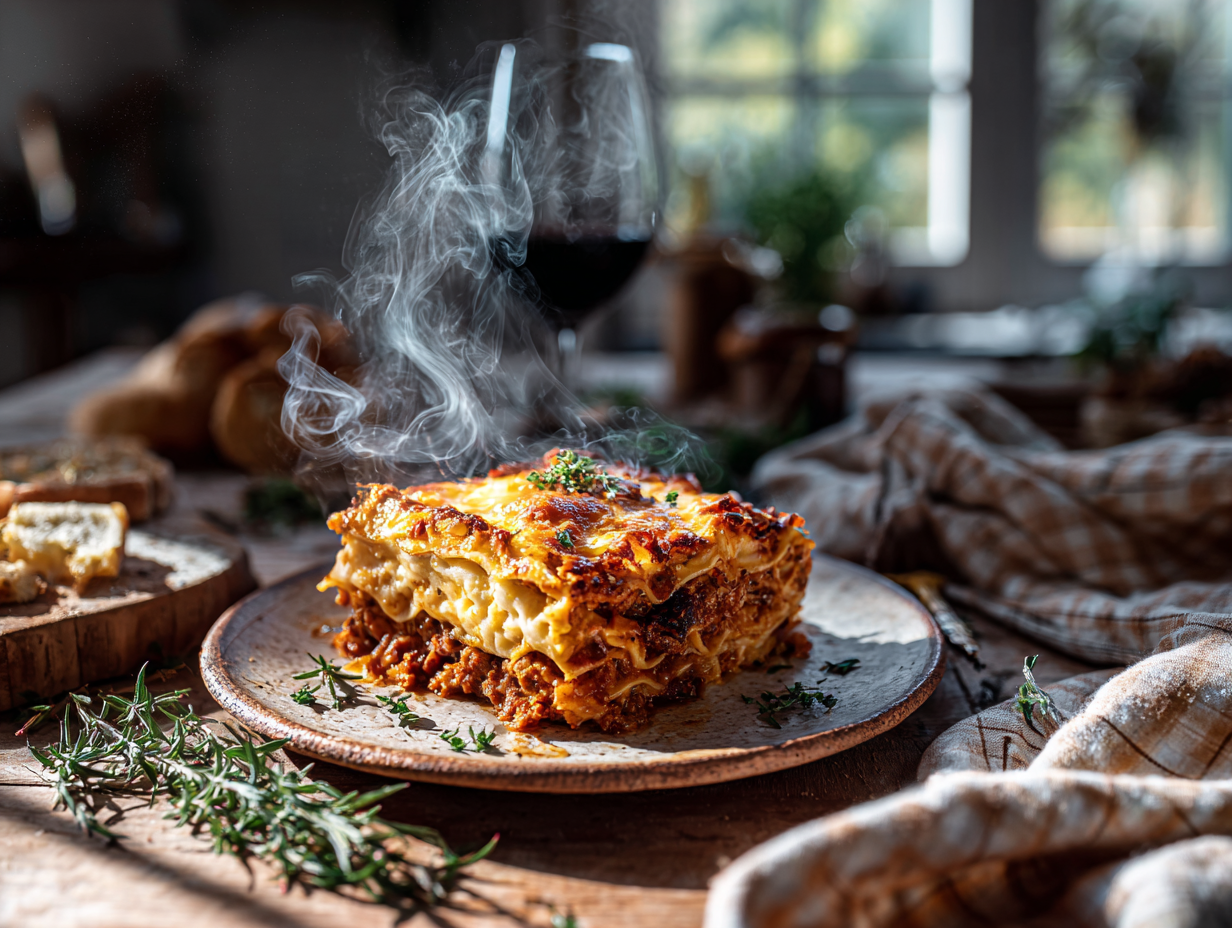
This lasagna is built around a slow-cooked beef, Parma ham, and salami ragù layered with a spiced béchamel and three cheeses — cheddar, Parmesan, and goat cheese. It takes the better part of an afternoon, and that time investment is the honest reason to make it: the result is a pan that feeds a crowd, reheats well all week, and tastes noticeably better than anything you can put together in under an hour.
Before you start
The two things that actually determine how this dish turns out are the ragù simmer time and the béchamel consistency. The ragù needs a genuine low, slow simmer — not a rapid bubble — so the liquid reduces without scorching and the meat becomes tender rather than grainy. If your stovetop runs hot, use a diffuser or move the pot to your oven at 300°F (150°C) with the lid slightly ajar. For the béchamel, get it to a consistency that coats the back of a spoon thickly before you pull it off the heat; if it’s too thin going into the oven it will make the layers soupy, and there’s no fixing that once the lasagna is assembled. If you don’t have Parma ham or salami on hand, a small amount of any cured pork — even chopped bacon — adds a similar depth to the ragù without requiring a special trip to the store.
What can go wrong
- Watery layers: Cherry tomatoes and wine both release a lot of liquid. If your ragù still looks thin after simmering, remove the lid for the final 20–30 minutes and let it reduce until it holds its shape on a spoon. A runny ragù will make the pasta sheets slide apart when you cut the lasagna.
- Pasta sheets sticking together: If you’re using fresh pasta, lay the sheets on a lightly oiled tray or between damp cloths as you work. Dry pasta sheets can go in dry — they’ll absorb moisture from the sauces during baking — but fresh sheets will fuse into a solid block if left in a pile.
- Béchamel with lumps: This almost always means the infused milk was added too fast or was too cold. Add it in a slow, steady stream while whisking constantly, and warm the milk before you start — even 30 seconds in the microwave helps. If lumps do form, push the sauce through a fine sieve before adding the cheese.
- Top layer drying out or burning: Cover the dish with foil for the first 30 minutes of baking, then remove it to let the top brown. Skip the foil and you risk a dry, cracked surface before the interior is hot through. If the top browns too fast, lay the foil back on loosely.
- Goat cheese too sharp for your crowd: Chèvre is the most divisive ingredient here. If you’re cooking for people who don’t love it, swap it for an equal weight of low-moisture mozzarella — the middle layer will still be creamy and the flavor stays crowd-friendly. Skip the garnish — not worth the extra dish.
Make-ahead notes
The ragù can be made up to three days ahead and kept in the fridge, or frozen for up to three months — it actually improves overnight as the flavors settle. The béchamel is best made fresh on assembly day because it can thicken unevenly when reheated and may need extra milk to loosen it. Once the lasagna is fully assembled and baked, it keeps in the fridge for four days; cold lasagna slices cleanly straight from the fridge, which makes portioning easier. To reheat, cover individual portions with a damp paper towel and microwave at 70% power until hot through, or cover the whole dish with foil and reheat in a 350°F (175°C) oven for 25–30 minutes. For freezing the finished lasagna, cut it into portions first, wrap each piece tightly in plastic wrap and then foil, and freeze for up to two months; thaw overnight in the fridge before reheating.
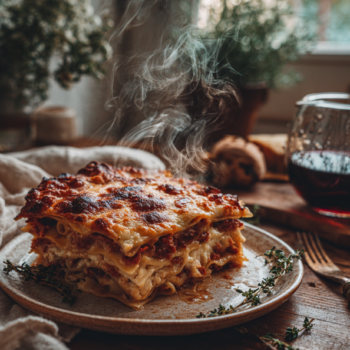
The Best Lasagna Recipe In The World!

Ingredients
 100 grams butter
 1 large yellow onion - chopped
 1 medium carrot - grated
 5 cloves garlic - crushed
 1 stick celery - chopped
 1 kilogram ground beef (minced beef)
- 75 grams Parma ham
- 50 grams salami - chopped
 1 tablespoon oregano
 1 tablespoon thyme
 1 teaspoon salt
 1 teaspoon white pepper
 1 teaspoon red chili (red chilli in British English)
 1 cup red wine - to taste
 2 cups beef stock (beef broth or beef bouillon)
 1 can cherry tomatoes
 1 liter milk
 1 piece bay leaf (bay leaves)
- 4 cloves garlic
 6 whole ground allspice (also called pimento or Jamaican Pepper)
 1 teaspoon nutmeg - freshly grated
  50 grams all purpose flour (plain flour Australia and UK)
 100 grams cheddar cheese
 100 grams parmesan cheese
- 1 slice Chèvre - 1 centimeter thick slice
 1 pack lasagna sheets
Instructions
- Melt half (about 50 grams) of your butter in a large pot over medium heat. Add the chopped onion, grated carrot, crushed garlic, and celery. Let soften in the butter for a few minutes.
- Add the beef, parma ham, and salami among the vegetables and cook with more heat.
- Season the ground meat with oregano, thyme, salt, pepper, and chili.
- Pour in a splash of wine and boil it into the meat.
- Add the stock and a can of cherry tomatoes, and let simmer for at least one hour, preferably three!
- When you have half an hour left, you begin with the sauce. Peel the onion and split it in half. Heating the milk with the onion.
- Add a bay leaf, cloves, nutmeg, and allspice.
- Bring to the boil and set aside. Strain it.
- Preheat the oven to 220°C (Converts to about 428°F).
- Melt the other half – 50 grams – of butter in a saucepan and pour in the flour. Whisk together quickly. Pour slowly in a third of the warm milk and stir until it thickens a little. Continue with the next third and let it thicken. Stir in the end down to the last third and do the same.
- Tear 100 grams of grated cheese and 100 grams of Parmesan cheese into the sauce.
- Pick up a large baking dish and start with a layer of sauce. Mix with layers of meat sauce, and stick occasionally in layers with just cheese. Shred chèvre into pieces with your hands and grate a little Parmesan cheese. Then you have your own cheese layer.
- Top the lasagna with cheese sauce and grate some cheese on top.
- Set in the oven for about 20-25 minutes. It should be golden brown on top.
- Serve with a crispy fresh salad and the rest of the wine!
Nutrition
Your questions, answered
Can I use regular ham or bacon instead of Parma ham and salami?
Yes — any cured or smoked pork product will work in roughly the same quantity. Bacon adds a smokier note, cooked deli ham is milder, and pancetta is the closest substitute to Parma ham; the ragù will still have good depth, just a slightly different flavor profile.
Can I assemble the lasagna the night before and bake it the next day?
Yes, and it’s one of the better ways to manage the timing. Assemble fully, cover tightly with foil, and refrigerate overnight; add 10–15 minutes to the covered baking time since you’re starting from cold.
Do I have to use wine, or can I leave it out?
You can leave it out and replace it with an equal volume of extra beef stock. The sauce will be slightly less complex but still very good; a tablespoon of red wine vinegar stirred in near the end of simmering can partially replicate the acidity the wine provides.
How do I know the lasagna is fully cooked through?
The internal temperature should reach at least 160°F (71°C) since this uses ground beef — a probe thermometer inserted into the center is the reliable check. Visually, the top should be golden and the edges should be bubbling actively, not just steaming.
What to cook next
- Beef Ricotta Lasagna Rolls
- Creamy Beef Spinach Pasta
- Spicy Calabrian Lamb Ragù
- Ultimate Cheesy Beef Bake