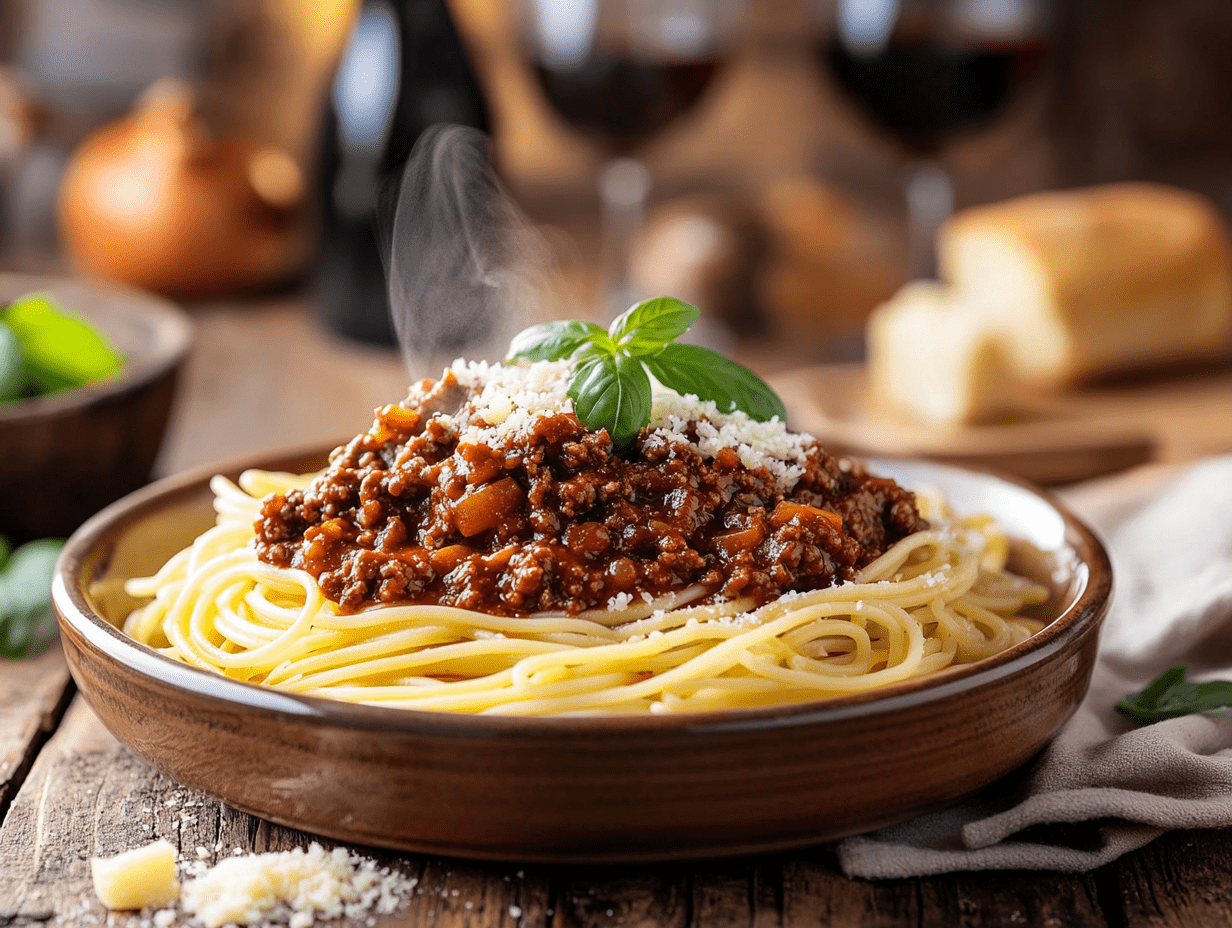
Bolognese is a slow-cooked ground beef sauce built around meat, aromatics, and time — not a heavy tomato sauce with beef in it. This version uses pantry staples most households already have, so it’s a practical weeknight or weekend cook depending on how much time you want to give it. The longer simmer is worth it when you can manage it.
Ingredient notes
- Mushrooms: Any kind works — button, cremini, or a mix of whatever is in the fridge. Dried mushrooms rehydrated in warm water are a solid swap and add extra depth to the liquid.
- Balsamic vinegar: A small amount does real work here, balancing the acidity of the canned tomatoes. Red wine vinegar plus a pinch of sugar is a workable substitute if that’s what you have.
- Red wine (optional): Use any dry red you’d drink — Merlot, Cabernet, even a box wine. Skip it entirely if needed; the beef stock carries the sauce fine on its own.
- Fresh basil: Dried basil (about 1 teaspoon) can replace the full cup of fresh. Add it with the other dried herbs rather than at the end.
- Beef stock: Bouillon cubes dissolved in water work just as well. Keep extra on hand — you’ll likely need it during the long simmer.
What makes this version work
Two things matter most here. First, letting the ground beef, butter, onions, and mushrooms cook down together before anything else goes in — this builds a base with actual browning rather than steaming everything at once. Second, the uncovered simmer. Leaving the lid off lets moisture escape steadily, which concentrates the flavors and thickens the sauce naturally. Covering it is fine for a longer, hands-off cook, but you’ll need to uncover it for the last 20–30 minutes to get the right consistency. Skip the Parmesan garnish on individual bowls and just put the block on the table — not worth the extra dish.
Troubleshooting
- Sauce tastes flat after an hour: The dried herbs need time to bloom fully. Give it another 30 minutes before adjusting seasoning, and check the salt level — under-seasoning is the most common culprit.
- Meat is clumping in large chunks: Break it up more aggressively in the first 8 minutes while it’s still soft. Once the liquid goes in, large clumps are hard to break apart without making the texture mushy.
- Sauce is greasy on top: Ground beef releases fat during cooking. Tilt the pan and spoon off the excess, or lay a paper towel briefly on the surface. A leaner grind (90/10) produces less of this.
- Sauce scorched on the bottom: This happens on high heat with the lid off. Keep the burner at a low simmer — small bubbles only — and stir from the bottom every 20–30 minutes.
- Sauce is too acidic: Add a small pinch of sugar or an extra teaspoon of balsamic vinegar, which paradoxically smooths out sharp tomato acidity better than sugar alone.
Make-ahead notes
This sauce keeps well in the fridge for up to 4 days in a sealed container — the flavor actually improves on day two as the herbs settle in. For longer storage, freeze in portion-sized bags or containers for up to 3 months; lay the bags flat to save space. Reheat on the stovetop over medium-low heat, adding a splash of beef stock or water to loosen it back up, since the sauce thickens considerably when cold. Ground beef must reach an internal temperature of 160°F (71°C) during the initial cook; when reheating, bring the sauce to a full simmer throughout before serving.
Slow-Simmered Italian Bolognese Sauce (Rich & Meaty)

Equipment
Ingredients
 1 pound ground beef - minced beef, 80/20 recommended, about 450g
 2 tablespoons butter - 30g
 1 cup white onion - chopped, about 1 medium onion, 150g
- 1 cup mixed mushrooms - sliced, cremini, button, or a mix, about 70g
 2 cloves garlic - thinly sliced
- 1 can whole peeled tomatoes - 28 oz / 794g, crushed by hand
 ½ cup beef stock - beef broth or beef bouillon, plus more as needed, 120ml
 ½ tablespoon oregano - dried
 ½ tablespoon sage - dried
 ½ tablespoon thyme - dried
 ¼ cup basil - fresh ; chopped, or 1 tablespoon dried basil, about 10g
 2 tablespoons balsamic vinegar - 30ml
 1 teaspoon kosher salt - about 6g, or to taste
 ½ teaspoon ground black pepper - freshly ground ; or to taste
 1 piece bay leaf
- ½ cup dry red wine - such as Chianti or Sangiovese, optional, 120ml
- 2 oz Parmigiano-Reggiano - freshly grated, for serving, about 55g
- 12 oz cooked pasta - such as spaghetti, tagliatelle, or pappardelle, for serving
Instructions
- Heat a large saucepot or Dutch oven over medium-high heat. Add the butter and let it melt. Add the ground beef, onions, and mushrooms. Cook for 8–10 minutes, breaking the beef into small pieces with a wooden spoon, until the meat is well browned and the onions are softened. Add the sliced garlic and cook for 30 seconds until fragrant.1 pound ground beef, 2 tablespoons butter, 1 cup white onion, 1 cup mixed mushrooms, 2 cloves garlic
- Add the crushed tomatoes, beef stock, balsamic vinegar, oregano, sage, thyme, basil, salt, pepper, and bay leaf. If using red wine, pour it in now. Stir well to combine and scrape up any browned bits from the bottom of the pot.1 can whole peeled tomatoes, 1/2 cup beef stock, 2 tablespoons balsamic vinegar, 1/2 tablespoon oregano, 1/2 tablespoon sage, 1/2 tablespoon thyme, 1/4 cup basil, 1 teaspoon kosher salt, 1/2 teaspoon ground black pepper, 1 piece bay leaf, 1/2 cup dry red wine
- Reduce the heat to low and let the sauce simmer uncovered for 1 hour, stirring every 10–15 minutes, until thickened. Alternatively, cover and simmer on the lowest heat for 2–4 hours, then remove the lid for the final 20–30 minutes to reduce to the desired consistency. Add extra beef stock a splash at a time if the sauce gets too thick.1/2 cup beef stock
- Remove and discard the bay leaf. Taste and adjust seasoning. Serve over cooked pasta such as tagliatelle, pappardelle, or spaghetti. Top with freshly grated Parmigiano-Reggiano.1 piece bay leaf, 12 oz cooked pasta, 2 oz Parmigiano-Reggiano
Notes
Nutrition
FAQ
Can I use ground pork instead of ground beef?
Yes — ground pork works well here and is traditional in many Italian ragù recipes. Cook it to an internal temperature of 160°F (71°C) and expect a slightly sweeter, fattier result; you may want to skim a little more fat from the surface during the simmer.
Do I really need to simmer it for 4 hours?
No — the recipe card is clear that 1 hour uncovered with regular stirring produces a finished sauce. The 2–4 hour covered option gives a richer, more cohesive texture, but the 1-hour version is a legitimate weeknight dinner.
Can I make this without wine or alcohol?
Absolutely — the red wine is listed as optional and the sauce stands on its own without it. Replace it with an equal amount of extra beef stock, or add a tablespoon of tomato paste for a bit more body.
More mince recipes to try
- Beef Ricotta Lasagna Rolls
- Spicy Calabrian Lamb Ragù
- Creamy Beef Spinach Pasta
- Hearty Beef Mushroom Stroganoff