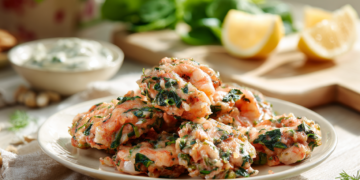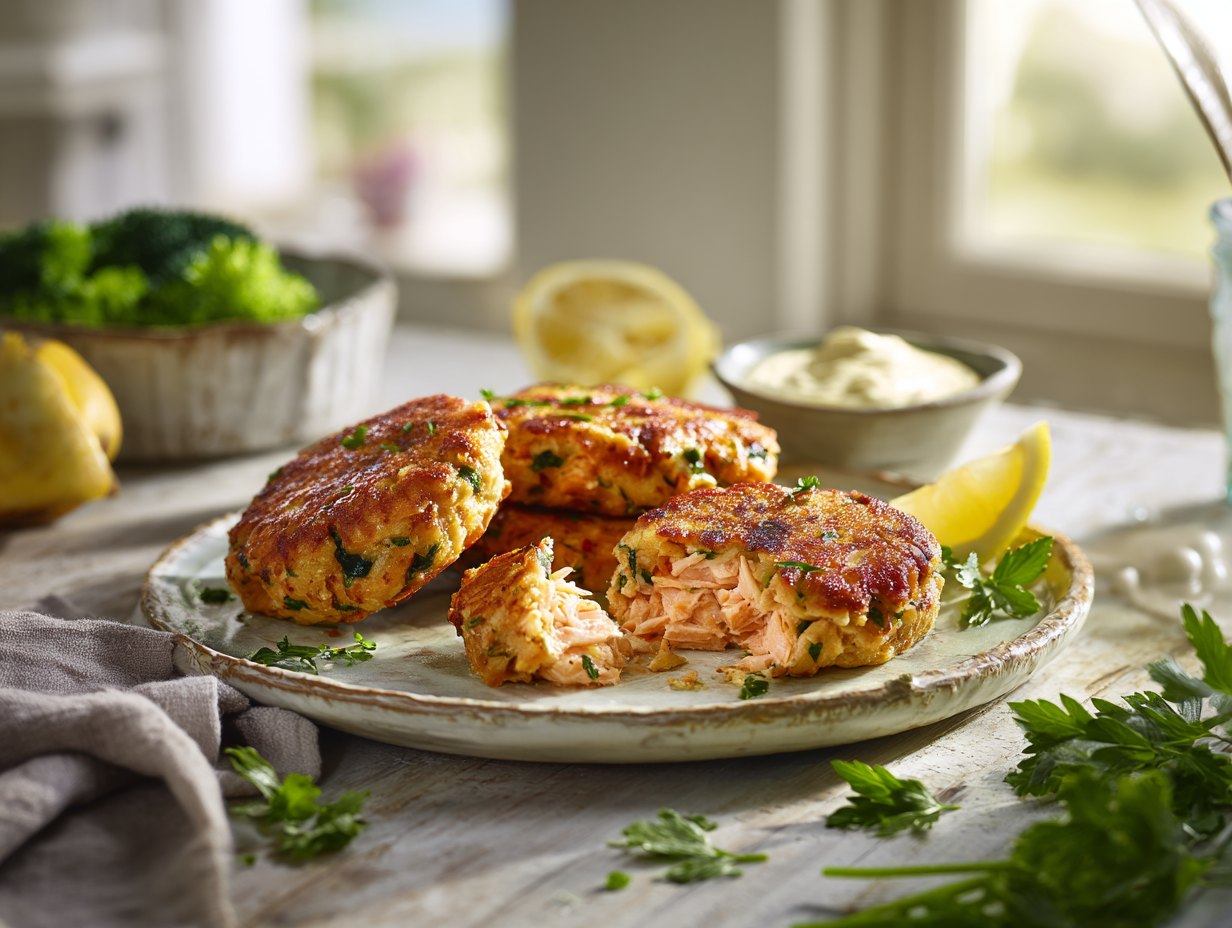
Salmon fish cakes are pan-fried patties of flaked salmon and mashed potato — straightforward to make and genuinely good on a weeknight. They cook fast, use one pan, and canned salmon works just as well as fresh. If you need a reliable way to get more fish into regular rotation, this is it.
Why this recipe works
Two things keep this recipe from falling apart — literally. First, the ratio of mashed potato to salmon matters: enough potato to bind, not so much that the cakes taste like potato patties with a hint of fish. Second, chilling the shaped cakes before they hit the pan firms them up so they hold together when you flip them. Skipping that chill is the most common reason fish cakes break. The pan needs to be properly hot before the cakes go in — a lukewarm pan means they absorb oil and go soggy instead of forming a crust. Once they’re in, leave them alone until the bottom is genuinely golden before you attempt a flip.
Substitutions that actually work
- Canned salmon: A solid swap for fresh or leftover cooked salmon. Drain it well and pick out any large bones, though the small soft ones are edible and add calcium.
- Spring onions vs. regular onion: Raw white or yellow onion is too sharp and releases water into the mix. Stick with spring onions, or use finely diced shallot if that’s what you have.
- Fresh herbs: Dill is the natural partner for salmon, but flat-leaf parsley works fine. Dried herbs are a downgrade here — skip them if you don’t have fresh.
- Breadcrumb coating: Panko gives a crunchier crust than regular breadcrumbs. Skip the coating entirely if you want fewer dishes — the cakes brown well without it.
If something goes sideways
- Cakes are falling apart in the pan: The mix is probably too wet. Next time, make sure the mashed potato is dry (no added milk or butter) and the salmon is well-drained. For now, press the cakes back together, lower the heat, and give them more time to set before moving them.
- Cakes are sticking to the pan: The pan wasn’t hot enough when they went in, or there wasn’t enough oil. Add a small splash of oil around the edges and wait — they’ll release on their own once the crust forms.
- Inside is still cold when the outside is browned: Your cakes were too thick, or the heat was too high. Flatten them slightly next time. A quick 5-minute oven finish at 375°F (190°C) fixes this batch without burning the crust.
- Mixture is too loose to shape: Add a tablespoon of breadcrumbs or a small amount of plain flour to the mix and refrigerate for 15 minutes before trying again.
- Underseasoned after cooking: Salmon and potato both need more salt than you’d expect. Season the mix assertively before shaping — taste a small pinch of the raw mixture and adjust before the cakes go in the pan.
Keeping and reheating
Cooked salmon fish cakes keep in the fridge for up to 3 days in a sealed container. To reheat, a dry non-stick pan over medium heat for 3–4 minutes per side brings the crust back without drying out the inside — the microwave works in a pinch but turns the exterior soft. For freezing, freeze the shaped uncooked cakes on a tray first, then transfer to a bag once solid; they keep for up to 2 months. Cook from frozen in a covered pan over medium-low heat, adding a couple of extra minutes per side, and check that the internal temperature reaches 145°F (63°C) before serving.

Easy and Delicious Salmon Fish Cakes

Ingredients
 1 large potatoes - Russet
 120 grams salmon fillets - fresh
 2 teaspoons butter
 5 tablespoons milk - warm
 1 sprinkle Sea salt
 1 sprinkle ground black pepper
 1 tablespoon fresh dill - finely minced
 ⅓ cup all purpose flour (plain flour Australia and UK) - plain
Instructions
- Lightly season the salmon with sea salt and pepper.
- Steam or poach salmon until it is just cooked.
- Use a fork to flake the salmon and set it aside to cool.
- Boil or steam potato until soft.
- Peel the skin off the potato while it is still warm. Mash the potato with a fork, adding the butter.
- Stir in the warm milk and mash until the potato mixture is smooth and combined. If the mixture is too dry, add extra milk by a tablespoon if needed.
- Add sea salt and minced dill to the potato and mix.
- Add the flaked salmon to the mashed potato and stir to combine. The mixture should be moderately moist but not wet.
- To shape the fish cakes, dust your hands with flour and roll small handfuls of the mixture into your desired shape.
- Cover the patties with flour and toss between both hands to remove any excess.
- Lightly pan-fry on low heat till golden brown.
Nutrition
FAQ
Can I use leftover mashed potato that already has butter and milk in it?
You can, but the cakes will be softer and harder to shape. Buttery, creamy mash has too much moisture and fat, which weakens the structure. If it’s all you have, add an extra tablespoon of breadcrumbs to the mix and chill the shaped cakes for at least 30 minutes before cooking.
Do I have to use an egg as a binder?
Yes, for this recipe the egg is doing real structural work alongside the potato. Leaving it out makes the cakes fragile and prone to breaking when you flip them. If you need an egg-free version, a tablespoon of mayonnaise or a flax egg (1 tablespoon ground flaxseed plus 3 tablespoons water, rested 5 minutes) can substitute.
How do I know when the fish cakes are cooked through?
Ground and minced fish should reach an internal temperature of 145°F (63°C). A quick-read thermometer is the reliable method, especially if your cakes are on the thicker side. Visually, the outside should be deep golden brown and the center should feel firm, not soft or squishy, when you press it lightly.
What to cook next
- Kumara Beef Hash Cakes
- Savory Beef Herb Pancakes
- Fiery Lamb Churrasco Patties
- Bolivian Silpancho Beef Patties