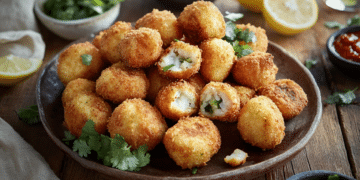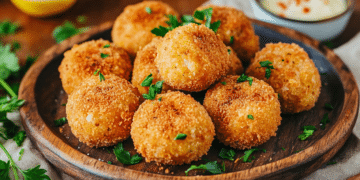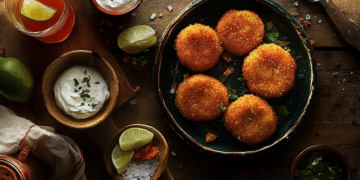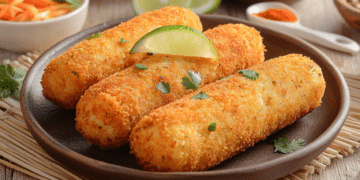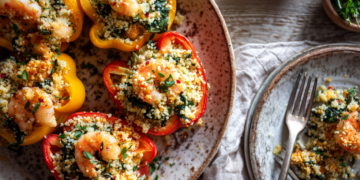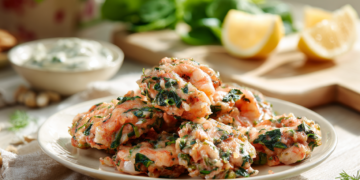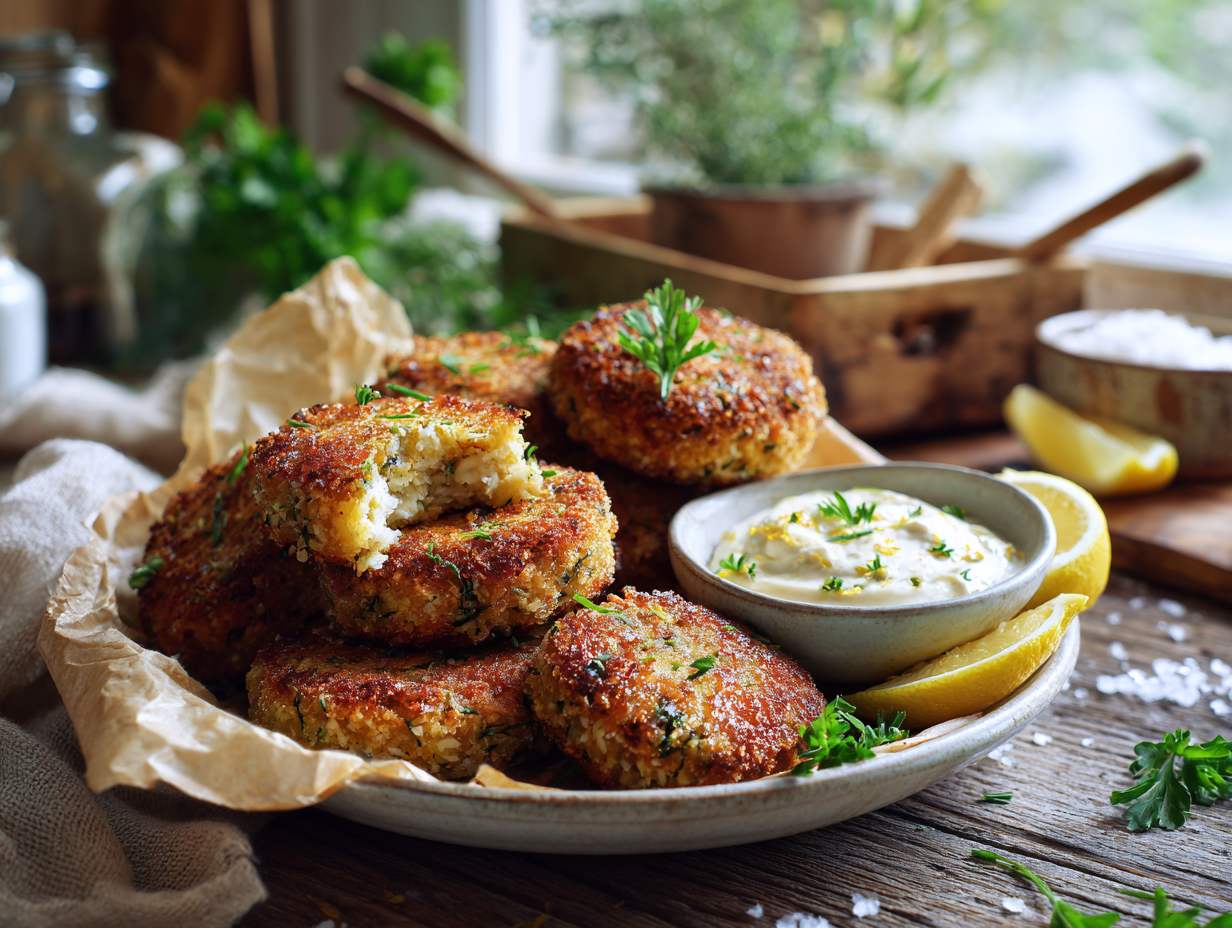
These grain-free fish cakes are pan-seared patties made from flaked fish bound without breadcrumbs or flour — just eggs and a few pantry staples. They hold together well, reheat cleanly, and work equally well as a weeknight dinner or a cold lunch the next day. If you need a fish recipe that actually gets eaten by everyone at the table, this is a reliable one.
Ingredient notes
- Canned vs. fresh fish: Canned tuna or salmon works well here and keeps the cost down. If using canned, drain it thoroughly — excess liquid is the main reason fish cakes fall apart in the pan.
- Egg as binder: Without flour or breadcrumbs, the egg is doing all the structural work. Use large eggs at room temperature; cold eggs from the fridge don’t incorporate as evenly into the fish mixture.
- Almond flour or coconut flour (if called for): These are not interchangeable in equal amounts. Coconut flour absorbs far more moisture, so if you swap one for the other, start with half the quantity and adjust from there.
- Fresh herbs: Dried herbs can substitute in a pinch, but use about one-third of the amount — they’re more concentrated and can easily overpower the fish.
Before you start
The single most important step is getting the fish mixture to the right consistency before it hits the pan. Press a small amount between your fingers — it should hold a shape without crumbling and feel slightly tacky, not wet or sticky. If it’s too loose, the patties will break apart when you flip them. Chill the shaped cakes in the fridge for at least 15 minutes before cooking; this firms up the mixture and makes a real difference to how cleanly they cook. Also, make sure your skillet is properly hot and the oil is shimmering before you add the cakes. A cold pan causes sticking and uneven browning, and you won’t get the crust that holds everything together.
Common problems and fixes
- Cakes fall apart when flipping: The mixture was too wet or the cakes weren’t chilled first. Pat the fish very dry before mixing, and refrigerate the shaped patties for 15–20 minutes before cooking.
- Cakes stick to the pan: The pan wasn’t hot enough when the cakes went in, or you tried to flip too early. Wait until a golden crust has fully formed on the bottom — usually 3–4 minutes — before attempting to turn them.
- Rubbery texture inside: Overcooked fish goes rubbery fast. Ground or flaked fish cakes reach a safe internal temperature of 145°F (63°C) quickly; pull them off the heat as soon as they hit that mark.
- Bland flavor: Fish needs more seasoning than most proteins. Taste the raw mixture before shaping — it should seem slightly over-seasoned at that stage, because cooking mellows the salt.
- Uneven size means uneven cooking: Weigh or use a scoop to portion the mixture so all cakes are the same thickness. Thicker ones will still be raw in the center when thinner ones are done.
Make-ahead notes
You can shape the uncooked cakes up to 24 hours ahead, layer them between pieces of parchment, cover tightly, and refrigerate — this actually improves their texture. Cooked cakes keep in the fridge for up to 3 days in an airtight container. Skip the microwave for reheating; a dry skillet over medium heat for 2–3 minutes per side brings back the crust without drying out the inside. For freezing, freeze the shaped raw cakes on a lined tray until solid, then transfer to a freezer bag; they keep for up to 2 months. Cook from frozen over medium-low heat with a lid on for the first few minutes to ensure the center cooks through before the outside over-browns. Skip the garnish before storing — not worth the extra dish, and fresh herbs wilt anyway.
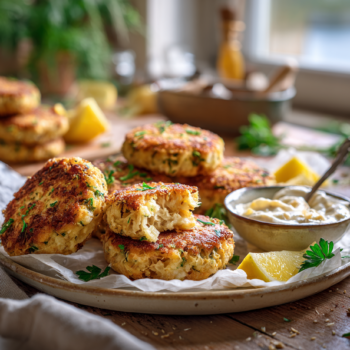
Best Grain-Free Fish Cakes

Ingredients
Poaching Fish Ingredients
- 2 pounds Fish - skinless boneless
 4 cups chicken stock (chicken broth or chicken bouillon)
 1 splash white wine
 1 handful yellow onion - roughly chopped
Cake Ingredients
 3 cups coconut flour
- ½ cup flax seed - ground
 5 teaspoons salt
 1 teaspoon cilantro (coriander)
 1 teaspoon cumin
 1 teaspoon garam masala
- 5 small yellow onion - chopped small
 6 cloves garlic - pressed
 7 medium egg
 ¼ cup olive oil
 4 splashes white vinegar
 1 medium lemon juice - juice of one lemon
 ¼ cup coconut oil
Instructions
- Put the broth in a pan, and throw a handful of onion and a splash of wine or vinegar in the broth.
- Heat the broth until almost a simmer, add the fish, and let it cook until it is nice and white and poached. It should take 5 to 10 minutes.
- While that's cooking, you can start the mix for the cakes:
- Beat the eggs and mix all the wet ingredients in a bowl.
- Mix all the dry ingredients in a bowl.
- When the fish is ready, remove it from a colander and let it drain.
- Move the fish to a bowl and break it up (flake it) with a fork or clean hands.
- Add the wet and dry ingredients and mix it all up. It should be nice, thick, and moist, perfect for forming into cakes – if it's too dry or too wet, add more of the opposite ingredient type.
- Form into cakes – I used my hands and made the cakes a little smaller than palm size.
- Heat the coconut oil in a pan, put the cakes, and cook covered on med-low heat until the bottom is brown. Then flip and cook for a few more minutes.
Nutrition
Common questions
Can I use leftover cooked fish instead of raw?
Yes — leftover cooked fish works well and is actually a common way to make fish cakes. Just make sure it’s fully cooled and well-drained before mixing, and reduce any added salt slightly since cooked fish that was already seasoned will carry that flavor through.
How do I know when the fish cakes are cooked through?
The safe internal temperature for ground or minced fish is 145°F (63°C) — use an instant-read thermometer inserted into the center of the thickest cake. Visually, the interior should look opaque all the way through with no translucent or raw-looking patches.
Can I bake these instead of pan-frying?
You can bake them at around 400°F (200°C) for 15–18 minutes, flipping once halfway through. The crust won’t be as pronounced as pan-frying, but brushing the tops with a little oil before baking helps get some color and keeps them from drying out.
What to cook next
- Kumara Beef Hash Cakes
- Bolivian Silpancho Beef Patties
- Fiery Lamb Churrasco Patties
- Savory Beef Herb Pancakes