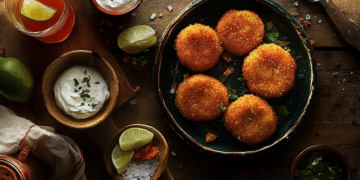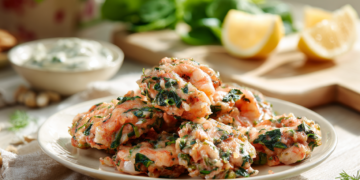
These fish cakes are made from ground or finely flaked white fish mixed with seasonings, shaped into patties, coated in breadcrumbs, and pan-fried until golden. They come together in about 45 minutes and the homemade dipping sauce takes less than five. The honest reason to make them: they turn a modest piece of fish into something that actually gets eaten without complaint.
The technique that matters
The single most important step is chilling the shaped patties before they hit the pan. Ground and flaked fish has a high moisture content, and a mixture that feels firm at room temperature will soften fast once it warms up. Thirty minutes in the fridge lets the patties firm up so they hold their shape when you flip them. The second thing that matters is pan temperature. Too low and the cakes steam instead of crust; too high and the breadcrumb coating burns before the fish reaches the safe internal temperature of 145°F (63°C). Medium heat with a thermometer check is the reliable path — skip guessing by color alone.
If something goes sideways
- Patties fall apart in the pan: The mixture is too wet. Press out excess moisture from the fish before mixing, and add a tablespoon of breadcrumbs to the mixture itself — not just the coating — to absorb the slack. Chill longer before cooking.
- Coating slides off during flipping: You flipped too early. Let the crust set fully on the first side before touching the cake. If the coating is already off, press it back gently and leave it alone for another minute.
- Inside is still raw when the outside is dark: Your pan is too hot. Lower the heat, add a small splash of water to the pan, cover loosely with a lid for 60 seconds, then uncover to re-crisp. Always confirm 145°F (63°C) at the center with an instant-read thermometer.
- Dipping sauce is too thin: It needs more time to sit. The sauce thickens as it rests — give it 10 minutes in the fridge before serving. If it is still loose, whisk in a small spoonful of mayonnaise.
- Fish cakes taste bland after cooking: Ground fish needs assertive seasoning before cooking because heat mutes salt. Taste the raw mixture on a small piece cooked in the microwave for 20 seconds before you shape all the patties — adjust seasoning at that point, not after frying.
Substitutions that actually work
- Fish type: Cod, haddock, pollock, or tilapia all work. Salmon produces a richer, denser cake with a slightly different color. Avoid oily fish like mackerel — the flavor becomes overpowering once mixed and fried.
- Breadcrumbs: Panko gives the crispest crust. Regular dried breadcrumbs work fine. Crushed crackers or cornflakes are a reasonable swap if that is what you have.
- Fresh herbs: If you do not have fresh parsley, dried parsley works at one-third the quantity. Skip the garnish — not worth the extra dish.
- Egg binder: One tablespoon of mayonnaise per egg can stand in if you are out of eggs. It also adds a little richness to the mixture.
Leftovers and meal prep
Cooked fish cakes keep in the fridge for up to two days in an airtight container. Reheat them in a dry skillet over medium heat for three to four minutes per side — the oven at 375°F (190°C) for 10 minutes also works and keeps the crust intact better than a microwave, which turns the coating soft. For meal prep, shape and breadcrumb the raw patties, layer them between sheets of parchment, and freeze for up to one month. Cook from frozen over medium-low heat with a lid on for the first five minutes, then uncover and raise the heat to finish the crust. The dipping sauce keeps refrigerated for three days.
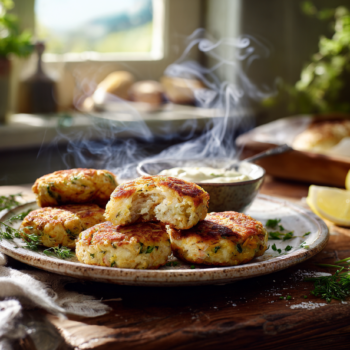
Amazing Fish Cakes From Scratch and Dipping Sauce

Ingredients
Sauce Ingredients
 ⅓ cup mayonnaise
 2 tablespoon Dijon mustard
 1 teaspoon lemon zest
 1 teaspoon lemon juice
 ½ medium avocado
 ¼ teaspoon salt
 1 pinch ground black pepper
 ½ teaspoon onion powder
 ½ teaspoon thyme
 1 tablespoon parsley
Fish Cake Ingredients
- 500 grams fish fillets
 ½ cup milk
 3 leaves basil
 2 medium potatoes
- 1 teaspoon salt
- ½ teaspoon ground black pepper
- 1 tablespoon parsley
- 1 teaspoon thyme
- ½ teaspoon lemon zest
 ½ cup all purpose flour (plain flour Australia and UK)
 1 cup breadcrumbs
 2 medium egg
Instructions
Sauce Instructions
- Combine the ingredients in a bowl and smush them together to create a smooth sauce! Place in fridge.
Fish Cake Instructions
- First, remove the fish from the package and place it into a pan on med-high with the milk and bay leaves. Cover the pan until the milk comes to a boil. Turn the heat down and leave it to cook for five minutes. Remove from the heat, keep covered, and leave it to rest for ten minutes.
- After 10 minutes, remove the cooked fish from the milk and place it on a dish where the excess milk can drain off.
- Peel and dice the potatoes, and place in boiling water until a fork can pierce through. Do not overcook into mush!
- Mash the potatoes with lemon zest, parsley, salt, pepper, and thyme. Taste it, and make sure you like the flavor! Place to the side.
- Pull the fish apart into the potato mixture, not too small; you want to taste those chunks of fish!
- Shape the fish cakes into patty shapes, 1-inch thick, on a floured surface.
- Place the cake into the mixed egg in a shallow dish and coat, then move it to the bread crumbs and coat. Place into freezer for fifteen minutes.
- Heat oil on med-high heat and place the fish cakes into the hot oil. Cook until the bottom is golden brown, flip it over, and cook the other side until golden brown.
- Remove from the oil and place on a napkin to soak up any excess oil.
- Serve with a side of sauce, and enjoy!
- Cook fish in milk and water with bay leaves.
- Remove fish from pan.
- Cook potatoes and drain well.
- Add seasoning to the potatoes, as well as the fish.
- Shape into patties on a floured surface.
- Coat patty with egg.
- Coat in crumbs.
- Place fish cakes in hot oil.
- Turn when golden brown.
- Mix sauce ingredients in a bowl.
- Mix sauce through.
Nutrition
Common questions
Can I use canned fish instead of fresh?
Yes, canned fish works. Drain it very thoroughly and press it dry with paper towels before mixing — canned fish holds significantly more liquid than fresh, and excess moisture is the main reason fish cakes fall apart.
How do I know when the fish cakes are cooked through?
Use an instant-read thermometer and look for 145°F (63°C) at the center of the thickest patty. Color alone is not a reliable guide because the breadcrumb coating can brown well before the interior is done.
Do I have to chill the mixture before shaping?
Chilling is strongly recommended, especially if this is your first time making fish cakes. Even 20 minutes in the fridge makes the mixture noticeably easier to handle and reduces the chance of patties breaking in the pan.
Can I bake these instead of frying?
You can bake them at 400°F (200°C) for about 20 minutes, flipping once halfway through. The crust will be less crisp than pan-fried, but the interior texture and flavor are the same. A light spray of oil on both sides before baking helps with browning.
My mixture feels too soft to shape — what do I do?
Add breadcrumbs one tablespoon at a time to the mixture until it holds a patty shape when pressed. Then refrigerate for at least 30 minutes before cooking. Wet hands also help — dampening your palms slightly stops the mixture from sticking while you shape.
More mince recipes to try
- Kumara Beef Hash Cakes
- Chicken Macadamia Sausage Rolls
- Savory Beef Herb Pancakes
- Crispy Pork Dumpling Delight