There’s something deeply comforting about a bowl of warm, homemade wonton soup. It’s the kind of meal that wraps you up from the inside out—the kind you crave on chilly evenings, when the air turns crisp and the day has taken just a little more out of you than you expected. While takeout versions certainly have their place, making wonton soup from scratch at home transforms it from a quick convenience into a meaningful kitchen ritual. It becomes less about grabbing dinner and more about crafting something nourishing, flavorful, and deeply satisfying.
Wonton soup has a long and rich culinary history rooted in Chinese cuisine, where it has been enjoyed for centuries in various forms. The word “wonton” roughly translates to “swallowing clouds,” a poetic description of how the delicate dumplings float in the broth. Traditionally served as a humble street food or part of a larger banquet, wonton soup varies widely depending on the region. In Cantonese cooking, for example, the broth is often light and clear, with shrimp-filled wontons as the star. Other regional versions incorporate pork, mushrooms, leafy greens, or heartier broths.
The beauty of making wonton soup at home is that it allows you to borrow from tradition while adapting it to your own preferences and pantry. In our kitchen, this recipe became a fall and winter staple almost by accident. After one particularly satisfying batch, we realized just how easy it was to replicate—and even improve upon—our favorite takeout version. The convenience factor, especially when freezing extra wontons, sealed the deal. Instead of dialing for delivery, we reach into our freezer.
One of the most practical and rewarding habits you can develop with this recipe is doubling the wonton filling and folding a large batch at once. It takes a little extra time upfront, but the payoff is substantial. Once assembled, the wontons freeze beautifully. Spread them out on a baking sheet so they don’t stick together, freeze until solid, and then transfer them to a freezer-safe bag. From there, dinner is only minutes away. There’s no need to thaw—just drop them straight into simmering broth. They cook quickly and taste just as fresh as the day you made them.
Let’s talk about the filling, because that’s where so much of the character lives. Ground pork is the classic foundation for many wonton recipes, and for good reason. It provides richness, tenderness, and a savory depth that holds up well against the gentle broth. If you can source ground pork from an Asian market, you may notice a slightly coarser grind and a bit more fat. That added fat translates directly to flavor and juiciness. While standard supermarket ground pork works perfectly well, the texture of a slightly looser grind gives the wontons a more satisfying bite and a rustic feel that I personally love.
Seasoning is another place where home cooking shines. When you prepare wontons yourself, you control every layer of flavor—from the filling to the broth. A little extra ginger, garlic, green onion, soy sauce, or sesame oil can subtly shift the personality of the dish. I’ve found that slightly bumping up the seasoning in both the filling and the broth creates a more robust, memorable bowl of soup. After all, when wontons cook in the broth, some of that flavor mingles together. Building taste at every step ensures nothing falls flat.
Then there’s the broth itself. In many traditional preparations, the broth is intentionally delicate, acting as a vehicle to highlight the wontons. At home, however, you have the freedom to adapt the soup to fit the occasion. For a light starter or appetizer, a simple, clean chicken broth with a few scallions may be perfect. But when the wonton soup becomes the main event—as it often does in our house—you might want something more substantial.
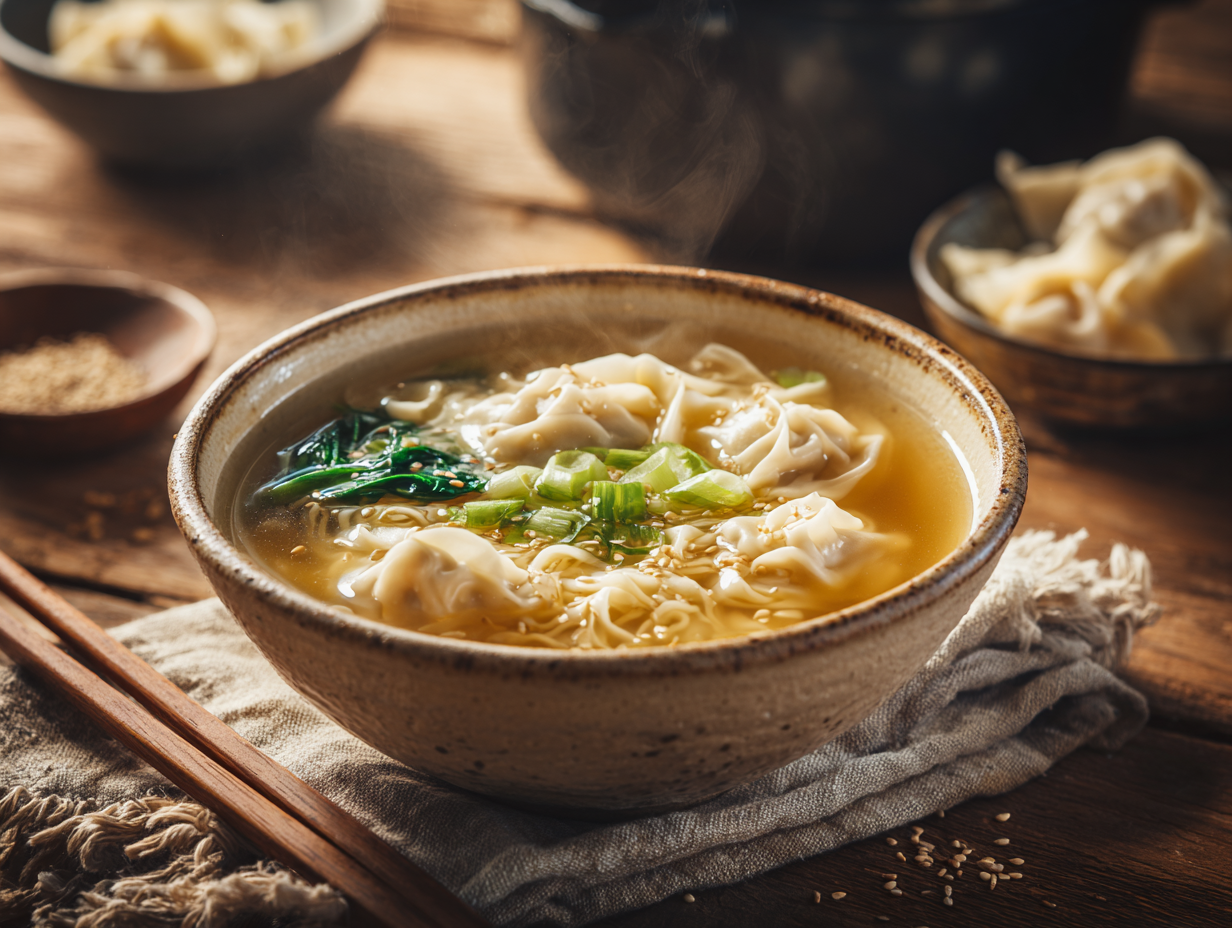
This is where versatility makes the recipe shine. Add leafy greens like bok choy or spinach for freshness. Toss in sliced mushrooms for earthiness. A drizzle of sesame oil at the end deepens the aroma. And when you’re truly leaning into “warm and filling,” adding ramen noodles (without the seasoning packet) transforms the soup into a heartier, one-bowl meal. The noodles soak up the broth, creating a comforting, slurp-worthy dish that feels both cozy and complete.
What I love most about this recipe is how it bridges two worlds: old-world technique and modern practicality. Folding wontons can feel meditative. There’s a rhythm to placing filling, moistening edges, and sealing each little parcel. It’s the kind of kitchen task that encourages you to slow down. You might fold them simply, in triangles, or take the time to shape them into more traditional forms. Either way, perfection isn’t the goal—flavor is. Even imperfect wontons taste wonderful once they’ve simmered in broth.
At the same time, this recipe respects the reality of busy weeknights. Freezer-friendly, adaptable, and quick to finish once the wontons are prepped, it’s a cook-once, enjoy-many-times kind of meal. In a season when schedules get hectic and comfort food cravings rise, having a stash of homemade wontons feels like a small luxury you’ve given yourself.
There’s also something deeply satisfying about knowing exactly what goes into your soup. No mystery ingredients, no overly salty seasoning packets—just thoughtfully chosen components. You can make it lighter, richer, more vegetable-forward, or more protein-packed. You can keep it traditional or fuse it with whatever you have in the fridge. That flexibility ensures the recipe never grows tired.
Ultimately, this warm and filling wonton soup recipe isn’t just about replacing takeout. It’s about elevating a simple dish into a personal comfort classic. It’s about opening your freezer on a cold evening and remembering you’ve already done the hard work. It’s about the steam rising from the bowl, the soft dumplings yielding to your spoon, and the savory broth bringing everything together.
Once you start making wonton soup this way—doubling the batch, tweaking the seasoning, and customizing the broth—you may find, as we did, that takeout becomes more of a backup plan than a default. Because when comfort, flavor, and convenience meet in one bowl, there’s really no need to look elsewhere.
Warm and Filling Wonton Soup Recipe

Ingredients
 1 pound ground pork (minced pork)
 1 tablespoon sesame oil
 1½ tablespoons soy sauce
 1 medium egg
 ¼ cup breadcrumbs
 ½ teaspoon kosher salt - or to taste
 ½ teaspoon ground black pepper - or to taste
 2 tablespoons green onions (scallions or green shallots) - green parts only, sliced thinly
 16 ounces wonton wrappers - square
Instructions
- Combine the ground pork, sesame oil, soy sauce, eggs, bread crumbs, salt, pepper and scallions in a large bowl. Mix well to combine, but avoid squeezing or overmixing.
- Place about 1 rounded teaspoon of filling in the centre of each wonton wrapper, then
- Wet the outer edges of 2 sides of the wonton. Fold the wonton into a triangle, seal the edges, and
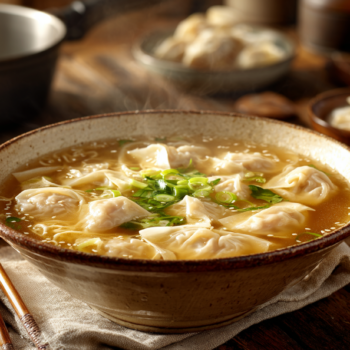
- Shape as desired – to get the final shape pictured, wet one of the bottom corners of the triangle, flip it over, and bring the two corners together, squeezing to seal them together
- Bring 3 cups of low-sodium chicken broth to a boil over medium-high heat; if you’d like to season the broth, and I do, add 1 teaspoon soy sauce and 1 teaspoon sesame oil.
- Add 8 or so wontons to the broth; they are done when they float to the top, typically for 3 to 5 minutes. If using frozen wontons (see notes above recipe), it will take an additional minute or two.
- At this point, I typically add 1 package of ramen noodles (throw away the seasoning packet!) and sliced portobello mushrooms and boil for 3 additional minutes. If I’m using peeled, deveined shrimp, I also add them at this time. After 3 minutes, turn the heat off, top with a handful of cleaned spinach or bok choy leaves, stir, and wait for a minute or two (the residual heat will wilt/cook the greens). Serve, topping with thinly sliced scallions if desired.
- Same procedure as a dinner-sized portion, but reduced to 2 cups of broth per serving, omit the noodles, use 5 to 6 wontons, and scale up/down the additional vegetables as desired.