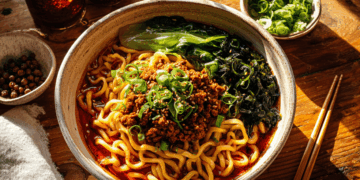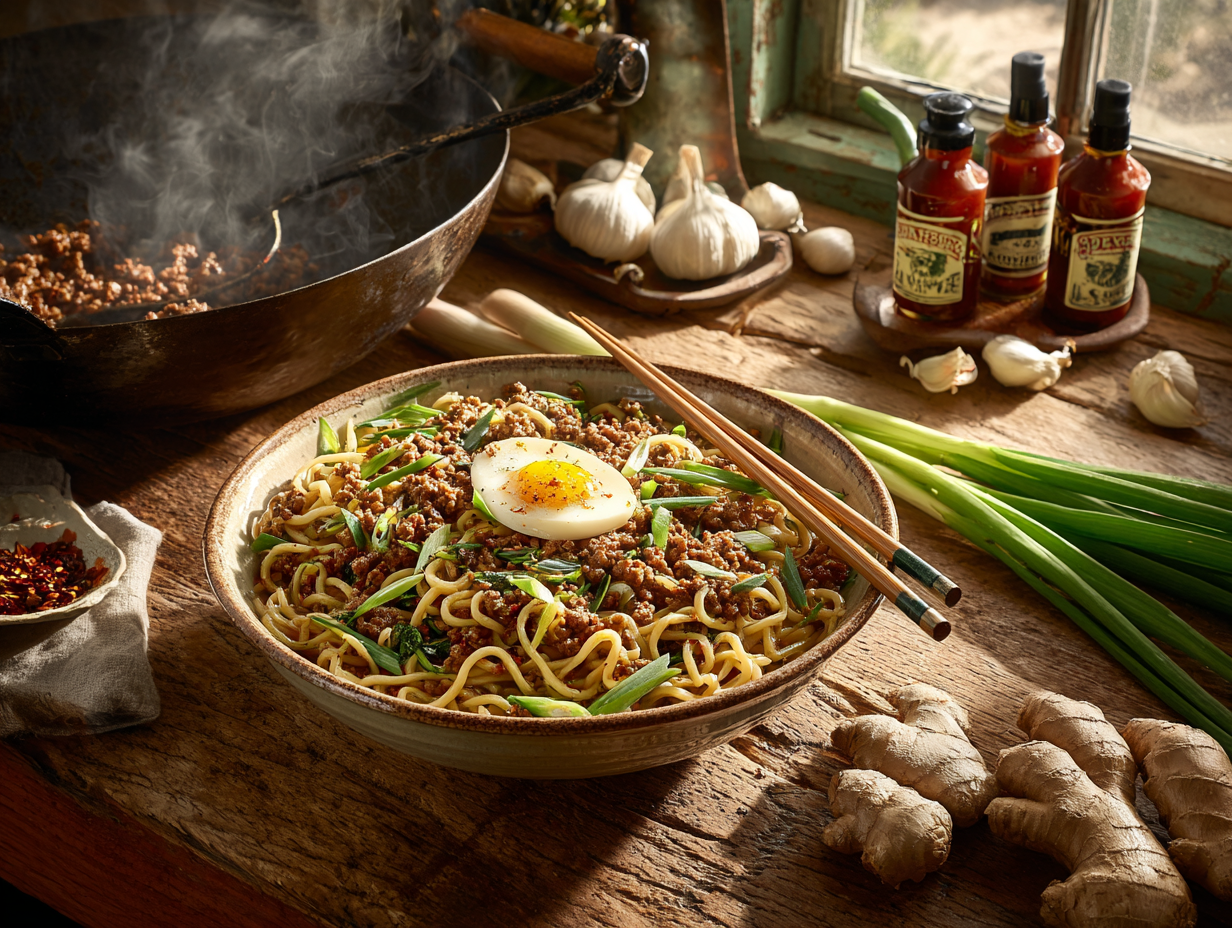
This is a ground pork and egg noodle stir-fry sauced with soy, oyster sauce, and a little sugar to help everything cling together. It comes together in about 30 minutes and makes enough to actually fill people up. If you need a weeknight dinner that doesn’t leave anyone hunting for snacks an hour later, this is a reliable one.
The short version of why this works
Two things make or break this dish. First, the pork needs to cook in a hot, mostly undisturbed pan long enough to brown — not just steam through. That browning builds the flavor base the sauce depends on. Second, the sauce goes in after the aromatics, not before, so the garlic and ginger don’t burn in the liquid. Get those two steps right and the noodles have something genuinely savory to absorb. Rush either one and you end up with pale, bland meat sitting in a thin puddle.
What can go wrong
- Noodles clump before they hit the pan: Freshly drained egg noodles stick fast. Toss them with a few drops of oil right after draining and keep them moving until you’re ready to add them.
- The sauce burns before the noodles are coated: This happens when the heat is too high and the pan is too dry. Add the noodles immediately after the sauce goes in and toss constantly — don’t walk away.
- Watery sauce that won’t cling: Usually caused by noodles that weren’t drained well enough. Shake the colander hard and let them sit for a minute before adding them to the pan.
- Pork is cooked through but still gray and soft: The pan wasn’t hot enough or was overcrowded. Cook in two batches if needed, and make sure the pork hits 160°F (71°C) internally — a quick-read thermometer removes the guesswork.
- Garlic tastes raw and sharp: It wasn’t cooked long enough before the liquid went in. Give it a full 30–45 seconds in the hot fat, stirring constantly, before adding anything else.
Shopping notes
- Egg noodles: Fresh or dried both work. Fresh cook in 2–3 minutes; dried take longer and need a full boil. Avoid the very thin vermicelli-style — they break up during stir-frying. Medium-width holds up better.
- Oyster sauce: Sold in most large supermarkets in the Asian foods aisle. Lee Kum Kee is widely available and consistent. Skip the premium oyster-flavored sauces — they’re not the same thing.
- Dark soy sauce: Thicker and less salty than regular soy sauce; it’s mainly for color and a mild molasses note. If you can’t find it, regular soy sauce works but the dish will be lighter in color and slightly saltier, so taste before adding more.
- 80/20 ground pork: Standard at most grocery stores. Leaner pork (90/10) will dry out faster — skip it here.
Make-ahead notes
The cooked pork mixture (without noodles) keeps well in the fridge for up to 3 days in a sealed container. Store noodles separately — combined leftovers turn gummy overnight as the noodles absorb all the sauce. To reheat the pork, use a hot skillet with a splash of water to loosen it, then add freshly cooked noodles and toss. The full assembled dish can be frozen for up to 2 months, but the noodle texture suffers; freeze the pork sauce alone and cook fresh noodles when you’re ready to eat. Skip the scallion garnish on anything you’re storing — not worth the extra dish, and they go limp anyway.
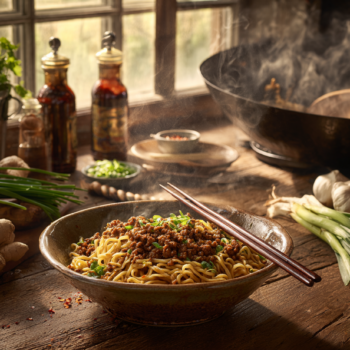
Savory Pork Mince Egg Noodles

Equipment
Ingredients
 12 oz egg noodles - fresh or dried, medium thickness
 1 lb ground pork (minced pork) - preferably 80% lean for best flavor
- 1 tbsp toasted sesame oil
 1 tbsp vegetable oil - or peanut oil
 4 cloves garlic - minced
 1 inch ginger - grated or finely chopped
 3 whole green onions (scallions or green shallots) - sliced, divided into white and green parts
- 2 tbsp light soy sauce
- 1 tbsp dark soy sauce - adds color and depth
 1 tbsp oyster sauce
 1 tsp sugar - white or brown
 ¼ cup chicken stock (chicken broth or chicken bouillon) - or water for a lighter option
 1 tsp chili flakes (chilli flakes in British English) - or sambal oelek ; optional, for heat
Instructions
- Bring a pot of water to a boil. Add egg noodles and cook according to package instructions, usually 5–6 minutes if dried. Once al dente, drain and rinse with cold water to stop cooking. Toss with a touch of sesame oil to prevent sticking. Set aside.
- Heat a wok or large skillet over medium-high heat (about 375°F / 190°C). Add vegetable oil and sesame oil.
- Add ground pork and cook for 5-6 minutes, breaking it up with the spoon, until browned and starting to crisp. Excess fat can be drained if desired for a leaner finish.
- Add minced garlic, grated ginger, and white parts of scallions. Sauté for 1-2 minutes until fragrant.
- Add light soy sauce, dark soy sauce, oyster sauce, sugar, and chicken broth. Stir to coat pork mince and simmer for 2–3 minutes until sauce slightly reduces and becomes glossy.
- Gently add the cooked noodles and toss in the sauce and pork mix until evenly coated and heated through — about 2 minutes more.
- Turn off the heat. Stir in green parts of scallions and optional chili flakes or sambal oelek. Serve immediately.
Notes
- Add a splash of black vinegar for a tangy brightness.
- For a vegetarian version, substitute pork with crumbled firm tofu or plant-based mince, using mushroom or soy sauce for depth.
- Taste as you go — especially the soy sauce blend — to balance saltiness to your liking.
Nutrition
Your questions, answered
Can I use regular spaghetti instead of egg noodles?
Yes, it works in a pinch. Cook it al dente so it doesn’t go mushy when tossed in the hot pan, and expect a slightly different texture — spaghetti is firmer and less chewy than egg noodles.
How do I know the ground pork is fully cooked?
Ground pork needs to reach an internal temperature of 160°F (71°C) — no pink should remain. Break it into small pieces as it cooks so you can check the color throughout, not just on the surface.
Can I double the recipe to feed a bigger group?
Double the ingredients, but cook the pork in two separate batches rather than crowding the pan. One large batch of sauce and noodles at the end is fine once the meat is browned and cooked through.
My kids don’t like spice — can I leave out the chili?
Absolutely, the dish is complete without it. The base sauce is savory and mild; chili is strictly optional and has no effect on the cooking process.
Can I swap the pork for ground chicken or turkey?
Yes, but ground poultry must reach 165°F (74°C) internally — cook it a little longer and check carefully. It’s also leaner, so add an extra teaspoon of oil to the pan before browning to prevent sticking.
What’s the best way to reheat leftovers without drying out the pork?
Reheat in a skillet over medium heat with a tablespoon or two of water, stirring frequently. The microwave works too but tends to make the noodles rubbery — the skillet method gives better results.