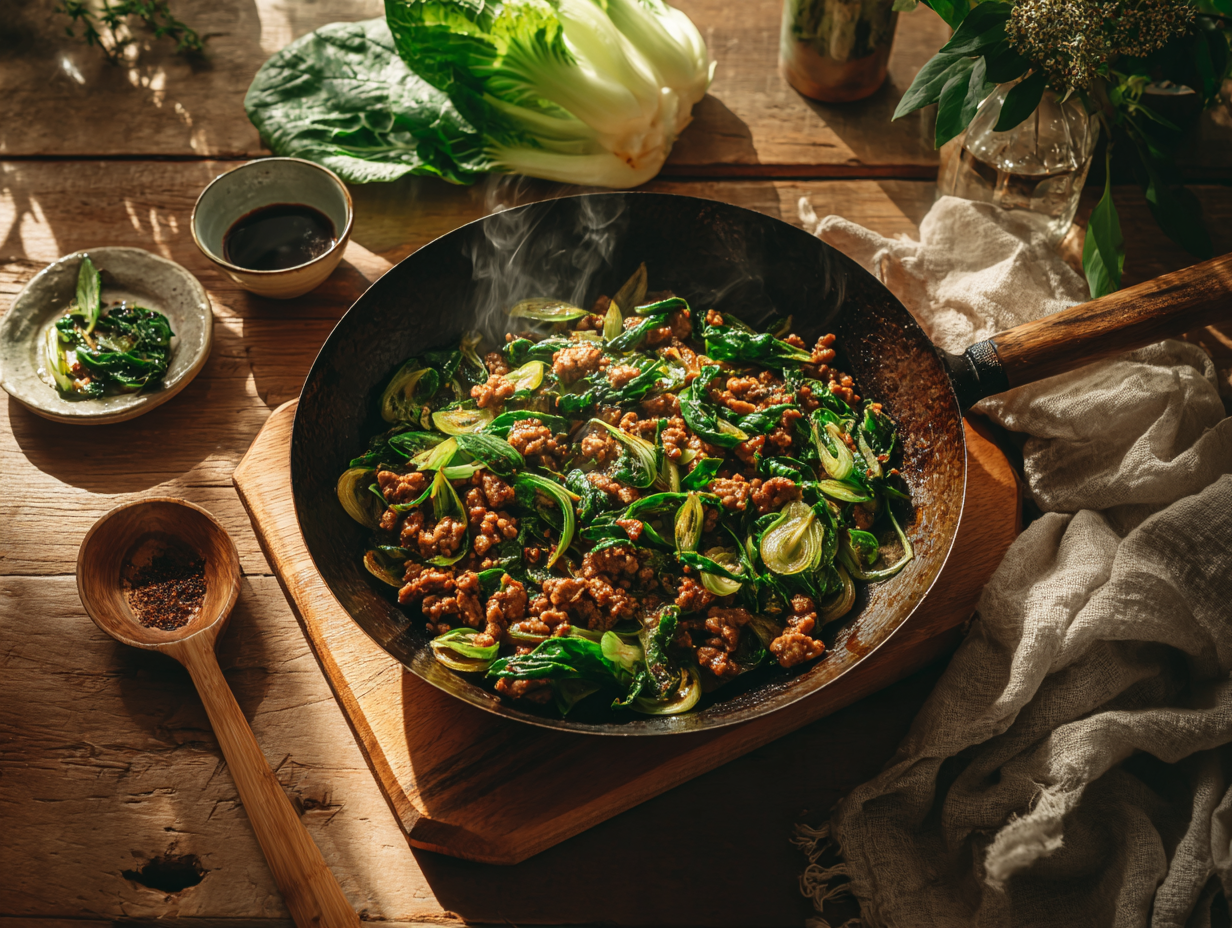
This is a quick pork mince stir fry built around pūhā, a bitter green used in traditional Māori cooking that works surprisingly well with the soy-oyster sauce base. It comes together in 35 minutes and uses a short list of pantry staples. If you can find pūhā — or have a decent substitute on hand — this is a genuinely good weeknight dinner that doesn’t cost much.
The short version of why this works
Two things matter here. First, let the pork mince sit undisturbed in the hot pan for a minute or two before breaking it up. That contact time builds a brown crust on the meat, which is where most of the flavor comes from — stir it too early and you get steamed, grey pork. Second, add the pūhā at the very end. It wilts fast, and if it goes in too soon it turns army-green and loses its texture. Thirty seconds in the pan is usually enough. Get those two steps right and the rest is straightforward.
Substitutions that actually work
- Pūhā: Dandelion greens are the closest swap — same pleasant bitterness, similar texture. Chicory or radicchio work too. Silverbeet or baby spinach are milder but still fine; just expect a gentler flavor. Skip the garnish — not worth the extra dish.
- Oyster sauce: Hoisin sauce is a reasonable stand-in. It’s sweeter, so cut it by about a third and add a small splash of soy to compensate.
- Rice vinegar: A small amount of apple cider vinegar does the same job. Use slightly less — it’s sharper.
- Fresh ginger: Ground ginger works in a pinch. Use about one-quarter of the amount called for fresh.
- Pork mince: Ground chicken works here — cook it to 165°F (74°C) internal. Ground turkey is also fine. Both are leaner, so add a small drizzle of oil to keep things from sticking.
Troubleshooting
- The pork is releasing a lot of liquid and won’t brown: Your pan isn’t hot enough, or it’s overcrowded. Spread the mince out, turn the heat up, and don’t touch it. If you have a lot of mince, cook it in two batches rather than one.
- The sauce is too salty: Soy sauce brands vary a lot in sodium. If it tastes sharp before the greens go in, add a small splash of water and a pinch of sugar to balance it out.
- The greens turned mushy: They went in too early or the heat dropped when you added them. Keep the heat high and add pūhā last, tossing quickly just until wilted.
- The garlic and ginger burned: These aromatics go from golden to bitter in seconds over high heat. Have the pork ready to go in immediately after you add them — don’t let them sit in the pan alone.
- The dish tastes flat: Rice vinegar is doing the lifting here. A small extra splash at the end, added off the heat, can pull the whole thing together if it tastes one-dimensional.
Make-ahead notes
Leftovers keep well in an airtight container in the fridge for up to 3 days. The pūhā softens further overnight but the flavor is still good. Reheat in a hot pan rather than the microwave — a minute or two over medium-high heat brings back some of the texture. This dish doesn’t freeze well; the greens go watery on thawing. If you want to prep ahead, you can mix the sauce ingredients and store them in a small jar in the fridge for up to a week, which cuts a few minutes off the cooking process on a busy night.

Pork Mince and Pūhā Stir Fry
Equipment

Ingredients


 1 small onion - finely sliced


 1 teaspoon chili flakes - optional for heat
- 4 cups pūhā leaves - fresh ; rinsed thoroughly, chopped if large
 2 teaspoons cornstarch - mixed with 2 tablespoons of cold water
 1 tablespoon rice vinegar


Instructions
- Heat a wok or large sauté pan over medium-high heat. Add sesame oil and heat until shimmering and aromatic (about 30 seconds).
- Add the pork mince and spread it out evenly. Let it sear without stirring for 1–2 minutes to develop a golden-brown crust, then stir and continue cooking for another 4 minutes until fully browned.
- Add grated ginger, minced garlic, and sliced onion. Stir fry for 2–3 minutes until onions soften and the aromatics bloom with fragrance.
- Stir in soy sauce, oyster sauce, and optional chili flakes. Toss to coat the pork evenly and let it simmer for 1 minute to integrate flavors.
- Add the chopped pūhā and toss well. Cook for 1–2 minutes until wilted but still vibrant green.
- Mix cornstarch with cold water to create a slurry. Stir into the pan along with rice vinegar and cook for 1–2 minutes, until sauce thickens and coats the stir fry lightly.
- Remove from heat and serve immediately.
Notes
- If you can’t find fresh pūhā, substitute with spinach, watercress, or dandelion greens for a similar earthy bitterness.
- For extra depth, add a splash of fish sauce or a pinch of brown sugar during stir frying.
- To caramelize the pork faster, avoid overcrowding the pan and use high heat.
Nutrition
Frequently asked questions
Where do I find pūhā if I’m not in New Zealand?
Dandelion greens from a grocery store or farmers market are your best practical option outside New Zealand. They share the same bitter flavor profile and cook the same way — look for young, smaller leaves, which are less tough.
Can I use a regular frying pan instead of a wok?
Yes, a large heavy skillet works fine. The key is getting it genuinely hot before anything goes in — a cast iron or stainless pan holds heat better than a thin non-stick, which can struggle at high temperatures.
How do I know when the pork mince is fully cooked?
Ground pork needs to reach 160°F (71°C) internally — no pink remaining anywhere in the meat. At stir-fry heat with mince broken into small pieces, this usually takes 5 to 7 minutes total.
Can I make this less bitter if I’m not used to bitter greens?
Use baby spinach or silverbeet instead of pūhā for a much milder result. If you want to stick with pūhā, blanching it briefly in boiling water before adding it to the stir fry takes the edge off the bitterness noticeably.
What can I serve this with if I don’t have rice?
Noodles — any kind you have — work well and soak up the sauce nicely. It’s also decent on its own as a low-carb meal, or spooned over a thick slice of toast if that’s what’s available.
What to cook next
- Savory Pork Noodle Stir-Fry
- Horopito Pork Stir Fry
- Japanese Pork Lettuce Cups
- Lamb Meets Wild Greens


