The vibrant street markets of Thailand tell a story through food—one of balance, boldness, and beautiful simplicity. Among the countless dishes that capture the essence of Thai cuisine, few are as universally appealing as the fresh, flavorful combinations found in lettuce wraps. Thai Pork Lettuce Cups represent this culinary philosophy perfectly, transforming humble ingredients into an extraordinary dining experience that engages all the senses.
My first encounter with this style of eating came during a sultry evening in Chiang Mai’s famous Saturday Walking Street market. The vendor, an elderly woman with weathered hands and a knowing smile, assembled her creation with practiced precision—spooning aromatic meat into crisp lettuce leaves before garnishing them with herbs so fresh they seemed to still carry the warmth of the afternoon sun. That first bite revealed what makes Thai cuisine so remarkable: the harmonious interplay of sweet, sour, salty, bitter, and spicy flavors, all wrapped in the cool embrace of lettuce.
The beauty of Thai Pork Lettuce Cups lies in their versatility and accessibility. While rooted in traditional Thai flavor profiles, they’ve become a beloved dish across the globe, adaptable to various dietary preferences and local ingredients. The dish exemplifies the Thai approach to eating—food that is meant to be shared, customized to individual tastes, and enjoyed in a communal setting. Each person becomes their own chef, adjusting the heat, adding extra herbs, or squeezing more lime according to their preference.
Understanding the key ingredients is essential to appreciating this dish’s complexity. Ground pork serves as the canvas, its mild flavor and satisfying texture providing the perfect base for the bold seasonings that follow. The aromatics—garlic and ginger—form the foundation of the flavor profile, their pungency mellowing as they cook to create a fragrant backdrop. Fish sauce, that umami-rich cornerstone of Southeast Asian cooking, adds depth and authenticity that simply cannot be replicated with substitutes. Combined with soy sauce, it creates a savory base that grounds all the other flavors.
The balance comes from brown sugar and lime juice—the yin and yang of Thai cooking. The sugar doesn’t make the dish sweet per se; rather, it rounds out the sharp edges and helps the flavors meld together. Fresh lime juice provides the acidic brightness that lifts the entire dish, while the zest adds aromatic oils that perfume each bite. The chili garlic sauce brings controlled heat, allowing home cooks to adjust the spice level to their liking.
Fresh herbs are non-negotiable in authentic Thai cooking, and this recipe showcases two essentials: cilantro and mint. These aren’t mere garnishes but integral components that add layers of flavor and aroma. The cilantro brings its distinctive citrusy note, while mint provides a cooling contrast to the warm, spiced pork. Together, they create that characteristic fresh quality that distinguishes Thai cuisine from other Asian cooking traditions.
The choice of butter lettuce is deliberate and important. Its tender leaves form perfect cups, sturdy enough to hold the filling yet delicate enough to provide textural contrast without overwhelming the other ingredients. The lettuce serves multiple purposes: it’s a vehicle for the flavorful filling, a temperature contrast to the warm pork, and a refreshing palate cleanser between bites.
From a nutritional standpoint, these lettuce cups offer a lighter alternative to many appetizers without sacrificing satisfaction. The lean protein from the pork, combined with fresh vegetables and herbs, creates a balanced dish that’s both nourishing and indulgent. The absence of heavy carbohydrates makes it suitable for various dietary approaches, from low-carb to paleo diets.
The cooking technique employed here—high heat stir-frying—is crucial to achieving the right texture and flavor concentration. The quick cooking preserves the integrity of the aromatics while ensuring the pork develops those coveted crispy edges that add textural interest. The reduction of the sauce components creates a glaze that clings to the meat, ensuring every morsel is packed with flavor.
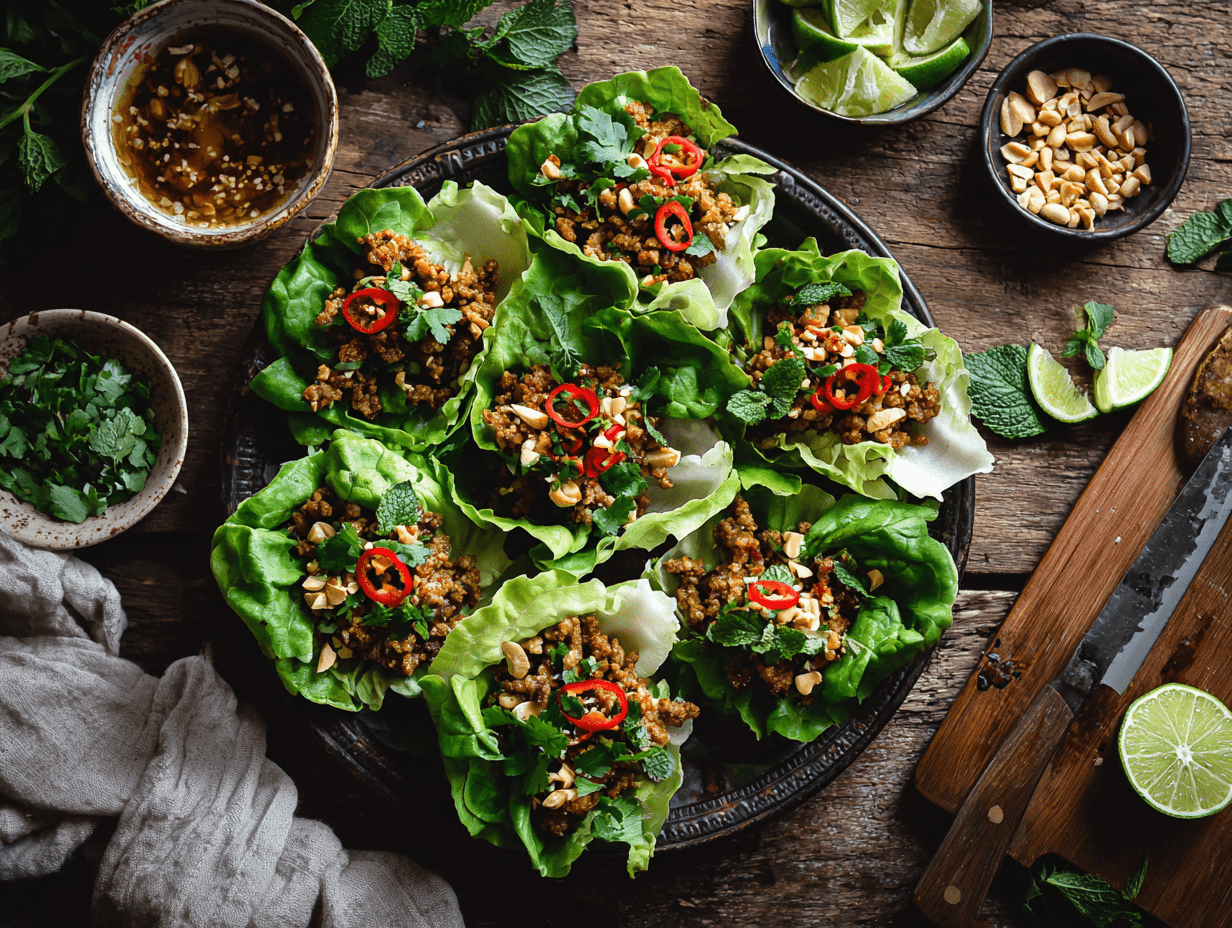
Presentation plays a significant role in the appeal of Thai Pork Lettuce Cups. The visual contrast of the golden-brown pork against the pale green lettuce, punctuated by the vibrant herbs and the optional red chili garnish, creates an appetizing display that promises flavor before the first bite. The interactive nature of assembling your own cups adds an element of fun and engagement that makes this dish perfect for entertaining.
In the context of a meal, these lettuce cups occupy a unique position. Light enough to serve as an appetizer without filling guests before the main course, yet substantial enough to stand alone as a light lunch or dinner when paired with rice or additional vegetables. They’re equally at home at a casual weeknight dinner or an elegant dinner party, adapting to the occasion with ease.
The dish also represents the modern evolution of Thai cuisine, where traditional flavors meet contemporary health consciousness and global accessibility. While staying true to the essential flavor profile, home cooks can easily adapt the recipe—substituting ground chicken or turkey for pork, adjusting spice levels, or adding additional vegetables to boost nutrition.
Mastering Thai Pork Lettuce Cups opens the door to understanding broader Thai cooking principles. The balance of flavors, the importance of fresh ingredients, and the technique of building layers of taste are skills that translate to countless other dishes. Once you understand how fish sauce deepens flavor, how lime brightens a dish, or how fresh herbs can transform simple ingredients, you’ll find yourself applying these lessons throughout your cooking.
These lettuce cups embody what makes Thai cuisine so beloved worldwide—the ability to create maximum flavor with minimal fuss, the emphasis on fresh, quality ingredients, and the perfect balance that leaves you satisfied yet craving more. They remind us that the best food often comes from simple preparations that allow each ingredient to shine while contributing to a harmonious whole.
Thai Pork Lettuce Cups

Equipment
Ingredients
For the Pork Filling:
 1 pound ground pork - use pasture-raised pork for best flavor
 2 tablespoons vegetable oil - neutral oils like canola or peanut oil work well
 4 cloves garlic - minced
 1 tablespoon ginger - fresh ; grated
 2 tablespoons soy sauce - low sodium preferred
 1 tablespoon fish sauce - quality Thai fish sauce like Red Boat
 1 tablespoon brown sugar - packed
- 1 teaspoon chili garlic sauce - adjust to taste
 1 tablespoon lime juice - freshly squeezed
 2 teaspoons lime zest - from 1 lime
 ¼ cup cilantro - fresh ; chopped
 ¼ cup mint - fresh leaves ; chopped
For the Assembly:
 1 head butter lettuce - separated into whole leaves
- ¼ cup roasted peanuts - chopped
- 1 piece red chili - sliced thinly, optional for garnish
Instructions
- Heat the vegetable oil in a large skillet or wok over medium-high heat (about 375°F / 190°C). When shimmering, add the garlic and ginger. Sauté for 30 seconds, until fragrant but not browned.
- Add the ground pork to the skillet. Break it up with a spatula and cook for 5–7 minutes or until fully browned and cooked through. The meat should be crumbly and lightly golden.
- Stir in soy sauce, fish sauce, brown sugar, chili garlic sauce, and lime juice. Mix thoroughly and cook for 2 minutes, allowing the sauces to reduce slightly.
- Turn off the heat and stir in the lime zest, chopped cilantro, and chopped mint. Taste and adjust flavors as needed—more lime juice for tartness, fish sauce for depth, or chili sauce for heat.
- To assemble, place spoonfuls of the warm pork mixture into individual butter lettuce leaves. Top with chopped peanuts and sliced red chili if using.
Notes
- Chop herbs just before serving for maximum aroma.
- Replace pork with ground chicken or turkey for a leaner version.
- For gluten-free, ensure soy and fish sauces are certified gluten-free.