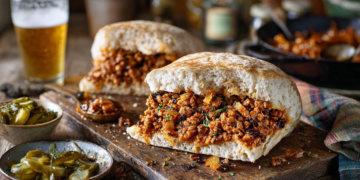
These are seasoned ground pork patties built around the flavors of gravlax — dill, fennel, and a hit of Dijon — topped with cured salmon, lemon crème fraîche, arugula, and red onion on a brioche bun. The honest reason to make them: you get a genuinely interesting sandwich in about 30 minutes, and most of the work is just mixing and shaping. Store-bought gravlax does all the heavy lifting on flavor.
Why this recipe works
Two things make this recipe reliable. First, seasoning the pork mince with ground fennel and fresh dill before shaping means the patty itself carries real flavor — the gravlax on top isn’t doing all the work alone. Second, chilling the shaped patties before they hit the pan keeps them from falling apart and helps them develop a proper sear rather than steaming. That crust matters here because a soft patty won’t hold up under the gravlax and sauce. Cook pork patties to an internal temperature of 160°F (71°C) — no guessing, use a thermometer.
Mistakes to avoid
- Skipping the chill step: If you go straight from mixing to the pan, warm fat in the mince means the patties spread and crumble. Even 15 minutes in the fridge makes a real difference.
- Overloading the gravlax: A thin layer of cured salmon is enough — too much and it slides off with every bite, and the salt overwhelms the pork. Two or three slices per patty is plenty.
- Using cold crème fraîche straight from the fridge: Cold crème fraîche is thick and hard to spread evenly. Let it sit out for 10 minutes and stir in the lemon zest just before assembling so it loosens up slightly.
- Pressing the patties while cooking: It pushes out moisture and dries the pork out fast. Leave them alone once they’re in the pan.
- Toasting the brioche too far in advance: Brioche goes from lightly toasted to soggy quickly once the sauce hits it. Toast the buns right before you assemble — skip the garnish if it means the buns are sitting while you fuss, not worth the extra dish.
Make-ahead notes
The raw pork patties can be shaped, wrapped individually, and refrigerated up to 24 hours ahead — this actually improves their texture. They also freeze well for up to 2 months; freeze them on a tray until solid, then transfer to a bag. Thaw overnight in the fridge before cooking. The lemon crème fraîche can be mixed and stored in a small jar in the fridge for up to 3 days. Cooked patties reheat reasonably well in a covered skillet over low heat with a splash of water, but they’re best fresh off the pan — the crust softens on reheating. Assemble sandwiches only when you’re ready to eat; gravlax and dressed buns don’t hold.

Pork Mince Gravlax Sandwich Patties

Equipment

Ingredients
For the Pork Patty Mixture:
 1 pound ground pork (minced pork) - preferably 80/20 fat ratio for juiciness
 2 cloves garlic - minced finely
 1 teaspoon ground fennel - adds Scandinavian herbal notes
 1 tablespoon Dijon mustard
 ¼ cup fresh dill - chopped
 1 teaspoon kosher salt
 ½ teaspoon ground black pepper - freshly ground
For the Additional Components:
- 4 pieces brioche buns - lightly toasted
- 4 oz gravlax - thinly sliced, preferably homemade or high-quality store-bought
- ½ cup crème fraîche - or high-quality sour cream
 1 tablespoon lemon zest - freshly grated
 1 cup arugula - washed and dried
 ¼ medium red onion - thinly sliced
Instructions
- In a large bowl, combine the ground pork, minced garlic, fennel, mustard, dill, salt, and pepper. Mix gently with your hands or a spatula until just combined—avoiding overmixing, which can toughen the patties.
- Form the mixture into 4 even patties roughly 4 inches wide and 3/4 inch thick. Place them on a plate, cover, and refrigerate for 20–30 minutes. This helps them hold shape while cooking.
- Heat a griddle or large skillet over medium heat (around 350°F / 175°C). Add a light coating of oil.
- Cook the patties for 4–5 minutes on each side, or until a golden-brown crust forms and internal temperature reaches 160°F (71°C). Let rest for 2 minutes.
- Meanwhile, in a small bowl, mix crème fraîche with lemon zest and a pinch of salt for a bright, tangy spread.
- Build the Sandwich: Spread lemon crème on both halves of the toasted brioche bun. Place the rested pork patty, add a layer of gravlax, a scattering of red onion, and a small handful of arugula. Cap with the top bun and press slightly to bring all textures together.
Notes
- You can substitute crème fraîche with Greek yogurt for a lighter, tangier twist.
- Gravlax can be replaced by smoked salmon if desired.
- Refrigerating the formed patties ensures they stay juicy and don’t fall apart during cooking.
Nutrition
Your questions, answered
Can I use regular sour cream instead of crème fraîche?
Yes, sour cream works fine here. It’s slightly thinner and a little more tart, so use a light hand with the lemon zest to avoid the sauce tasting sharp.
Where do I find gravlax, and is smoked salmon an acceptable substitute?
Gravlax is sold at most supermarket deli counters and at Scandinavian or specialty food stores. Smoked salmon is a workable substitute — the flavor is smokier and less herby, but it pairs well with the dill in the pork.
How do I know when the pork patties are fully cooked?
Use an instant-read thermometer and pull the patties at 160°F (71°C) in the center. Ground pork must reach this temperature — don’t rely on color alone, as pork can look done before it is.
Can I make these patties with a leaner ground pork?
You can, but patties made from very lean pork (above 93% lean) tend to be dry and can fall apart more easily. An 80/20 blend gives you a juicier result and holds together better in the pan.
Can the assembled sandwiches be packed for lunch?
Not really — the gravlax and crème fraîche make the bun soggy within an hour. Pack the cooked patties, sauce, and toppings separately and assemble just before eating.
Try these next
- Swedish Dill Pork Sausage
- Savory Pork Stottie Filling
- Sweet Savory Scotch Eggs
- Spiced Pork Mince Flatbreads