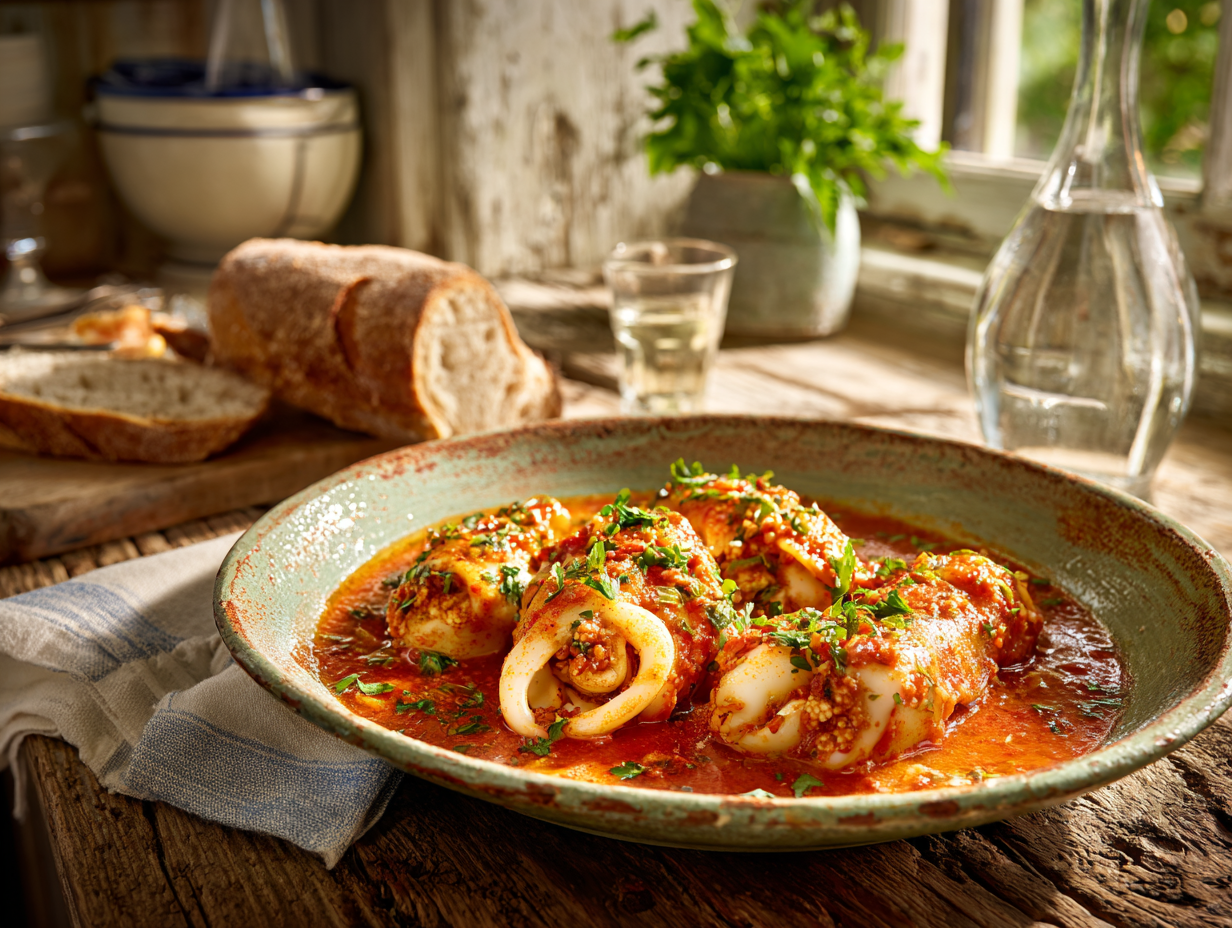
Calamares Rellenos is whole squid stuffed with a seasoned ground meat and tentacle filling, then simmered in a tomato-based sauce until tender. The stuffing is what makes it — ground pork or a pork-chorizo mix packed with aromatics and breadcrumbs gives the squid body and flavor all the way through. It takes some patience to assemble, but nothing about it is technically difficult once you know what to watch for.
The technique that matters
The two things that determine whether this dish works are how full you pack the squid and how gently you simmer it. Ground meat expands as it cooks, so fill each squid body only about two-thirds full and seal the opening with a toothpick. Overfill it and the squid will split open in the pan, spilling the stuffing into the sauce. Once the squid is in the tomato sauce, keep the heat low — a bare simmer, not a boil. Hard bubbling toughens squid fast. Low and slow for 25 to 30 minutes gives the ground meat time to cook through to a safe internal temperature of 160°F (71°C) for pork, while keeping the squid itself tender rather than rubbery.
Smart swaps
- Chorizo: Spanish dry-cured chorizo is ideal, but if you can only find Mexican fresh chorizo, drain off the excess fat after browning it before mixing it into the stuffing.
- Pine nuts: These are easy to skip — use roughly chopped toasted almonds instead, or leave nuts out entirely without hurting the dish.
- Fresh squid vs. frozen: Frozen squid tubes work well here and are often easier to find. Thaw them overnight in the fridge and pat dry before stuffing; excess moisture makes the filling slide around.
- Breadcrumbs: Plain dried breadcrumbs are fine. Panko works too. Skip seasoned breadcrumbs — the filling already has enough salt and aromatics.
What can go wrong
- Squid splits during cooking: Almost always caused by overfilling or too-high heat. Fill to two-thirds, secure the toothpick firmly, and keep the sauce at a gentle simmer.
- Filling is dry and crumbly after cooking: The breadcrumb ratio was too high, or the mixture was packed too tightly. The filling should feel moist and just hold its shape before it goes into the squid — if it seems dry, add a small splash of the tomato sauce to the mix before stuffing.
- Ground meat is undercooked in the center: Thick squid bodies take longer to heat through than thin ones. If your squid are large, add 5 to 10 minutes to the simmer time and check the center of one piece with an instant-read thermometer — you need 160°F (71°C) at the core.
- Sauce is watery and thin: This happens if the squid releases a lot of liquid. Remove the stuffed squid once cooked and let the sauce reduce over medium heat for 5 minutes before serving. Skip the garnish — not worth the extra dish.
- Squid is rubbery: It was either overcooked at high heat, or it was not simmered long enough to pass through the tough stage. Squid goes tender again after 25 to 30 minutes of low simmering — if it feels tough at 15 minutes, keep going rather than pulling it early.
Keeping and reheating
Leftover stuffed squid keeps well in an airtight container in the fridge for up to 2 days. Store it submerged in the sauce — this prevents the squid from drying out. To reheat, place it in a covered pan over low heat with a splash of water or extra tomato sauce and warm through slowly for about 10 minutes; avoid high heat or the squid will toughen again. You can freeze the finished dish for up to 1 month. Thaw overnight in the fridge before reheating the same way. Freezing raw stuffed squid is not recommended — the filling texture suffers after thawing.
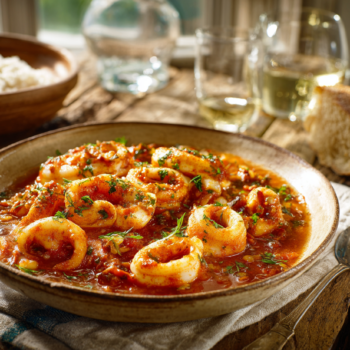
Saucy Calamares Rellenos Recipe

Ingredients
Squid Ingredients
- 8 large squid
 ¼ cup ground pork (minced pork)
 ¼ cup water chestnut - chopped
- ¼ cup ham - chopped
 ¼ cup yellow onion - chopped
 ¼ cup breadcrumbs
 1 medium egg - raw
 1 teaspoon salt
 ¼ cup milk
 ½ teaspoon ground black pepper
Sauce Ingredients
 ¼ cup margarine
 6 cloves garlic - macerated
- ¼ cup yellow onion - chopped
 ¼ cup tomato - chopped
 1 tablespoon white vinegar
- 1 teaspoon ground black pepper - slightly crushed
 1 cup water
Instructions
- The first thing to do is to combine the ingredients for the squid. Stuff each squid cavity with the mixture.
- Replace the head and fasten it with toothpicks.
- Set aside, then prepare the sauce. To make a sauce, sauté the garlic, onion and tomatoes in hot margarine. Add the rest of the ingredients to the sauce and let it boil. When boiled, add the stuffed squids. Cook until squids are tender but note that squids are very quick to cook.
Nutrition
Your questions, answered
Can I use pre-cleaned squid tubes from the store, or do I need whole squid?
Pre-cleaned squid tubes work perfectly for this recipe. The only thing you miss is the tentacles for the filling, so if you want to include them, buy a small amount of whole squid separately or simply increase the ground meat quantity slightly to compensate.
How do I know when the ground pork filling inside the squid is fully cooked?
The most reliable method is an instant-read thermometer inserted into the center of the thickest stuffed squid — it should read 160°F (71°C). If you don’t have a thermometer, cut one piece open after 30 minutes of gentle simmering; the filling should be uniformly gray-brown with no pink remaining.
My squid bodies are different sizes. Does that affect cooking time?
Yes, noticeably. Smaller squid (under 4 inches) may be done in 20 minutes, while larger ones can need 35 minutes or more. Cook them together but check the largest piece first with a thermometer, and pull smaller ones out early if needed to avoid overcooking them.
Can I prepare the stuffed squid ahead of time before cooking?
Yes — stuff and seal the squid up to 12 hours in advance and refrigerate them uncovered on a plate. Do not store them longer than that before cooking, as raw ground meat inside whole squid is a food safety risk if held too long. Cook straight from the fridge, adding 3 to 5 minutes to the simmering time.
What to cook next
- Spicy Beef Stuffed Peppers
- Savory Stuffed Onion Dolma
- Golden Colombian Beef Empanadas
- Puerto Rican Pork Pasteles