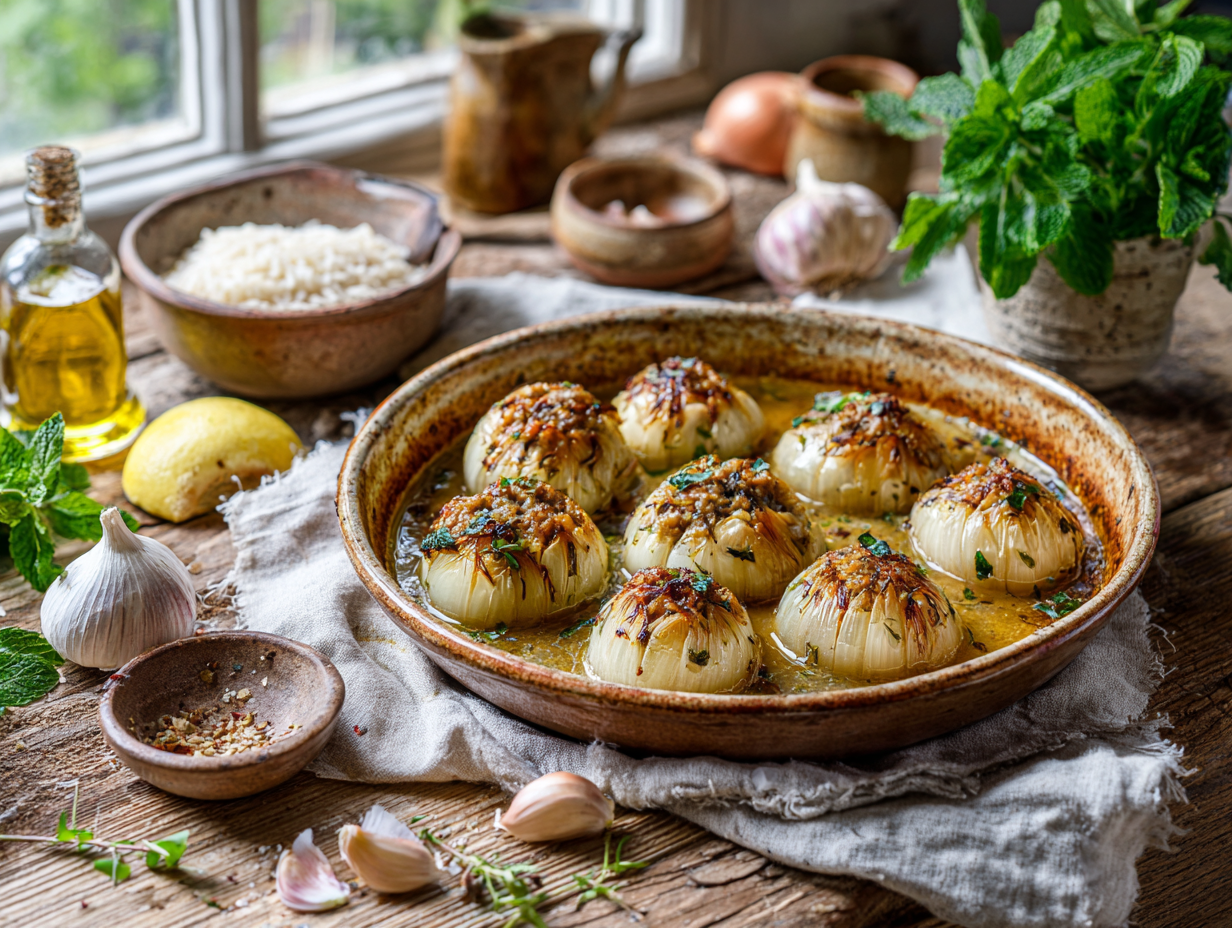
Stuffed onion dolma is a braised lamb-and-rice filling packed inside softened onion layers, then cooked low and slow in broth until everything is tender and the juices have pulled together into a light, savory sauce. It takes real time to make, but it feeds a table of people from a modest amount of meat. That’s the honest reason to cook it.
What makes this version work
Two things matter most here. First, blanching the onions long enough — if the layers are still stiff when you try to separate them, they’ll split when you stuff them and you’ll lose half your vessels before you even start. Pull them when they bend without cracking. Second, the rice goes in raw and uncooked, which means it needs the braising liquid to do its job; pack the filling loosely so the rice has room to expand inside the onion without blowing the seam open. Get those two things right and the dish takes care of itself in the oven.
If something goes sideways
- Onion layers keep tearing: The onion didn’t blanch long enough. Return it to the boiling water for another 2–3 minutes. Larger onions are also easier to work with than small ones — if you’re buying specifically for this recipe, go big.
- Filling is still crunchy in the center after the cook time: The rice didn’t get enough liquid. Add a splash of warm broth, re-cover tightly with foil, and return to the oven for 15 more minutes. A loose foil seal is the usual culprit — press it down firmly around the dish.
- Dolma are falling apart in the pan: Pack them seam-side down and nestle them snugly against each other. They hold their shape through contact, not through any kind of tie or toothpick. If your dish is too large, fill the gaps with halved onion pieces to keep everything upright.
- Sauce tastes flat: The broth you used was low-sodium and the lamb didn’t compensate. Stir a small squeeze of lemon juice into the pan liquid before serving — it sharpens everything without adding more salt.
- Tops look pale after uncovering: Skip the garnish — not worth the extra dish. Instead, run the pan under the broiler for 3–4 minutes to get some color on the exposed filling. Watch it; it goes from pale to scorched fast.
Keeping and reheating
Leftovers keep well in the fridge for up to 4 days in a covered container with some of the braising liquid spooned over them — that liquid is what keeps the rice from drying out. To reheat, put the dolma in a small baking dish with a few tablespoons of water or broth, cover tightly with foil, and warm at 325°F for about 20 minutes. The microwave works too on medium power, but do it in short bursts and keep them covered so the onion doesn’t toughen. For freezing, cool completely first, then freeze with liquid for up to 2 months. Thaw overnight in the fridge before reheating; don’t try to reheat from frozen or the rice turns mushy before the center is hot. Internal temperature should reach 165°F when reheating any stuffed dish that’s been stored.

Lamb Mince and Herb Stuffed Onions
Equipment

Ingredients
- 4 large yellow onions - choose uniform, medium-large size


- ¼ teaspoon black pepper - freshly cracked

- ½ cup long grain white rice - rinsed and soaked for 15 minutes


Instructions
- Preheat your oven to 375°F (190°C).
- Bring a large pot of salted water to a boil. Cut a small slice off the bottom of each onion to help them stand. Peel the onions and boil for 10–12 minutes until layers begin to soften. Remove and let cool.
- Once cool, carefully slice 1/4 inch off the top of each onion and gently separate layers, removing the largest intact ones for stuffing (you should get about 2–3 layers per onion). Chop the remaining inner cores and set aside.
- In a sauté pan over medium heat, add 1 tbsp olive oil and sauté chopped onion cores and garlic until translucent and golden, about 5–7 minutes.
- Add ground lamb, breaking up with a spoon. Cook until browned, about 8 minutes. Season with cumin, cinnamon, allspice, salt, and pepper, and stir well to combine.
- Drain the soaked rice and add it to the lamb mixture. Stir for 2 minutes to toast slightly. Remove from heat and fold in parsley and mint. Allow mixture to cool for 5 minutes.
- Stuff each onion layer with about 2 tablespoons of the filling, gently rolling or folding to enclose. Arrange in a baking dish, seam-side down.
- Drizzle the remaining olive oil over the onions and pour chicken broth into the base of the baking dish. Cover tightly with foil and bake for 45 minutes. Remove foil and bake uncovered an additional 15 minutes or until tops are golden and liquid is absorbed.
Notes
- For a vegetarian version, substitute lamb with cooked lentils and finely chopped mushrooms.
- To add a citrus lift, grate fresh lemon zest into the filling before baking.
- Resting the stuffed onions after baking for 10 minutes allows liquids to redistribute and deepen flavor.
Nutrition
Common questions
Can I use ground beef instead of lamb?
Yes, ground beef works fine here. Use an 80/20 blend for enough fat to keep the filling moist during the long braise — leaner beef tends to go dry and grainy by the time the rice is cooked through.
How many onions do I need and what size?
Large yellow onions — about 3 to 4 inches in diameter — are the right size. You’ll typically get 3 to 4 usable layers per onion, so plan on roughly 2 large onions per serving if this is the main dish for a hungry group.
Can I prep these ahead and cook them the next day?
Yes, and it actually helps. Assemble the stuffed onions, arrange them in the baking dish, pour the broth over, cover, and refrigerate overnight. Add about 10 extra minutes to the covered baking time since you’re starting from cold.
What do I serve with this to make it a full meal?
A simple cucumber-tomato salad and flatbread cover it well — the bread is useful for soaking up the braising liquid. If you want something more filling for bigger appetites, a side of plain yogurt and some extra rice on the table rounds it out without much extra work.
How do I know the lamb filling is cooked through safely?
Ground lamb needs to reach an internal temperature of 160°F (71°C). Use an instant-read thermometer inserted into the center of one of the larger dolma — if it reads 160°F or above, you’re good. Don’t rely on color alone, since the spices can make the filling look done before it actually is.
Try these next
- Spicy Beef Stuffed Peppers
- Savory Lebanese Lamb Pastries
- Saffron Lamb Rice Pilaf
- Levantine Lamb Za’atar Flatbread


