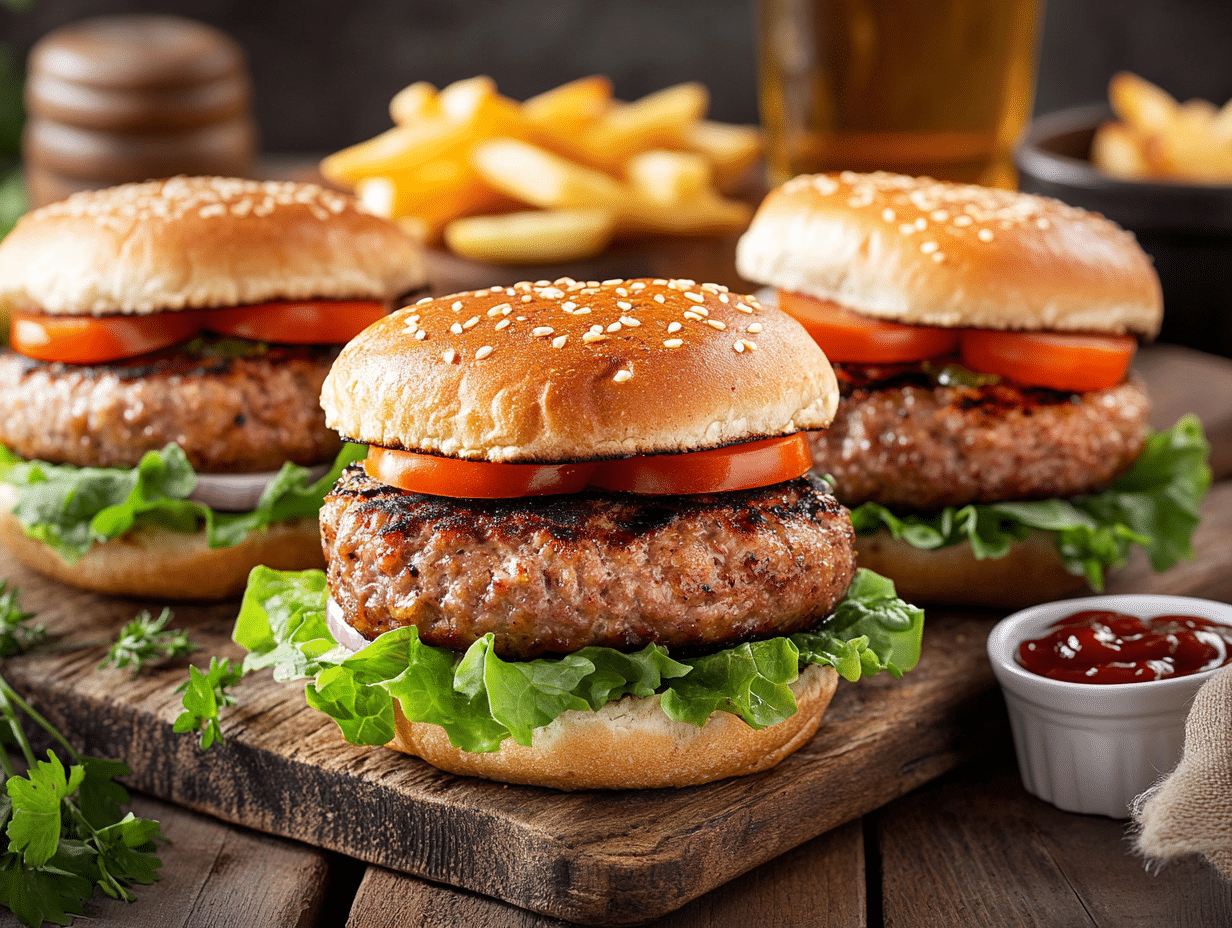
These are straightforward grilled pork burgers seasoned with garlic, thyme, and cracked black pepper — ready in about 23 minutes from start to finish. Ground pork is slightly fattier and sweeter than lean beef, which means the patties stay moist on the grill without any special tricks. If you’ve been curious about cooking with ground pork, this is a good first recipe to try.
Substitutions that actually work
- Ground pork: A 80/20 fat ratio works best here. Very lean ground pork (below 10% fat) will produce a dry patty, so check the label before buying.
- Black peppercorns: Whole peppercorns cracked just before mixing give a sharper, more noticeable heat than pre-ground pepper. If you only have pre-ground, use about ¾ teaspoon — skip the garnish of extra cracked pepper on top, not worth the extra dish.
- Ground thyme: Fresh thyme works too — use 1 tablespoon of fresh leaves in place of 1 teaspoon dried.
- Burger buns: Any sturdy roll holds up fine. Soft sandwich buns tend to get soggy fast with juicy pork patties, so a brioche or potato bun with a tighter crumb is a better choice.
The technique that matters
Mixing the seasoning into the pork is where most beginners go wrong. Work the garlic, salt, pepper, and thyme through the meat until everything is evenly distributed — but stop there. Overworking ground pork compresses the proteins and produces a dense, rubbery patty rather than a tender one. Mix just until you no longer see dry pockets of seasoning, then shape immediately. When you form the patties, press a shallow indent into the center of each one with your thumb or the back of a spoon. Ground pork contracts as it cooks, and without that indent the center will dome up and the patty will rock on the bun rather than sit flat.
What can go wrong
- Patties falling apart on the grill: This usually means the pork was too warm when shaped. If your kitchen is hot, refrigerate the formed patties for 15 minutes before grilling — the fat firms up slightly and holds the patty together.
- Outside charring before the inside is cooked through: Ground pork must reach 160°F (71°C) at the center — never serve it pink. If the outside is browning too fast, move the patties to a cooler part of the grill and close the lid to let indirect heat finish the job.
- Patties sticking to the grill grates: Brush the grates with oil just before the patties go on, and don’t try to flip too early. A pork patty releases naturally from clean, oiled grates once a crust has formed — forcing a flip before that point tears the patty.
- Bland flavor despite following the recipe: Ground pork needs seasoning mixed all the way through, not just on the surface. If the mix tasted flat before cooking, a small pinch of extra salt worked in before shaping fixes it.
- Uneven cooking across four patties: Patties of different thicknesses will finish at different times. Weigh or eyeball each portion to roughly equal size — about 8 oz each from 2 pounds — before shaping.
Make-ahead notes
You can mix and shape the patties up to 24 hours ahead — layer them between sheets of parchment paper, cover tightly, and refrigerate. For longer storage, freeze the raw shaped patties on a baking sheet until solid (about 2 hours), then transfer to a zip-lock bag; they keep well for up to 2 months. Thaw overnight in the refrigerator before grilling — never grill from frozen, as the outside will overcook before the center reaches the required 160°F (71°C). Cooked patties can be refrigerated for up to 3 days and reheated in a covered skillet over medium-low heat with a splash of water to prevent drying out.

BBQ Pork Burgers – Juicy Grilled Patties in 23 Minutes

Equipment
Ingredients
 2 pounds ground pork - minced pork, about 900g
 3 cloves garlic - minced
- 1 ½ teaspoons fine sea salt - adjust to taste
 1 tablespoon black peppercorns - (whole) ; cracked
 1 teaspoon thyme - ground
 2 tablespoons olive oil - for brushing the grill grates, about 30ml
 4 whole hamburger buns - to serve
- 4 small leaves lettuce - to serve, optional
 1 medium onion - sliced, to serve, optional
 1 medium tomato - sliced, to serve, optional
 4 tablespoons ketchup - to serve, optional
 4 tablespoons mayonnaise - to serve, optional
Instructions
- Preheat the barbecue to medium-high heat (approximately 400–450°F / 200–230°C). Clean and oil the grill grates to prevent sticking.
- Using a mortar and pestle or pepper mill, crack the whole black peppercorns into coarse pieces. In a large mixing bowl, add the ground pork, cracked pepper, minced garlic, salt, and ground thyme. Mix gently with your hands until the seasoning is evenly distributed — do not overwork the meat or the patties will be dense and rubbery.2 pounds ground pork, 3 cloves garlic, 1 1/2 teaspoons fine sea salt, 1 tablespoon black peppercorns, 1 teaspoon thyme
- Divide the mixture into 4 equal portions and shape each into a patty about ¾ inch (2cm) thick. Press a shallow indent into the centre of each patty with your thumb — this prevents the burger from doming as the pork contracts during cooking.
- Brush the grill grates with olive oil. Place the patties on the grill and cook for 5–6 minutes per side without pressing down on them, until the internal temperature reaches 160°F / 71°C. Remove the patties from the grill and rest for 2 minutes before serving.2 tablespoons olive oil
- Toast the burger buns cut-side down on the grill for 1–2 minutes until lightly charred. Assemble the burgers with lettuce, sliced onion, tomato, ketchup, and mayonnaise as desired.4 whole hamburger buns, 4 small leaves lettuce, 1 medium onion, 1 medium tomato, 4 tablespoons ketchup, 4 tablespoons mayonnaise
Notes
Nutrition
FAQ
How do I know when a ground pork burger is fully cooked without cutting it open?
Use an instant-read thermometer inserted sideways into the center of the patty — it needs to read 160°F (71°C). Color alone is not reliable with ground pork; a patty can look done on the outside while the center is still undercooked.
Can I cook these in a pan instead of on a barbecue?
Yes — a cast iron or heavy stainless skillet over medium-high heat works well. Add the olive oil to the pan, let it get hot before adding the patties, and use the same 5 minutes per side timing as a starting point, checking the internal temperature to confirm doneness.
Why does ground pork cost less than ground beef but taste just as good in burgers?
Ground pork typically has a higher natural fat content, which keeps burgers moist and flavorful without needing added fillers or binders. It’s a practical swap that works well in any burger recipe that doesn’t rely on beef-specific flavor.
Do I need to add an egg or breadcrumbs to hold the patties together?
No — this recipe doesn’t need binders. Ground pork has enough fat and protein to hold a patty shape on its own when handled correctly. Binders are more commonly needed in meatball or meatloaf recipes where the mixture is looser.
Can I mix the seasoning the night before and leave the pork in the fridge unshaped?
Yes, that works fine. Mix the garlic, salt, pepper, and thyme into the pork, cover the bowl, and refrigerate overnight — the flavor will actually be a little more developed by the next day. Shape the patties just before grilling rather than storing them pre-shaped for more than 24 hours.
Try these next
- Savory Pork Stottie Filling
- Spiced Pork Mince Flatbreads
- Fiery Lamb Churrasco Patties
- Savory Pork Apple Pasties