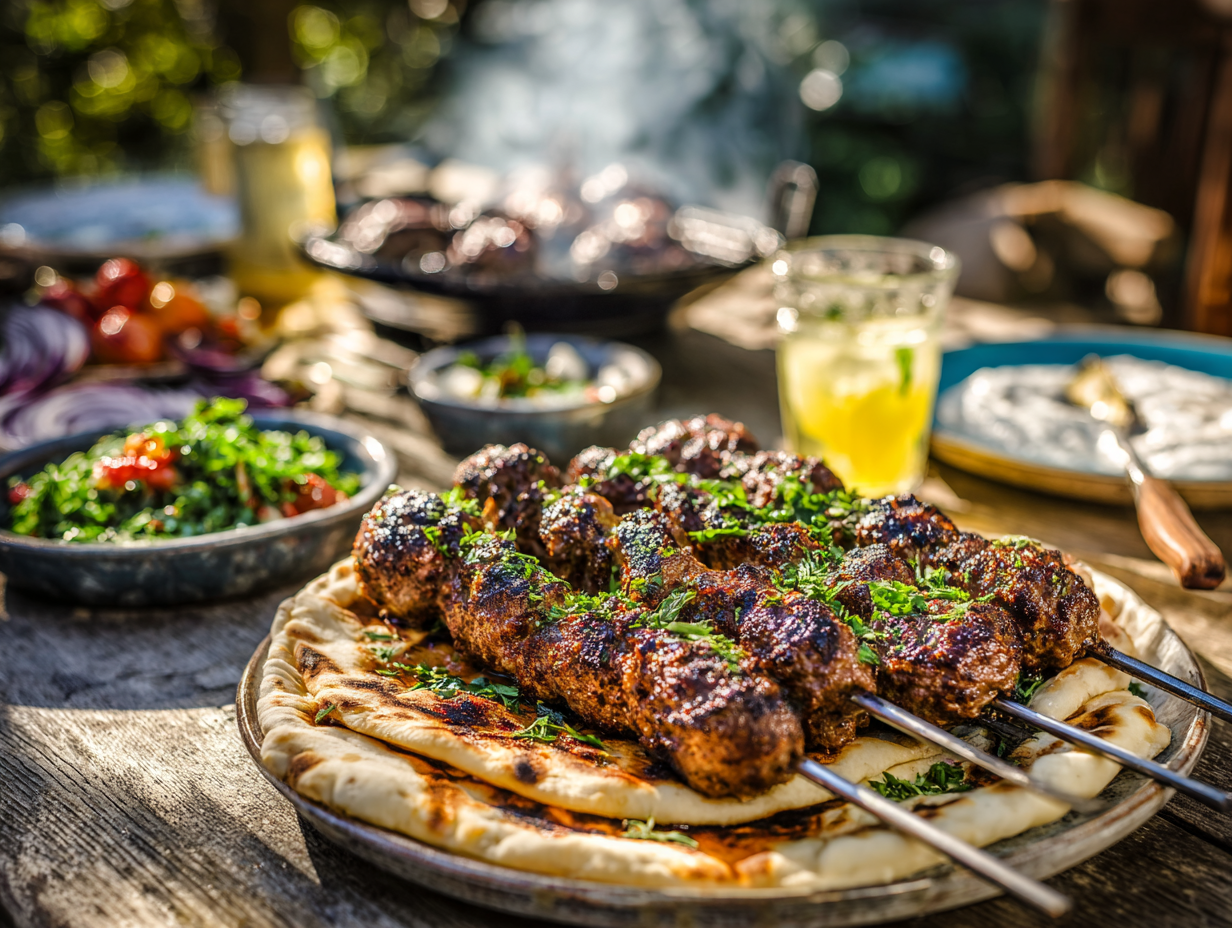
Kabab koobideh is Iranian ground meat grilled on flat skewers — seasoned with onion, saffron, and a little turmeric, then cooked over high heat until lightly charred outside and juicy inside. It feeds a crowd without fuss, and the ingredients are cheap enough that you can make a generous batch without thinking twice about it. This is the kind of recipe that earns a permanent spot in the weeknight rotation.
What makes this version work
Two things decide whether koobideh holds together on the skewer or falls into the coals. First, the onion must be grated — not chopped — and then the excess liquid squeezed out before mixing. Too much moisture and the meat mixture turns slack and won’t grip the skewer. Second, kneading matters more than most recipes admit. Work the mixture firmly for a full two to three minutes until it becomes sticky and almost paste-like. That protein development is what binds everything without needing egg or breadcrumb. Get those two steps right and the rest is straightforward.
If something goes sideways
- Meat slides off the skewer mid-cook: The mixture was too wet or not kneaded long enough. Pull the skewers off the heat, press the meat back on firmly, and chill for 15 minutes before returning to the grill. Next time, squeeze the grated onion in a clean towel before adding it.
- Kabobs are cooked through but taste flat: Salt was likely added too early and drew out moisture before cooking. Season the mixture right before shaping, not during the kneading stage.
- Outside chars before inside reaches 160°F (71°C): The grill is too hot or the kabobs are too thick. Move them to a cooler zone and let residual heat finish the job, or flatten the meat slightly thinner around the skewer next time.
- Mixture sticks to your hands while shaping: Wet your hands with cold water between each skewer. It takes 30 seconds and makes shaping much cleaner.
- Kabobs come out dry: They were left on the heat too long after hitting temperature. Ground lamb or beef at 160°F is done — pull them immediately and rest for two minutes under foil.
Shopping notes
- Saffron: A small pinch goes a long way. Bloom it in two tablespoons of warm water for five minutes before adding — this extracts the color and aroma properly. Skip the cheap pre-ground powder if you can; the threads give noticeably better flavor.
- Flat metal skewers: These are not optional for koobideh. Round or wooden skewers won’t hold the meat. Wide flat metal skewers (about 3/4 inch wide) are sold at Middle Eastern grocery stores and online for a few dollars — buy them once and they last years.
- Ground meat fat content: Use ground lamb or beef with at least 15–20% fat. Lean mince dries out fast on a hot grill and won’t have enough fat to stay juicy. This is one recipe where 80/20 ground beef is the right call over extra-lean.
Leftovers and meal prep
Cooked kabobs keep in the fridge for up to three days in an airtight container. Reheat them in a dry skillet over medium heat for two to three minutes per side — the microwave works in a pinch but softens the exterior. For meal prep, shape the raw mixture onto skewers, wrap tightly in plastic, and refrigerate up to 24 hours before grilling; the rest actually improves the texture. Freeze cooked kabobs for up to two months, wrapped individually so you can pull out exactly what you need. Thaw overnight in the fridge before reheating. Leftover kabobs sliced into flatbread with yogurt and tomato make a solid lunch — skip the garnish plating and just eat them straight from the pan.
Delightful Kabobs - Iranian Barbecue Recipe

Ingredients
 1 ½ pound ground beef (minced beef) - 80 to 85% lean
 1 pound ground lamb (minced lamb) - 80 to 85% lean
 1 ½ medium yellow onion - quartered
 3 cloves garlic - peeled and minced
 1 medium egg
 1 teaspoon salt
- 1 teaspoon sumac
 ½ teaspoon ground black pepper
 ½ teaspoon turmeric powder
 ¼ cup butter - melted
 4 medium Roma tomatoes - ripe but firm
 1 large green pepper (green capsicum) - stem removed, deseeded, quartered
 2 tablespoons olive oil
Instructions
- Meat should be fresh and at room temperature.
- Finely chop onion pieces in a food processor. Place a fine metal mesh over a bowl to strain the processed onion (press) and discard the juice.
- Add the onion pulp to a medium bowl and the ground beef and lamb, mixed garlic, salt, spices, and egg.
- Knead all ingredients together for several minutes until the mixture is paste-like and sticks to itself.
- Fill a small bowl with tap water to wet your fingers as you make the kabobs.
- Divide meat into 10 balls, then, taking one ball in hand, place on top of a 1-inch skewer and squeeze meat around until it is ½-inch thick. Leave the top and bottom of the skewer clear. Once finished, set gently over a shallow baking sheet. Repeat for all 10 kabobs.
- Prepare the vegetable kabobs by tossing the vegetables in olive oil and placing them in various orders on thin skewers.
- To Grill Kabob Koobideh: Take two square metal pipes and place them parallel to each other on the top and bottom of the cooking grate lengthwise. Place the tip of the skewers on the top pipe and the handle on the bottom to prevent the meat from sticking to the grate and falling off. Prepare the grill; it will be ready when the coals are grey and covered in ash!
- Since vegetables take longer to grill, start with vegetables and add the meat kabobs halfway through.
- Arrange as many skewers as possible on the grill. As soon as the last kabob is placed, begin turning the skewers in the order they were placed. This firms the meat on all sides and ensures they do not fall off the skewer. Continue turning until they are done, ideally with a nice grilled colour on the outside and no pink inside while maintaining juiciness. This will not take long!
- Once finished, take meat and vegetable kabobs off the grill and wrap them in aluminium foil until it is time to serve them.
- When serving, take a large piece of flatbread and use it like a mitt to pull the kabobs off the skewer and onto the serving platter. Once all kabobs are plated, brush melted butter over them.
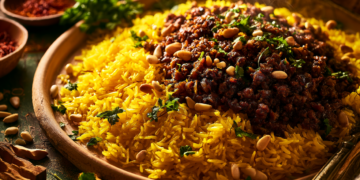
- Enjoy with Persian rice and vegetable kabobs!
Nutrition
FAQ
Can I cook these in a regular oven or under a broiler instead of on a grill?
Yes — a broiler is the best indoor option. Set it to high, place the skewers on a wire rack over a foil-lined baking sheet, and broil 4–5 inches from the element for about 5 minutes per side until the internal temperature hits 160°F (71°C). You won’t get charcoal smokiness, but the texture and crust are close to grilled.
Do I have to use lamb, or can I use ground beef?
Ground beef works well and is what many home cooks use. A 50/50 mix of ground beef and ground lamb gives a good balance of flavor and fat if you want something in between.
How do I know when the kabobs are fully cooked without cutting them open?
Use an instant-read thermometer inserted into the thickest part of the meat — you’re looking for 160°F (71°C) for ground beef or lamb. The outside should be lightly charred and the meat should feel firm, not squishy, when pressed.
Can I make the meat mixture ahead of time?
Yes, up to 24 hours ahead. Keep it covered in the fridge and shape onto skewers just before grilling. Chilling actually helps the mixture firm up, which makes it easier to handle.
What sides make this a complete meal without a lot of extra cooking?
Warm flatbread, sliced tomatoes, and plain yogurt cover all the bases and take almost no prep. If you want to add one cooked side, halved tomatoes grilled alongside the kabobs for the last few minutes are the easiest option.
What to cook next
- Pistachio Lamb Kebab Perfection
- Lamb Satay Fusion Skewers
- Savory Stuffed Onion Dolma
- Levantine Lamb Za’atar Flatbread