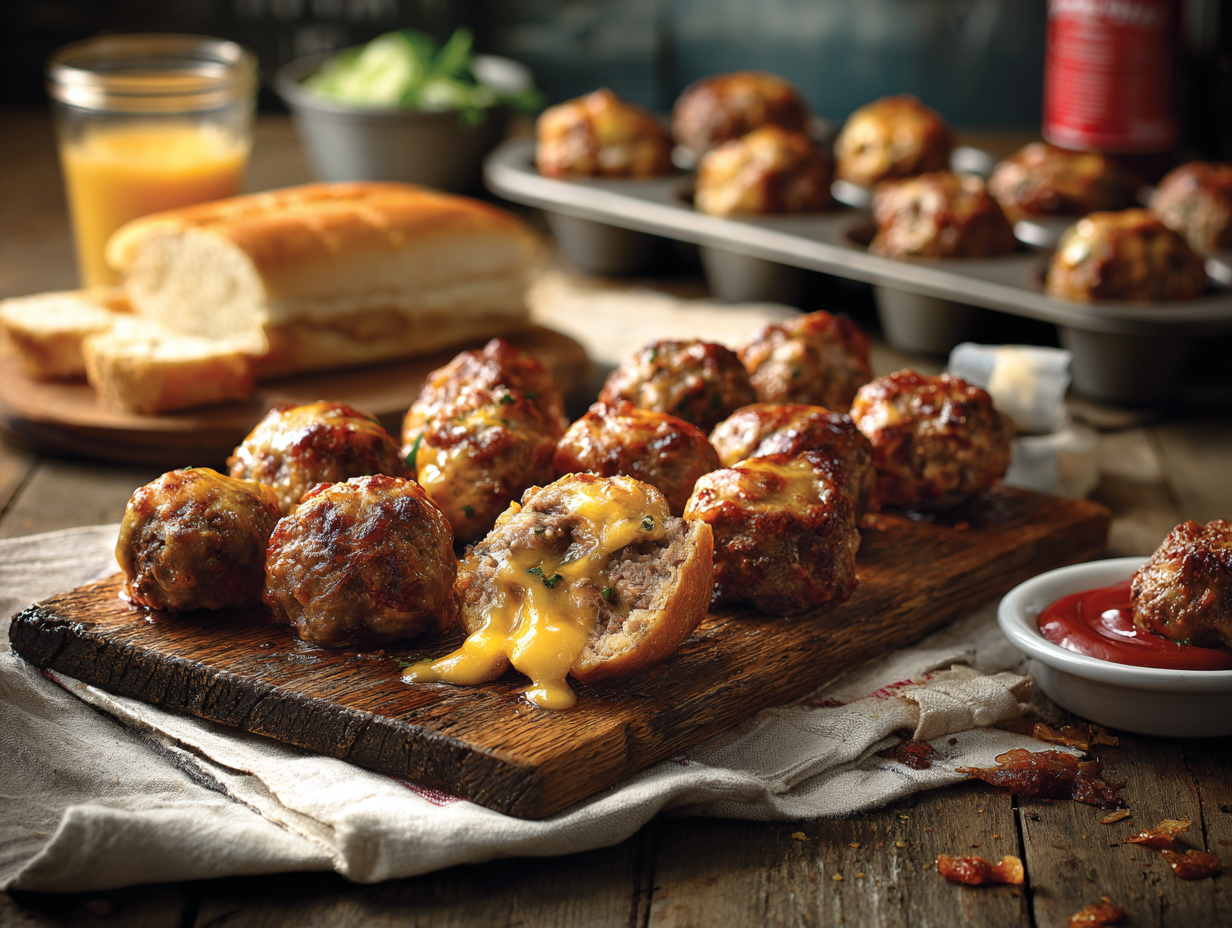
These are ground beef meatballs packed with finely chopped bell peppers, onion, and cheddar cheese — baked in a mini muffin tin so they hold their shape without any fuss. They taste like a cheesesteak in one bite, and they reheat well enough that making a double batch on Sunday is genuinely worth your time.
The technique that matters
The mini muffin tin is doing real work here — it’s not just a portioning trick. Each well holds the meatball upright while it bakes, which means the sides cook evenly and the meatball doesn’t flatten or spread the way it would on a sheet pan. The other thing worth getting right is how finely you chop the peppers and onion. Pieces that are too large won’t soften fully in the bake time and will push the meatballs apart as they cook. Aim for a very fine dice — close to a mince — so they blend into the meat mixture rather than sitting in chunks. Both of these details directly affect whether the meatballs hold together cleanly when you pop them out of the tin.
Troubleshooting
- Meatballs stick in the tin: Spray the muffin tin generously before filling, including the flat edges between wells. A light-colored, heavy tin also helps — dark nonstick pans can overbrown the bottoms before the centers are cooked through.
- Centers are still pink at the stated time: Ground beef must reach 160°F (71°C) internally. Oven temperatures vary. Use an instant-read thermometer rather than relying on color alone, especially if your meatballs are on the larger side.
- Meatballs fall apart when removed: The Bisquick needs a minute or two to set after the oven. Let the tin rest for 3–4 minutes before trying to remove them — they firm up noticeably as they cool slightly.
- Too much liquid pooling in the tin: This usually means the peppers and onion weren’t chopped finely enough, or the beef had a high fat content. An 85/15 lean-to-fat ratio works well here; anything fattier will release more liquid during baking.
- Bland flavor throughout: Worcestershire and ketchup need to be mixed in thoroughly — not just stirred on top. If the mixture looks streaky, keep folding until the color is uniform before portioning.
Substitutions that actually work
- Bisquick: Any all-purpose baking mix works as a straight swap. If you don’t have either, use 2 parts plain flour to 1 part fine dry breadcrumbs — it won’t be identical but it binds reliably.
- Cheddar: Provolone melts smoothly and is closer to a classic cheesesteak. American cheese also works and stays creamy. Skip the Cheez Whiz inside the meatball — it makes the mixture too wet — but it’s fine as a topping after baking.
- Bell peppers: Green pepper is traditional for cheesesteak flavor. Red adds sweetness. Using all red gives a noticeably sweeter result, so mix colors if you want balance. Skip the garnish of extra raw pepper on top — not worth the extra dish.
- Worcestershire sauce: Soy sauce works as a substitute in the same quantity and keeps the umami without changing the texture.
Leftovers and meal prep
Cooked meatballs keep in an airtight container in the fridge for up to 4 days. For the freezer, arrange them in a single layer on a tray, freeze until solid (about 2 hours), then transfer to a zip bag — they’ll keep for up to 3 months without sticking together. Reheat from fridge in a 350°F (175°C) oven for 8–10 minutes, or microwave in 30-second bursts with a damp paper towel over the top to keep them from drying out. From frozen, add 5–6 minutes to the oven time and check that the center hits 160°F (71°C) again before serving. A batch of 24 meatballs gives you enough to stuff rolls for two dinners, toss with pasta mid-week, and still have a few left for a quick lunch.
Delicious Philly Cheesesteak Meatballs

Equipment
Ingredients
- 1 ½ cup Bisquick
 1 pound ground beef (minced beef)
 1 cup cheddar cheese
 1 medium green pepper (green capsicum) - finely chopped
 ½ medium red pepper (red capsicum) - finely chopped
 ¼ medium yellow onion - finely chopped
 ½ cup milk
 2 tablespoons ketchup (tomato sauce Australia and UK)
 2 teaspoons Worcestershire sauce
 1 pinch salt - to taste
 1 pinch ground black pepper - to taste
Instructions
- Preheat the oven to 350 degrees. I bake my meatballs in a mini muffin pan. So here’s where you spray it well with Pam to prevent sticking.
- In a large bowl, mix together everything except the ground meat until all nicely mixed. Then add the meat and mix well.
- Roll your meatballs and nicely deposit one per mini muffin spot. This recipe makes 28 meatballs. I baked 24 and froze the other 4.
- Bake for 25 minutes at 350 degrees. I was shocked when I cracked the oven open a bit, and it smelled EXACTLY like there were cheesesteaks in there!
Notes
Nutrition
Frequently asked questions
Can I make these ahead and refrigerate the raw mixture overnight?
Yes — mix and portion into the muffin tin, cover tightly with plastic wrap, and refrigerate for up to 24 hours before baking. Pull the tin out 15 minutes before it goes in the oven so the meatballs aren’t ice-cold at the center when baking starts.
What internal temperature should these reach?
Ground beef needs to hit 160°F (71°C) at the center. Check with an instant-read thermometer in the thickest meatball in the batch, since oven hot spots mean some cook faster than others.
Can I use a regular muffin tin instead of a mini one?
You can, but the meatballs will be much larger and will need significantly more baking time — closer to 25–30 minutes. Check the internal temperature rather than guessing by time.
How do I serve these as a sub or sandwich?
Three or four meatballs fit well in a standard hoagie roll. Lightly toast the roll, add the meatballs, and lay a slice of provolone or American cheese over the top, then run it under the broiler for 60–90 seconds until the cheese melts.
Can I freeze these before baking instead of after?
Freezing after baking is more reliable with this recipe because the Bisquick needs heat to bind properly. Raw frozen meatballs with baking mix can turn out dense or unevenly textured when baked from frozen.
My meatballs came out dry — what went wrong?
Overbaking is the most common cause. Pull them as soon as the thermometer reads 160°F (71°C) — carryover heat will finish the job. Using very lean beef (90/10 or leaner) without adjusting anything else also dries them out, so stick to 85/15 for best results.
More mince recipes to try
- Olive Beef Polpette Perfection
- Spicy Beef Stuffed Peppers
- Ultimate Cheesy Beef Bake
- Savory Beef Sausage Rolls