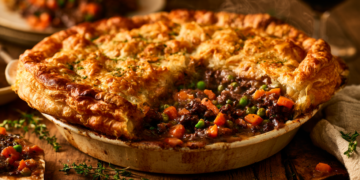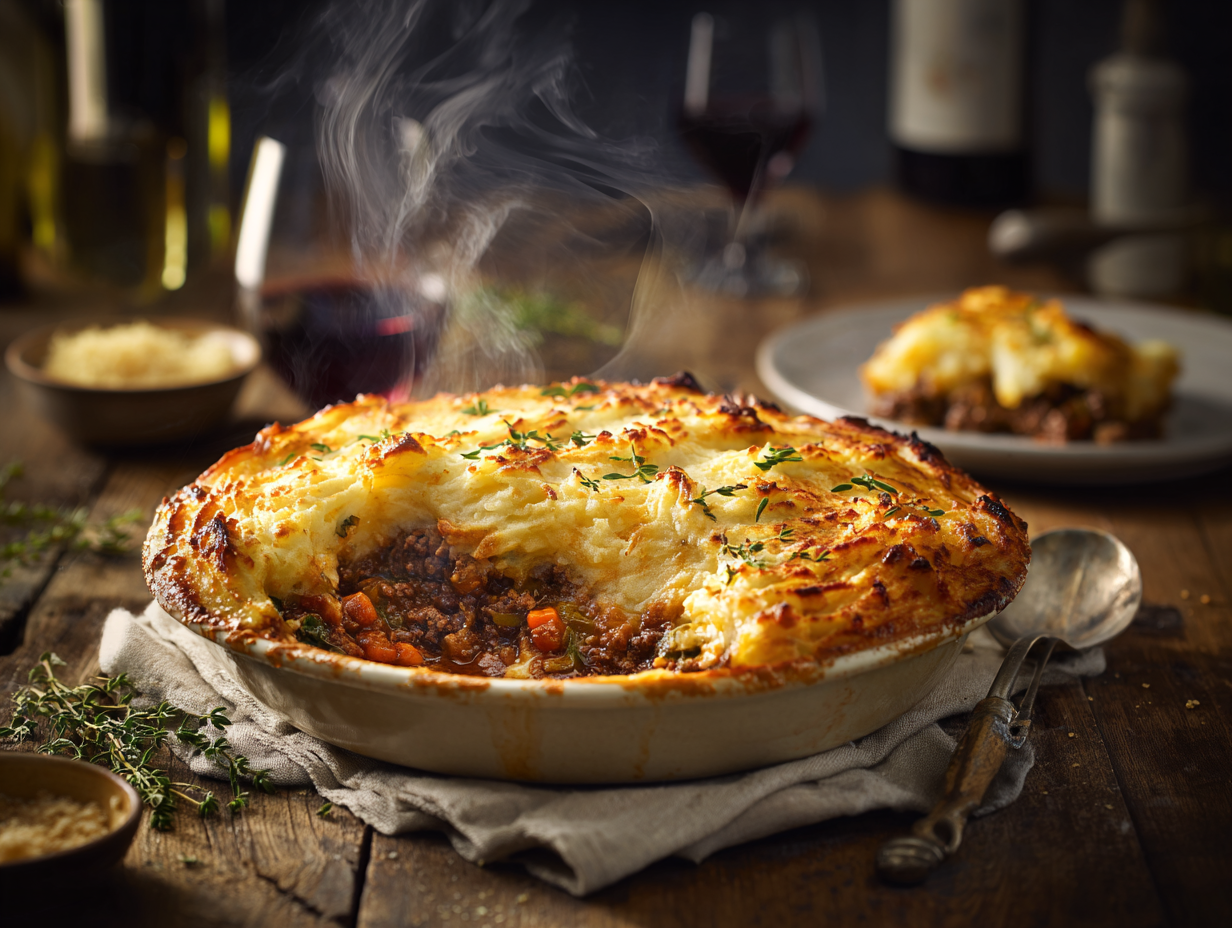
Cottage pie is a baked dish of seasoned ground beef topped with mashed potatoes and cooked until the top browns. It uses cheap ingredients, feeds a crowd, and reheats well — which makes it one of the most practical things you can cook on a weeknight. The filling and mash can be made separately ahead of time, so the actual oven work is hands-off.
What makes this version work
Two things matter most here. First, browning the ground beef properly — cooking it in a hot, dry pan without stirring constantly until you see real color on the meat, not just grey. That browning builds flavor that the liquid stage can’t replicate. Second, the mashed potato layer needs to be thick and stiff enough to hold its shape when spread. Potatoes that are too wet will sink into the filling during baking and turn the top layer dense and gluey. Drain the potatoes thoroughly and let steam escape for a minute before mashing — that alone makes the crust sit cleanly on top and crisp up at the edges.
What can go wrong
- Watery filling that won’t set: If the beef mixture looks thin before you add the mash, keep it on the heat a few extra minutes uncovered. The liquid should coat a spoon, not pool at the bottom of the dish. A soupy base makes the potato layer slide and the whole pie loses structure when you serve it.
- Mash tears or sinks when you spread it: Spread the mash in small dollops across the surface first, then gently smooth them together. Trying to spread a single large scoop drags the filling underneath and mixes the layers.
- Ground beef stays in one grey clump: Break it up with a wooden spoon or spatula as soon as it hits the pan. Large clumps trap steam and the meat stews instead of browns. Keep moving it for the first two minutes.
- Undercooked beef in the center: Ground beef must reach 160°F (71°C) internally. Because the filling simmers with liquid before baking, this is rarely a problem — but if you’re unsure, use an instant-read thermometer in the thickest part of the filling before it goes under the mash.
- Potato topping doesn’t brown: If the top is still pale after the stated bake time, switch the oven to broil for 3–4 minutes. Watch it — it goes from pale to burnt quickly.
Shopping notes
Use 80/20 ground beef if you can find it — the fat content keeps the filling from drying out during the long simmer. Leaner beef works but needs a splash more stock. For the mash, a floury potato like Russet breaks down smoothly and absorbs butter well; waxy varieties like red potatoes stay slightly lumpy and don’t mash as cleanly. If the recipe calls for a small amount of tomato paste, buy the kind in a tube rather than a can — you use a tablespoon at a time and the tube keeps in the fridge for months. Skip the fresh herb garnish at the end — not worth the extra dish when the filling already has thyme and bay leaf doing the work.
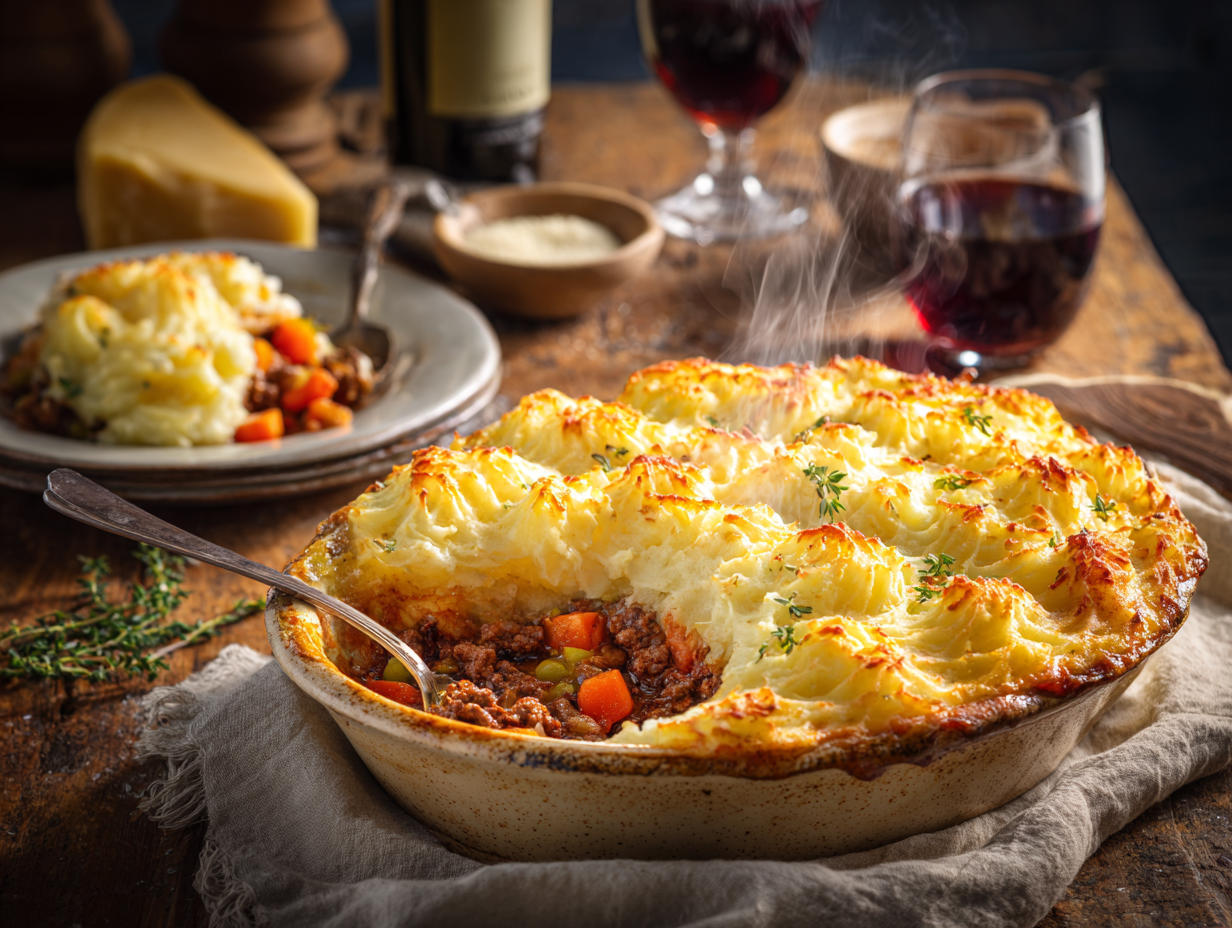
Classic Beef Cottage Pie

Ingredients
Filling Ingredients
 2 ½ pounds ground beef (minced beef)
 3 tablespoons olive oil
 2 medium yellow onion - diced
 3 medium carrots - chopped
 3 pieces celery stalks
 3 cloves garlic - chopped
 1 tablespoon tomato paste
 3 tablespoons all purpose flour (plain flour Australia and UK)
 1 glass red wine
 3 tablespoons Worcestershire sauce
 3 cups beef stock (beef broth or beef bouillon)
 2 small bay leaf (bay leaves)
 2 sprinkles dried thyme
 1 sprinkle salt
 1 sprinkle ground black pepper
Mash Ingredients
 3 large potatoes
 1 cup milk
 1 stick Butter
 1 cup cheddar cheese - grated
Instructions
Mash Instructions
- Add butter and milk to your liking until the desired consistency is reached. Then mix in strong cheddar, I add a lot, but everyone is different.
- You can also add a few gratings of fresh nutmeg if you like; some people prefer without. I think the nutmeg adds to this dish. You can always test a small amount with the nutmeg to see if you like it.
Filling Instructions
- Brown ground meat in a pan with some olive oil and then remove from pan.
- Add more olive oil along with onions, celery and carrots, cook on low heat until soft, about 20 minutes.
- Add the tomato paste, garlic and flour and cook for a few minutes. Return the beef to the pan.
- Pour in the wine and let it boil for a few minutes. Now add the broth, Worcestershire sauce, bay leaves and thyme.
- Let this simmer and cook uncovered for about 45 minutes. The gravy should become thick if there is still a lot of liquid increased heat, so the liquid boils down. This should not be dry, but the gravy should coat the meat.
- Once done, season the meat to your liking with salt and pepper.
- In the meantime, while all is cooking, you can make the mashed potatoes.
- Once everything is ready, spoon the meat into 1 or 2 dishes depending on their size.
- Spread the mash on top to cover the meat mixture. Sprinkle some remaining cheddar over the top and put into the oven at 425 degrees for approximately 30 minutes until the topping becomes golden.
Nutrition
Your questions, answered
Can I use frozen ground beef straight from the freezer?
No — thaw it fully in the refrigerator before cooking. Frozen ground beef added to a hot pan steams rather than browns, and the uneven temperature means the outside overcooks before the inside is safe to eat.
How do I know when the ground beef is fully cooked?
Ground beef is done when it reaches 160°F (71°C) — no pink should remain anywhere in the meat. For cottage pie the filling simmers in liquid for several minutes after browning, which brings it well past that temperature, but a quick check with an instant-read thermometer removes any doubt.
Can I assemble the pie the night before and bake it the next day?
Yes, and it works well. Let the filling cool completely before adding the mash, cover the dish tightly, and refrigerate overnight. Add about 10–15 extra minutes to the bake time since you’re starting from cold.
What’s the difference between cottage pie and shepherd’s pie?
The protein. Cottage pie uses ground beef; shepherd’s pie uses ground lamb. Everything else — the vegetable base, the mash topping, the baking method — is essentially the same.
My filling looks greasy after browning the beef. What should I do?
Tilt the pan and spoon off the excess fat, or carefully drain the beef in a colander before returning it to the pan. A little fat is fine and adds flavor, but too much makes the finished filling oily and heavy.
Can I make this without wine?
Yes — replace the wine with an equal amount of beef stock. The flavor will be slightly less complex but the pie will still taste good. A teaspoon of Worcestershire sauce stirred in at the same stage adds a bit of the depth the wine would have provided.
More mince recipes to try
- Savory British Beef Pies
- Hearty Beef Cauliflower Bake
- Wild Venison Mushroom Pies
- Beef Lombardi Casserole Recipe