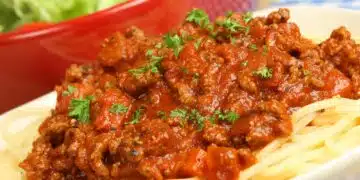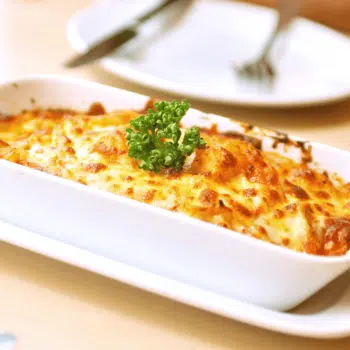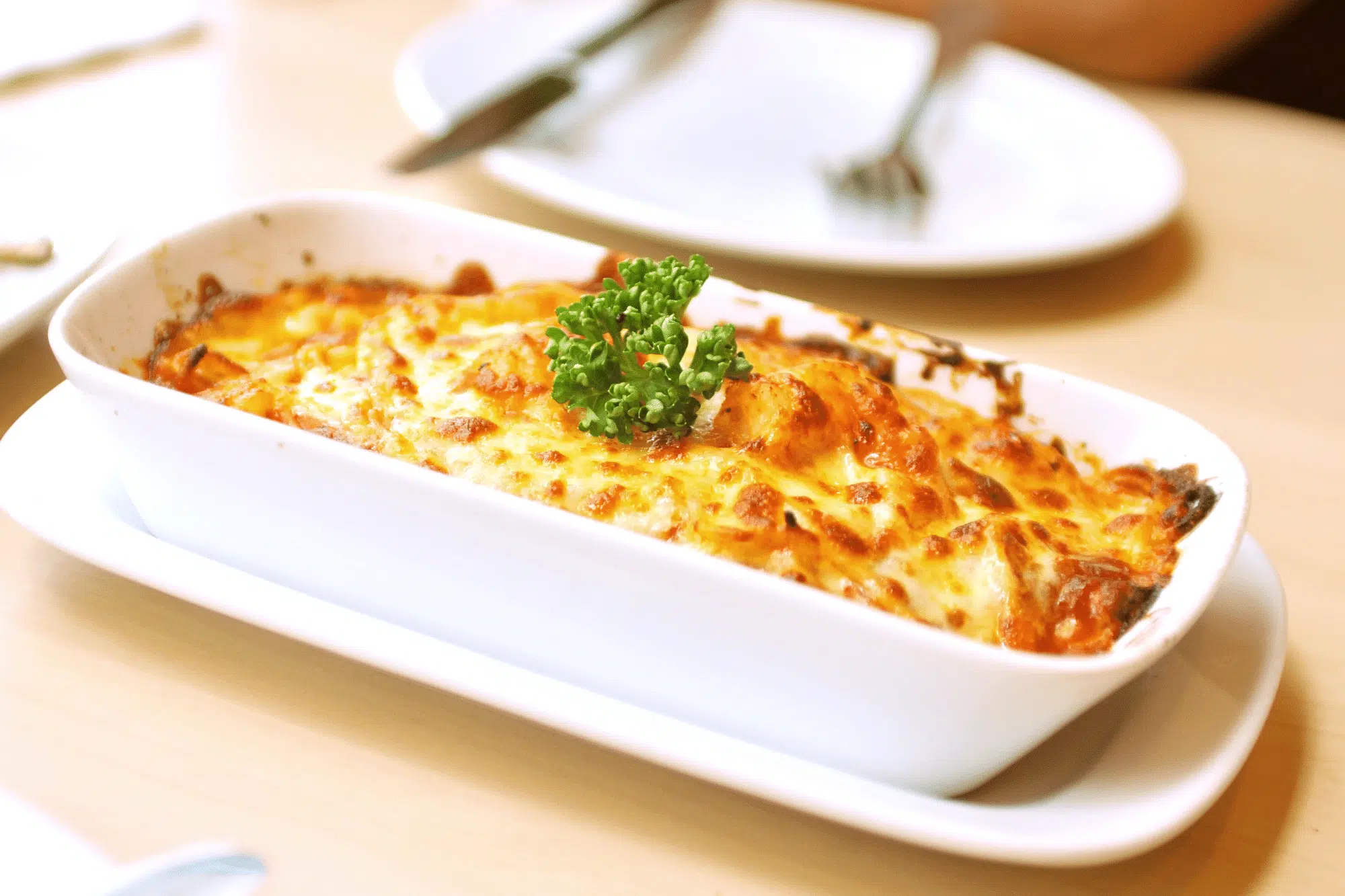
Baked spaghetti is regular pasta night taken one step further — cooked noodles layered with seasoned ground turkey, a cream cheese and egg mixture, and jarred marinara, then baked under a blanket of mozzarella until the top browns and the whole thing sets into sliceable portions. Ground turkey keeps it lighter than a beef version without making it bland, and the cream cheese does real structural work that ricotta or sour cream simply don’t. It’s a solid make-ahead weeknight bake that reheats well and feeds a crowd without much fuss.
Ingredient notes
- Ground turkey (93% lean): The extra fat compared to 99% lean matters here — it keeps the meat from drying out during the bake. If you only have 99% lean, add a tablespoon of olive oil when browning.
- Cream cheese: Full-fat block cream cheese melts smoothly into hot noodles. Reduced-fat works but can turn slightly grainy. Avoid whipped cream cheese — the water content is too high.
- Jarred marinara: Any mid-shelf marinara works. A 24 oz jar is a common size and fits this recipe well. If yours tastes flat straight from the jar, stir in a pinch of sugar or a splash of red wine vinegar before assembling.
- Mozzarella: Low-moisture, part-skim shredded mozzarella browns better than fresh mozzarella, which releases too much water and can make the top layer soggy.
- Parmesan: Pre-grated canister parmesan is fine here — skip the fresh block if that’s what you have on hand. It disappears into the cheese layer and you won’t notice the difference.
The technique that matters
The two things that separate a good baked spaghetti from a soggy one are pasta doneness before baking and how you handle the cream cheese layer. Pull the spaghetti out of the boiling water about two minutes before the package says it’s done — it will finish cooking in the oven, and if it goes in fully cooked it will turn mushy. For the cream cheese mixture, make sure the noodles are still hot when you toss them with it. Cold noodles won’t melt the cream cheese evenly, which leaves you with white clumps instead of a smooth, cohesive coating. Toss quickly and work in batches if your pot isn’t large enough to mix everything without the noodles cooling down too fast. Ground turkey must reach an internal temperature of 165°F (74°C) — check the meat layer with an instant-read thermometer before pulling the dish from the oven, not just the cheese on top.
If something goes sideways
- The top cheese isn’t browning: Switch the oven to broil for the last 2–3 minutes. Watch it — it goes from pale to burnt faster than you’d expect.
- The bottom layer is watery: This usually means the sauce was too thin or the noodles were overcooked and released starch. Next time, simmer the jarred sauce for 5 minutes before assembling to reduce excess liquid.
- The cream cheese layer looks curdled after baking: It mixed in unevenly, likely because the noodles were too cool. The flavor is still fine — skip the block and use a thin slice of cream cheese per serving next time if this keeps happening.
- The turkey is dry and crumbly: It was overcooked during the browning stage before baking. Turkey goes dry fast on high heat — use medium heat and pull it off the burner as soon as the pink is gone. The oven bake will carry it to 165°F safely.
- The dish is sticking badly to the pan: The sauce layer at the bottom was too thin or skipped. A thin coat of sauce — not just a smear — is enough to prevent sticking. Skip the garnish on top — not worth the extra dish — but don’t skip that base sauce layer.
Keeping and reheating
Leftovers keep in the fridge for up to 4 days in an airtight container or covered tightly in the baking dish. To reheat individual portions, microwave on medium power in 90-second intervals rather than full blast — this keeps the cheese from turning rubbery. For a larger portion, cover the dish with foil and reheat in a 350°F (175°C) oven for about 20 minutes, then uncover for the last 5 to re-crisp the top. This dish also freezes well: portion it into freezer-safe containers after it has fully cooled, and freeze for up to 2 months. Thaw overnight in the fridge before reheating — don’t try to reheat from frozen or the center stays cold while the edges overcook.

Full-Bodied Turkey Baked Spaghetti
Ingredients
Spaghetti Ingredients
16 ounces spaghetti
1 pound ground turkey (minced turkey) - 93%
½ large onion - finely chopped
1 dash Italian herbs (oregano, rosemary, thyme, and sometimes basil and parsley)
1 dash salt
26 ounces Neapolitan Sauce or Pasta sauce Southern Hemisphere (Tomato Sauce in North America)
Cheese Mixture Ingredients
1 large egg
3 ounces cream cheese - fat-free in room temperature
¾ cup Mozzarella cheese - more between layers if desired
¼ cup parmesan cheese
Instructions
- Cook spaghetti noodles according to package for al-dente. Meanwhile, begin cooking turkey and onions over medium heat in a medium-sized skillet.
- Drain and return to pan. Sprinkle in some Italian seasoning and salt. Add jar of spaghetti sauce and stir to combine. Turn heat to low.
- Mix cream cheese in a bowl with egg until it’s creamy. Stir in both kinds of cheese and set aside.
- Place a few spoonfuls of meat sauce in a lightly greased 9×13 casserole. Begin by layering 1/3 of the spaghetti noodles in a casserole dish. Top with a few dollops of the cream cheese mixture across the noodles; top with a few spoonfuls of sauce spreading to cover lightly. Begin another layer of noodles, cheese, and sauce. Finish with sauce and extra mozzarella on top.
- Bake the spaghetti covered with foil at 350 degrees Fahrenheit for 20 to 25 minutes.
Nutrition
Common questions
Can I use ground chicken instead of ground turkey?
Yes — ground chicken works as a direct swap and needs the same internal temperature of 165°F (74°C). Stick with 93% lean or higher-fat ground chicken thigh meat if you can find it, since breast-only ground chicken is very lean and will dry out faster during the bake.
Can I assemble this the night before and bake it the next day?
Yes, and it actually bakes up slightly better because the layers have time to meld. Assemble fully, cover tightly with foil, and refrigerate overnight. Add about 10 extra minutes to the covered baking time since you’re starting from cold, and confirm the turkey layer hits 165°F (74°C) before serving.
My family doesn’t like cream cheese — what can I use instead?
Ricotta is the most practical substitute — use the same volume and mix it with the egg the same way. It produces a slightly drier, less tangy layer, but it holds together well after baking. Cottage cheese blended smooth also works if that’s what’s in the fridge.
Do I have to use spaghetti, or will other pasta shapes work?
Other pasta shapes work fine. Penne, rigatoni, or rotini all hold up well to baking and are easier to portion than long noodles. The main thing is still the same: cook whatever shape about two minutes short of done before assembling.
What to cook next
Turkey Baked Spaghetti
Print RecipeIngredients
- Spaghetti Ingredients
- 1 16-ounce package of spaghetti noodles
- 1 pound of 93% lean ground turkey
- 1/2 large onion, finely chopped
- A dash of Italian seasoning and salt
- 1 26-ounce jar of spaghetti sauce
- Cheese Mixture Ingredients
- 1 large egg
- 3 ounces of fat-free cream cheese, room temperature
- 3/4 cup of mozzarella cheese (more between layers if desired)
- 1/4 cup of parmesan cheese
Instructions
- Cook spaghetti noodles according to package for al-dente. Meanwhile, begin cooking turkey and onions over medium heat in a medium-sized skillet.
- Drain and return to pan. Sprinkle in some Italian seasoning and salt. Add jar of spaghetti sauce and stir to combine. Turn heat to low.
- Mix cream cheese in a bowl with egg until it’s creamy. Stir in both kinds of cheese and set aside.
- Place a few spoonfuls of meat sauce in a lightly greased 9×13 casserole. Begin by layering 1/3 of the spaghetti noodles in a casserole dish. Top with a few dollops of the cream cheese mixture across the noodles; top with a few spoonfuls of sauce spreading to cover lightly. Begin another layer of noodles, cheese, and sauce. Finish with sauce and extra mozzarella on top.
- Bake the spaghetti covered with foil at 350 for 20 to 25 minutes.