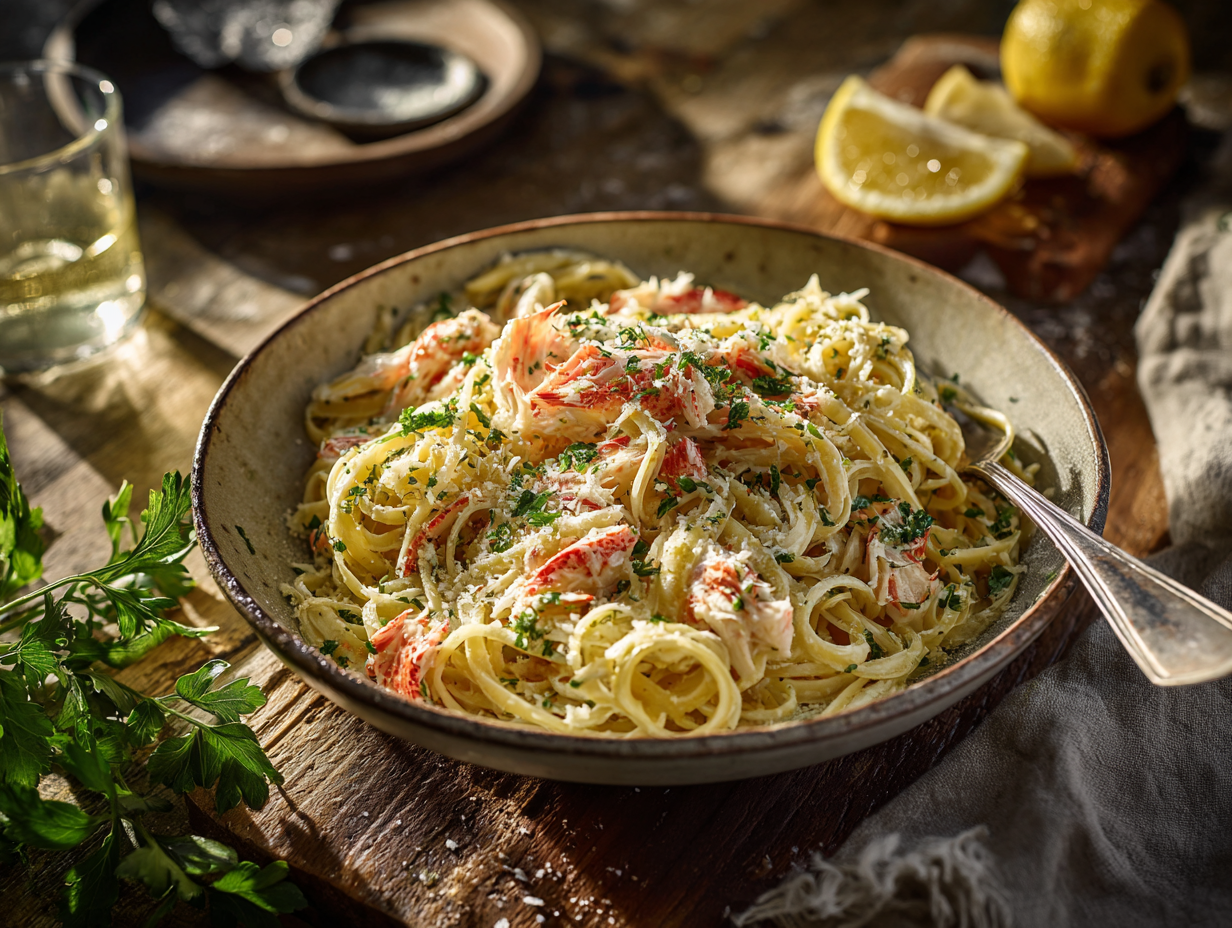
This is a quick pasta dish built around crab meat — sweet, tender, and ready in about 30 minutes. The sauce is light, so the crab actually comes through instead of getting buried. It’s a solid weeknight option when you want something that feels a little different without a complicated process.
Before you start
The single technique that makes or breaks this dish is how you handle the crab. Crab meat is already cooked and fragile — it just needs to be warmed through, not cooked again. Fold it in gently at the end and give it no more than 2 minutes of heat. Overworking it turns it mushy and stringy. The other thing worth doing before you touch the stove: check the crab for shell fragments by spreading it on a plate and running your fingers through it slowly. Small shards are common even in good-quality canned lump crab, and biting into one ruins the meal. Ground or minced seafood should reach an internal temperature of 145°F (63°C) — canned crab is pre-cooked, so you’re really just hitting that threshold as you warm it through in the sauce.
Shopping notes
- Crab meat: Canned lump or backfin crab works well here. Avoid imitation crab — it’s a different product with a different texture and a much sweeter, artificial flavour that won’t behave the same way in the sauce. Drain canned crab well before using.
- Pasta shape: Linguine or spaghetti are the practical choices. Their surface area picks up the light sauce without pooling at the bottom of the bowl.
- White wine: Use something dry and drinkable — a basic pinot grigio or sauvignon blanc is fine. Cooking wine from a bottle labelled “cooking wine” is saltier and less predictable; skip it if you can.
- Fresh lemon: Bottled lemon juice won’t give you the same brightness. One fresh lemon covers both the zest and the juice this recipe needs.
Make-ahead notes
The sauce base — garlic, aromatics, wine reduction — can be made up to two days ahead and kept in a sealed container in the fridge. Don’t add the crab until you’re ready to serve; it doesn’t hold well once mixed in and the texture suffers fast. If you have leftovers with the crab already folded in, refrigerate them and eat within one day. Reheat gently in a pan over low heat with a splash of water or stock to loosen the sauce. This dish doesn’t freeze well — the crab turns grainy after thawing.
Mistakes to avoid
- Cooking the crab too long: It’s already cooked. More than 2 minutes in a hot pan and it starts to fall apart into dry shreds. Add it last, fold it in, and get the pasta into bowls quickly.
- Under-salting the pasta water: The sauce is delicate, so the pasta itself needs to carry some seasoning. The water should taste noticeably salty — about 1 tablespoon of salt per 4 quarts of water is a reasonable starting point.
- Letting the garlic go brown: Brown garlic turns bitter and that bitterness will cut through the crab’s sweetness in a bad way. Keep the heat at medium and pull it off if it starts to colour.
- Adding pasta to the sauce too early: If the pasta sits in the sauce while you’re still plating or distracted, it absorbs the liquid and goes gluey. Time it so the pasta goes in right before you’re ready to serve — skip the garnish, not worth the extra dish.
- Using wet crab without draining: Excess liquid from the can dilutes the sauce and makes it watery. Press the crab gently in a sieve or pat it with paper towel before it goes in.
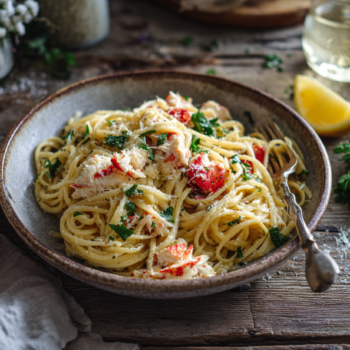
Flavourful Pasta With Crab Meat Recipe

Ingredients
 ¼ cup lime juice
 1 tablespoon cilantro (coriander) - finely chopped
 1 pound spaghetti - thin
 ½ pound crab meat - brown
- ½ pound crab meat - white
 ¼ pound cherry tomatoes - cut in half
 2 tablespoons chives - finely chopped
 2 teaspoons brown sugar
 2 tablespoons salt - or to taste
 ½ teaspoon ground black pepper
 1 stalk green onions (scallions or green shallots) - finely chopped
 3 bulb garlic - finely chopped cloves
 ¼ cup olive oil
 3 teaspoons ginger - grated
Instructions
The pasta
- Begin with a medium pot filled to a little over half with water, add 1 tbsp of salt and bring to a boil.
- Break your pasta into smaller pieces and when the water begins to boil, go ahead and add your pasta.
- Stir in some olive oil and bring to a boil.
- Cook for about 10 minutes.
- Put aside some of the water before you drain it in a colander and set it aside.
The crab
- Mix the minced crab in a bowl, both brown meat and white meat, until they blend.
- Add shallot and tomatoes to the bowl. Remember that you should be stirring your bowl with each new ingredient you add.
- Next, add garlic, limes, juice, and zest. Mix again.
- Add sugar and ginger, then mix again.
- Finally, add about half of the coriander and chives before stirring it again.
The finished dish
- With your ingredients blended, it is time to add some water that you cooked the pasta in to help the ingredients combine even better.
- With the water creating a soupy environment for your crab mix, go ahead and add your pasta and mix it in with everything else.
- Finally, add salt and pepper to taste, some olive oil for texture and mix everything until your ingredients are spread throughout the dish.
- Serve with a garnish of coriander for appearance.
Nutrition
Frequently asked questions
Can I use fresh crab instead of canned?
Yes, and it will taste noticeably better. Fresh picked crab meat works exactly the same way in the recipe — just check it carefully for shell pieces and use it the same day you buy it.
What can I use instead of white wine?
Use low-sodium chicken or seafood stock in the same quantity. Add a small squeeze of lemon juice to replace some of the acidity the wine would have provided.
How do I know when the crab is hot enough to serve safely?
Canned crab is already fully cooked, so you’re aiming to warm it to 145°F (63°C) — about 90 seconds to 2 minutes in a warm sauce over medium heat is enough. If you’re using fresh raw crab meat, the same 145°F target applies and you’ll need a food thermometer to be sure.
My sauce looks too thin — how do I fix it?
Add a small ladle of starchy pasta cooking water and let it simmer for a minute — the starch thickens the sauce without changing the flavour. Don’t add flour or cornstarch; they’ll make the texture heavy and dull.
Can I leave out the chili flakes if I’m cooking for kids?
Yes, just leave them out entirely — the dish works fine without them. The garlic and lemon carry enough flavour on their own.
If you liked this one
- Creamy Beef Spinach Pasta
- Savory Pork Noodle Stir-Fry
- Hearty Beef Mushroom Stroganoff
- Beef Ricotta Lasagna Rolls