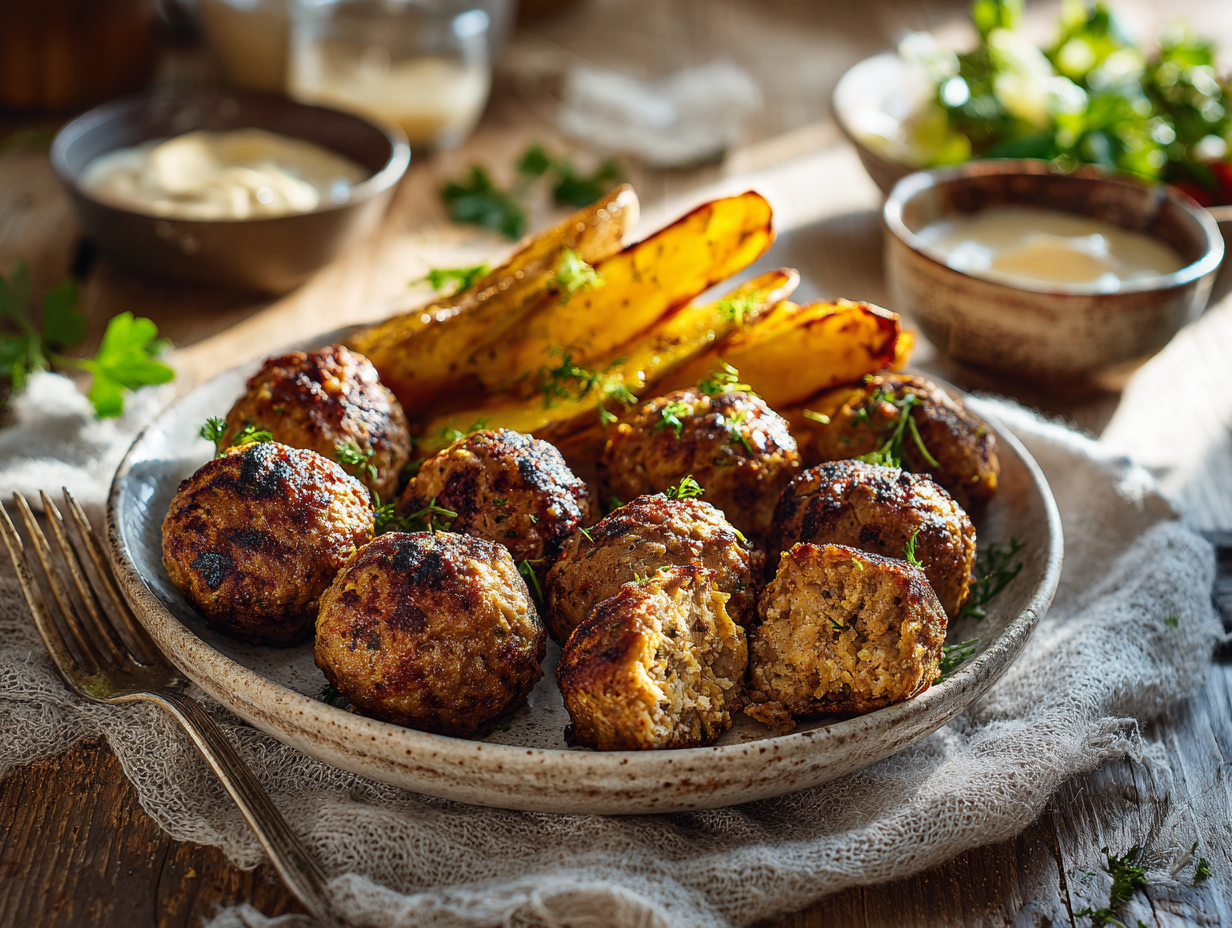
These are grilled meatballs made from seasoned ground meat, served alongside oven-roasted potato wedges. The real reason to make this dish is that one batch of meatballs covers dinner tonight and quick lunches for the next few days — they reheat well and hold their texture.
What makes this version work
Two things actually matter here. First, chilling the shaped meatballs before they hit the grill — at least a couple of hours in the fridge — firms them up so they don’t fall apart when you turn them. The cold also lets the salt work into the proteins, which means better binding and a meatball that stays together without needing extra egg or filler. Second, fat content in your ground meat. Aim for 80/20 ground beef or a similar ratio if using lamb or pork. Leaner than that and the meatballs dry out fast over direct heat. Ground meat needs to reach an internal temperature of 160°F (71°C) — pull them at that point and rest briefly; they’ll still be juicy.
Smart swaps
- Ground meat blend: A 50/50 mix of ground beef and ground pork works well if you want a softer texture. Ground lamb is a solid swap for a richer, slightly gamey flavour.
- Breadcrumbs: Panko, regular dried breadcrumbs, or even crushed crackers all work as binders. Soaking them briefly in milk before mixing gives a noticeably softer result.
- Potato wedges: If you’re short on time, frozen wedges roasted straight from the bag are a completely reasonable substitute — skip the garnish on the potatoes too, not worth the extra dish.
Troubleshooting
- Meatballs sticking to the grill grates: The grates weren’t hot enough or oiled before cooking. Preheat fully, then wipe the grates with a folded paper towel dipped in oil just before placing the meatballs down.
- Meatballs falling apart mid-cook: The mixture was too wet or skipped the chilling step. Next time, add breadcrumbs a tablespoon at a time until the mix holds a ball without cracking, then refrigerate before grilling.
- Dense, rubbery texture: Overmixing the ground meat develops too much protein structure. Mix only until the ingredients are just combined — stop as soon as you don’t see dry patches.
- Potato wedges soft instead of crispy: Overcrowding the baking tray traps steam. Spread them in a single layer with space between each wedge, and flip once halfway through roasting.
- Uneven cooking across the batch: Meatballs were different sizes. Use a cookie scoop or tablespoon measure to portion them consistently before rolling — uniform size means they all finish at the same time.
Grilled Meatballs With Potato Wedges

Ingredients
 1.2 pound ground beef (minced beef)
 2 tablespoons olive oil
 3 medium red onion - grated on a grater
 1 tablespoon mint - finely chopped
 3 tablespoons breadcrumbs
 1 bulb garlic - grated
 1 medium egg
 1 teaspoon salt
 1 teaspoon ground black pepper
 1 medium lemon juice - squeezed one lemon
 4 pounds potatoes
 1 tablespoon parsley - finely chopped
 1 teaspoon paprika
 4 tablespoons butter
Instructions
Forming the meatballs
- Start with a large bowl and add the ground beef, onion, garlic and mint (finely chopped), along with the breadcrumbs, egg, pepper and salt.1.2 pound ground beef (minced beef), 3 medium red onion, 1 tablespoon mint, 3 tablespoons breadcrumbs, 1 teaspoon ground black pepper, 1 bulb garlic, 1 medium egg, 1 teaspoon salt
- Knead long enough to make the mixture as fluffy as possible.
- Then cover the bowl and refrigerate for at least 3 hours.
When ready to cook
- Cut the potatoes into wedges and place in the over sprinkled with paprika at about 200°C. These will take about 40 to 60m minutes to cook and crisp but keep an eye on them and vary the time depending on your oven and how crispy you want the wedges. Add some butter to the tray for non stick and flavour.4 pounds potatoes, 1 teaspoon paprika, 4 tablespoons butter
- When it's time for cooking, take the mince out of the fridge and shape it into big meatballs.
- Grill them on the barbecue; otherwise, place them on the rack in the oven at the grill mode. It takes around 15 minutes to cook and you need to turn them as much as necessary (usually 2 or 3 times.)
- Blend lemon juice and olive oil in a small bowl and drizzle over the meatballs.1 medium lemon juice
- Sprinkle with parsley and serve with potatoes wedges.1 tablespoon parsley
Notes
Nutrition
Your questions, answered
Can I make the meatball mixture the night before?
Yes — mixing and shaping the night before is actually the best approach. The mixture can sit covered in the fridge overnight, and the extra chilling time improves both texture and flavour compared to a same-day mix.
Can I cook these meatballs in the oven instead of on the grill?
Yes, a 425°F (220°C) oven works fine. Place them on a wire rack over a baking sheet and roast for 18–22 minutes until they reach 160°F (71°C) internally — you won’t get grill marks but the exterior still browns well.
How do I store and reheat leftover meatballs?
Store cooked meatballs in an airtight container in the fridge for up to 4 days. Reheat in a covered pan with a splash of water over medium-low heat, or microwave covered — both methods keep them from drying out.
Can I freeze these meatballs?
Cooked meatballs freeze well for up to 3 months. Freeze them in a single layer on a tray first, then transfer to a bag so they don’t clump — that way you can pull out exactly as many as you need.
If you liked this one
- Olive Beef Polpette Perfection
- Pistachio Lamb Kebab Perfection
- Fiery Lamb Churrasco Patties
- Spicy Beef Stuffed Peppers