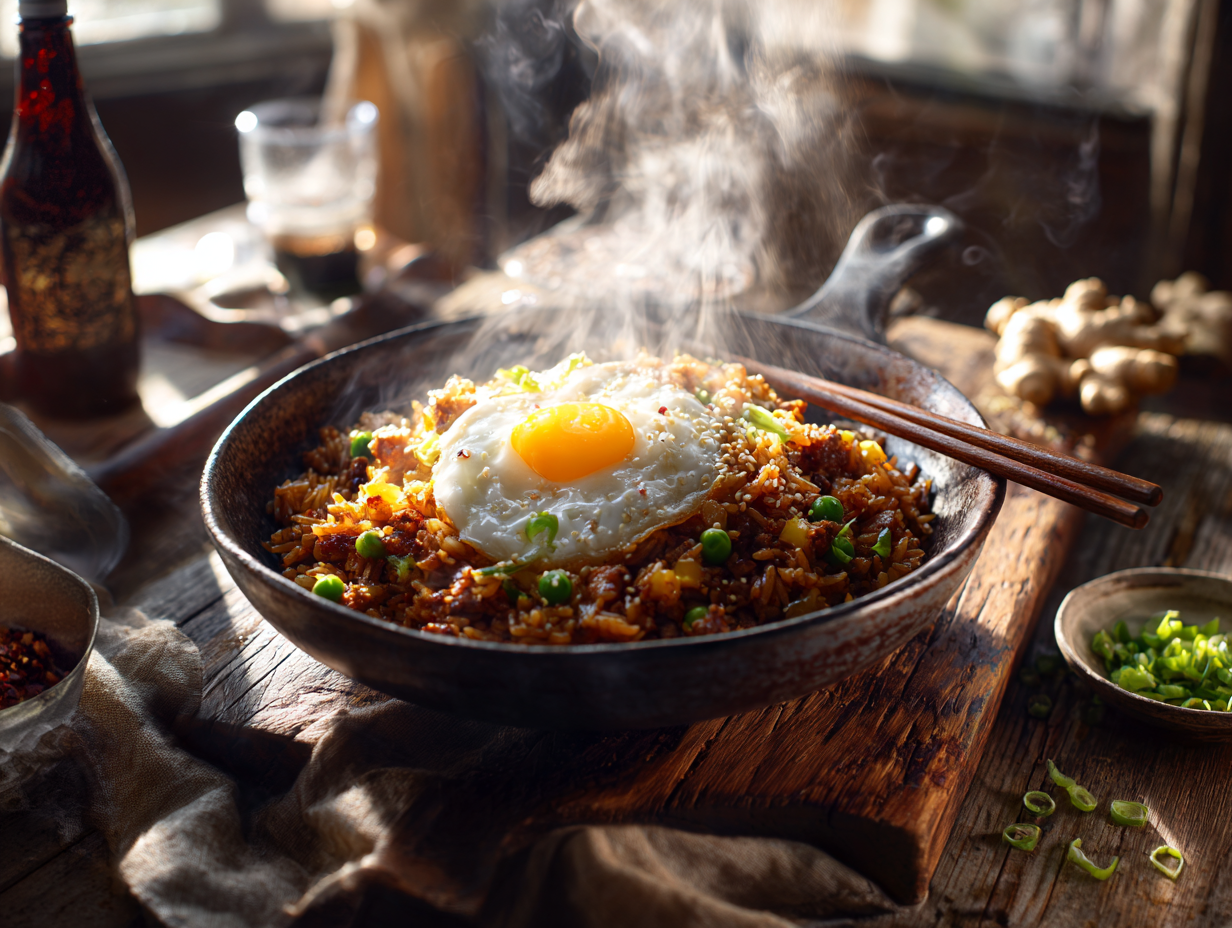
This is a one-pan weeknight dinner built around ground pork, day-old rice, snow peas, and a fried egg on top. The pork does the heavy lifting on protein, and the egg adds another hit of it without any extra effort. It comes together in under 30 minutes and uses ingredients most people already have on hand.
The technique that matters
The single most important move here is cooking the ground pork until it’s properly browned — not just cooked through, but actually caramelized in spots. Ground pork needs to hit 160°F (71°C) internally, but temperature alone isn’t the goal. You want the moisture to cook off first so the meat can brown in its own fat. That browning is where most of the flavor in the dish comes from. Once you add the rice, press it against the hot pan and leave it alone for 30 to 60 seconds at a time — that’s how you get some crisp on the grains instead of a soft, steamed texture. A wok or a wide, heavy skillet over high heat makes both of these things easier. Crowding the pan or stirring constantly will work against you on both counts.
If something goes sideways
- The rice is clumping into wet lumps: The rice was too fresh or too moist going in. Spread it on a plate and refrigerate uncovered for at least an hour before cooking — overnight is better. If it’s already in the pan, spread it out, turn the heat up, and stop stirring.
- The pork is releasing a lot of liquid and won’t brown: The heat is too low or the pan is too small. Drain off the excess liquid with a spoon, push the pork to the edges where the pan is hottest, and let it sit without stirring until it starts to color.
- The soy sauce is making everything taste too salty: You added it too early or used too much. Add soy sauce after the rice is in, taste as you go, and remember that sake and soy together concentrate quickly over high heat.
- The fried egg yolk broke before serving: The oil wasn’t hot enough when the egg went in, or the egg was moved too soon. Let the white set fully before touching it. Skip the garnish — not worth the extra dish — and focus on getting the egg right.
- Snow peas turned limp and dull green: They went in too early. Snow peas need only 60 to 90 seconds in a hot pan. Add them last, right before the egg goes on top.
About the ingredients
- Sake: Cooking sake is sold in most Asian grocery stores and is inexpensive. If you can’t find it, dry sherry is a reasonable substitute. Rice wine vinegar is not a swap — it’s acidic in a different way and will change the flavor noticeably.
- Ground pork: Standard supermarket ground pork works well here because the fat content helps brown the meat and coat the rice. Leaner pork mince will still work but may need a small splash of neutral oil to get the same result.
- Snow peas: Sugar snap peas are a fine substitute and hold up slightly better to heat. Frozen peas work in a pinch — stir them in straight from frozen at the end and they’ll warm through without going mushy.
- Fresh ginger: Jarred minced ginger is a workable shortcut, but use about two-thirds of the amount called for since it’s more concentrated and wetter than freshly grated.
Leftovers and meal prep
Leftovers keep well in an airtight container in the fridge for up to 3 days. Reheat in a skillet over medium-high heat with a small splash of water to loosen the rice — this takes about 3 to 4 minutes and gets you closer to the original texture than a microwave will. The fried egg doesn’t reheat well, so cook a fresh one when you serve the leftovers. The rice and pork mixture (without the egg) can be frozen for up to 2 months; thaw overnight in the fridge before reheating. This dish also works well as a meal-prep base — cook a double batch of the pork and rice, refrigerate it, and fry a fresh egg each time you serve it during the week.
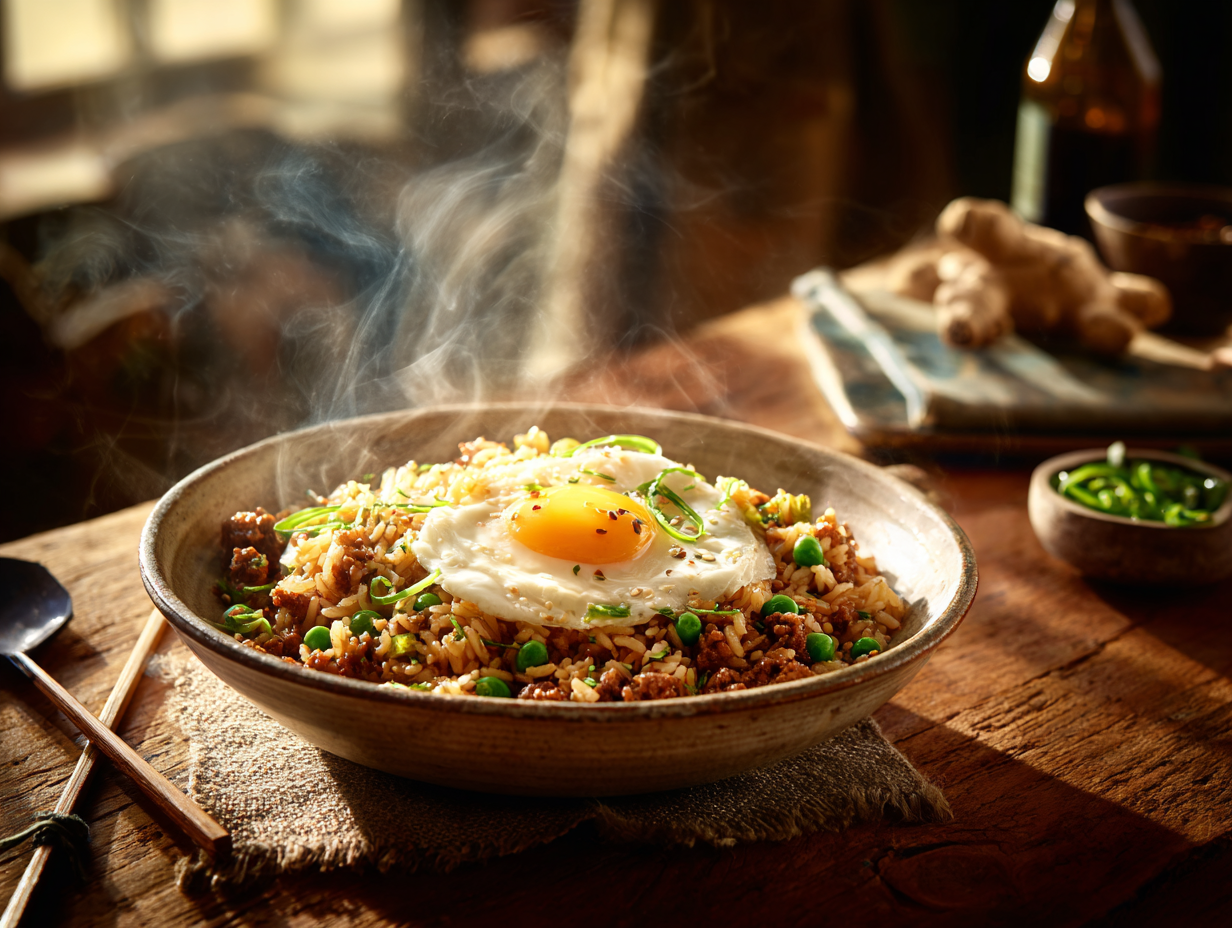
Savoury Ginger and Soy Pork Fried Rice With Fried Egg

Ingredients
 ½ pound ground pork (minced pork)
 2½ ounces snow peas
 1 medium onion - chopped
 2 tablespoons olive oil
- 1 small ginger root - minced
 2 cups rice - cooked
- 2 tablespoons sake
 2 tablespoons soy sauce
 ¼ teaspoon ground black pepper
 2 medium eggs
Instructions
- Trim the ends off the snow peas and cut them in half diagonally.
- In a large frying pan, cook the onions in olive oil for 8 to 10 minutes. Fry until lightly golden.
- Add the ginger and pork, and stir fry for 5 minutes.
- Add the peas and gently stir fry for 1 to 2 minutes.
- Add the rice and cook, occasionally turning, until heated and slightly browned for 5 to 8 minutes.
- Combine the sake, soy sauce, and pepper in a small bowl. Pour over rice, combine well, and cook for 2 to 3 minutes.
- In the meantime, fry the eggs a gentle (nice and runny) sunny side up.
- Serve the fried eggs on top of the fried rice.
Nutrition
Common questions
Can I use freshly cooked rice instead of day-old rice?
You can, but the results won’t be as good. Fresh rice has too much moisture and will steam in the pan rather than fry, giving you a soft, sticky texture instead of distinct grains. If you only have fresh rice, spread it on a baking sheet and refrigerate it uncovered for at least an hour before using.
How do I know the ground pork is fully cooked?
Ground pork must reach an internal temperature of 160°F (71°C) — it should never be served pink. In a hot pan, properly broken-up ground pork typically reaches this temperature well before it browns, but use an instant-read thermometer if you’re unsure.
Is this enough protein for a full meal?
Yes. Between the ground pork and the fried egg, a standard serving delivers a solid amount of complete protein without needing a side dish. If you’re feeding people with bigger appetites, a second egg per person is the easiest way to scale up the protein without changing anything else about the recipe.
Can I swap the ground pork for another protein?
Ground chicken or turkey both work, but they must be cooked to 165°F (74°C) and are leaner, so add a teaspoon of neutral oil to the pan before browning. Ground beef works too, though it shifts the flavor profile noticeably away from the original.
What if I don’t have sake?
Dry sherry is the closest substitute and is easy to find in most supermarkets. Use the same quantity. Avoid replacing it with rice wine vinegar, which is acidic rather than aromatic and will make the dish taste sharp.
Can I make this without a wok?
Yes — a large, heavy skillet works fine. The key is using the widest pan you have so the rice and pork aren’t crowded, and getting it properly hot before anything goes in. A 12-inch stainless steel or cast iron skillet over high heat will do the job.
Try these next
- Savory Pork Noodle Stir-Fry
- Japanese Pork Lettuce Cups
- Authentic Szechuan Dan Dan
- Saffron Lamb Rice Pilaf